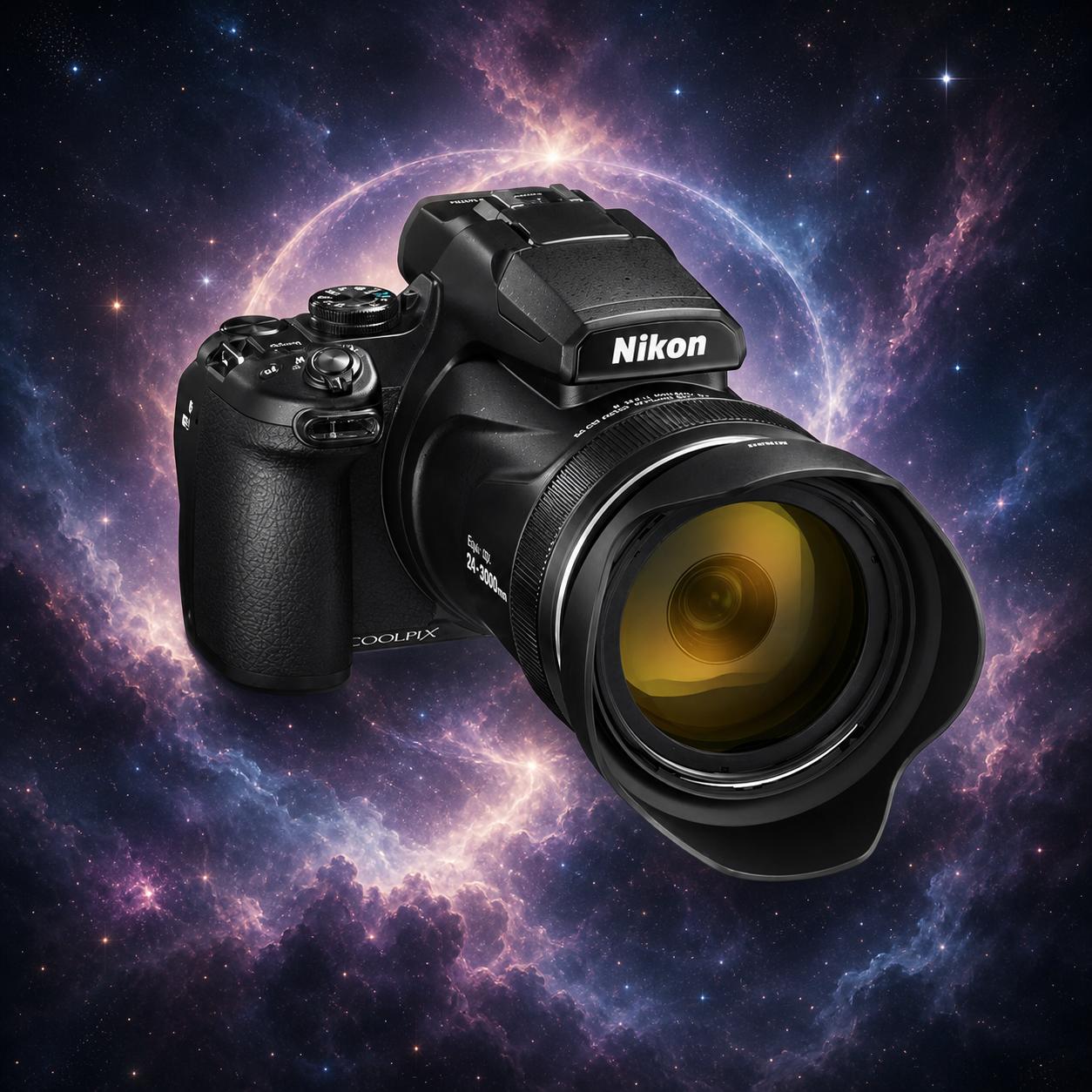
Camera Specs
Nikon Coolpix P1000
The portal’s long-range workhorse: a 125× superzoom bridge camera built for celestial, shoreline, wildlife, and atmospheric observation.
125× optical zoom24–3000mm equivalentDual Detect Optical VRRAW + JPEG4K UHD video
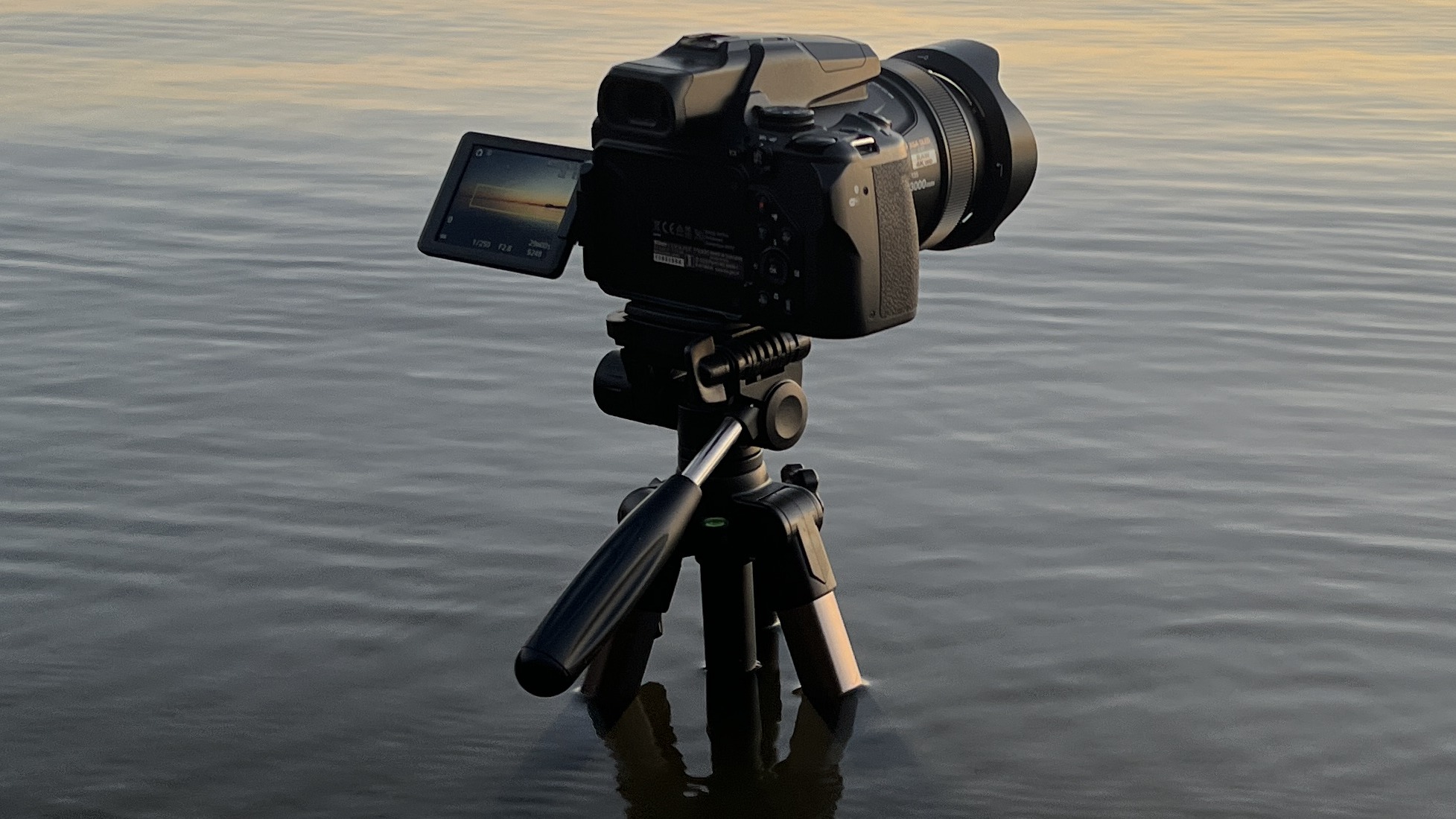
Zoom range24–3000mm35mm-equivalent focal length; 125× optical zoom for Moon, Sun, wildlife, ships, and long-distance terrestrial studies.
Sensor16 MP1/2.3-inch backside-illuminated CMOS; small sensor, enormous reach, good daylight detail with careful technique.
Aperturef/2.8–8Bright at wide angle, narrows through the long telephoto range; tripod/low ISO discipline matters at extreme zoom.
Video4K UHD3840×2160 recording plus high-speed modes for documenting motion and atmospheric shimmer.
Core imaging specs
Lens constructionNIKKOR super ED glass, 17 elements in 12 groups; designed around extreme optical reach.
Optical zoom125× native zoom, expandable with digital zoom when documentation matters more than image purity.
StabilizationDual Detect Optical VR rated around 5 stops, useful handheld but still best paired with bracing/tripod for the Moon.
FocusContrast-detect autofocus with macro capability at wide angle and manual focus support for difficult celestial targets.
ISO rangeISO 100–6400; best archive quality usually comes from low ISO and stable support.
ShutterMechanical/electronic shutter behavior varies by mode; fast daylight exposures help freeze shimmer and vibration.
Why it fits this portal
- Moon: fills the frame without a telescope, making craters, terminator contrast, and phase changes easy to document.
- Sun: useful for solar disk and atmospheric observation when paired with proper solar filtration and safe technique.
- Waterline/shore: the 3000mm-equivalent end exaggerates distant compression and makes mirage/refraction effects visible.
- Wildlife: enough reach for birds and distant subjects without carrying interchangeable lenses.
- Video: 4K clips preserve motion, heat shimmer, tracking behavior, and changing sky conditions better than stills alone.
Field workflow notes
Best supportTripod, remote/timer release, optical stabilization testing, and short exposure bursts at high zoom.
Moon settingsStart near low ISO, fast shutter, manual/spot exposure, and adjust for the bright lunar surface rather than the black sky.
Long distanceAtmospheric seeing often dominates sharpness; shoot bursts and compare frames instead of trusting one exposure.
Archive habitKeep stills, 4K clips, thumbnails, capture time, location/session notes, and “best shot” flags together.
Practical limitations
Small sensorLess dynamic range and low-light flexibility than large-sensor cameras; daylight and bright Moon work are its strengths.
Extreme zoomVibration, heat shimmer, focus hunting, and haze become more important than nominal lens reach.
Not a telescopeIt is a versatile observation camera, not a dedicated astro rig — but that portability is the point.
SafetyNever point at or photograph the Sun without a proper front-mounted solar filter and safe viewing discipline.
Portal note: this page is written for the actual archive workflow: Moon phases, solar sessions, Hog Island long-range shots, bird frames, and field evidence captured with the P1000 ecosystem.
