The sources gathered here do not come from one school, one religion, or one neat tradition. They range from cuneiform tablets and the Babylonian world map to Vedic astronomy, Greek philosophy, Roman natural philosophy, Gnostic texts, medieval theology, alchemy, and folklore.
When they describe the structure of the world, the same shape keeps returning: a bounded Earth, enclosing the heavens within it. The sky is not treated as empty space around a globe. It is described as a spherical order inside the world itself, with nested heavens, cosmic waters, wombs, eggs, and inner spheres arranged within the Earth’s perimeter.
This article follows that record source by source. Not to flatten every tradition into the same claim, but to show the recurring architecture: Earth as the fixed outer enclosure, and the heavens nested inside forming the geocosmos.
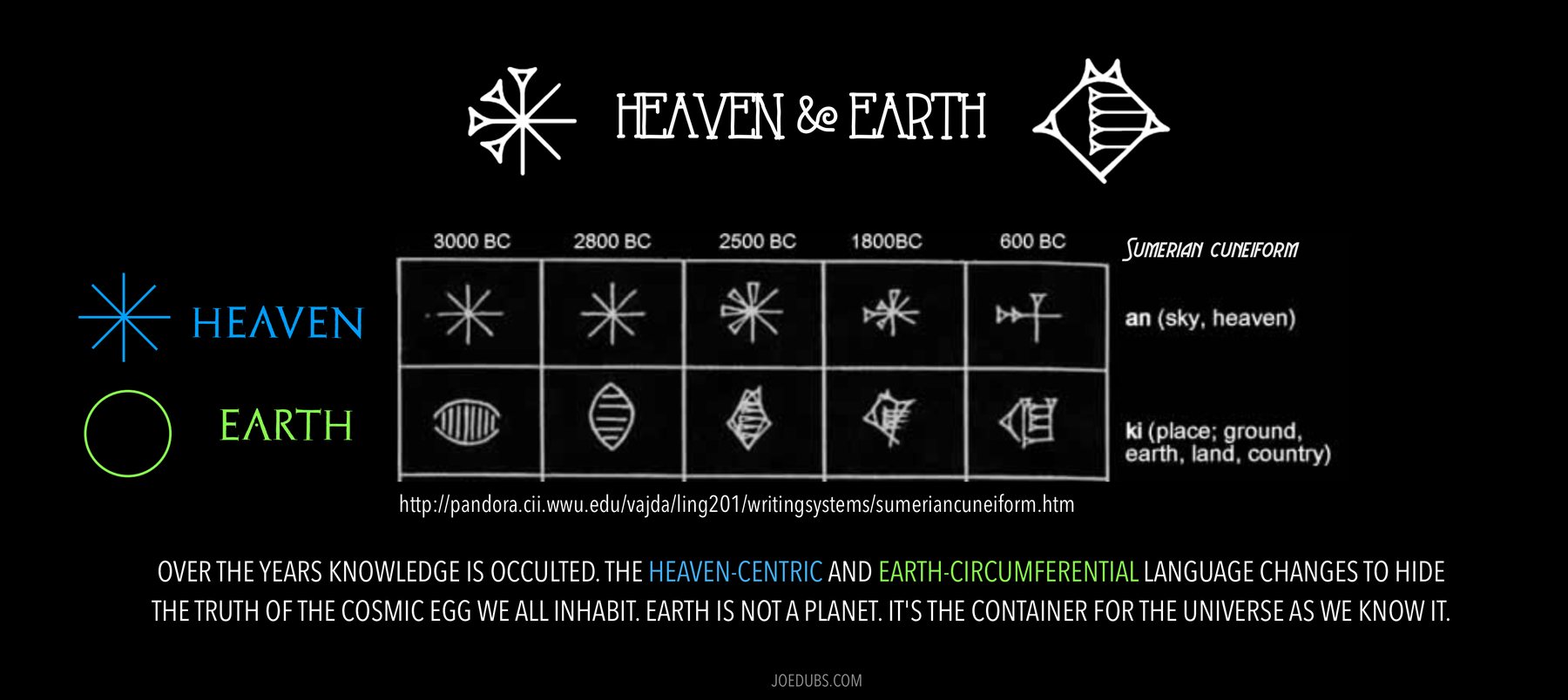
The oldest cosmological language begins with a pair: above and below. The cuneiform phrase does not give us a modern diagram. It gives us a grammar. Heaven and earth are named together, as if the world starts by splitting into two facing regions. The heavens are contained inside Earth.
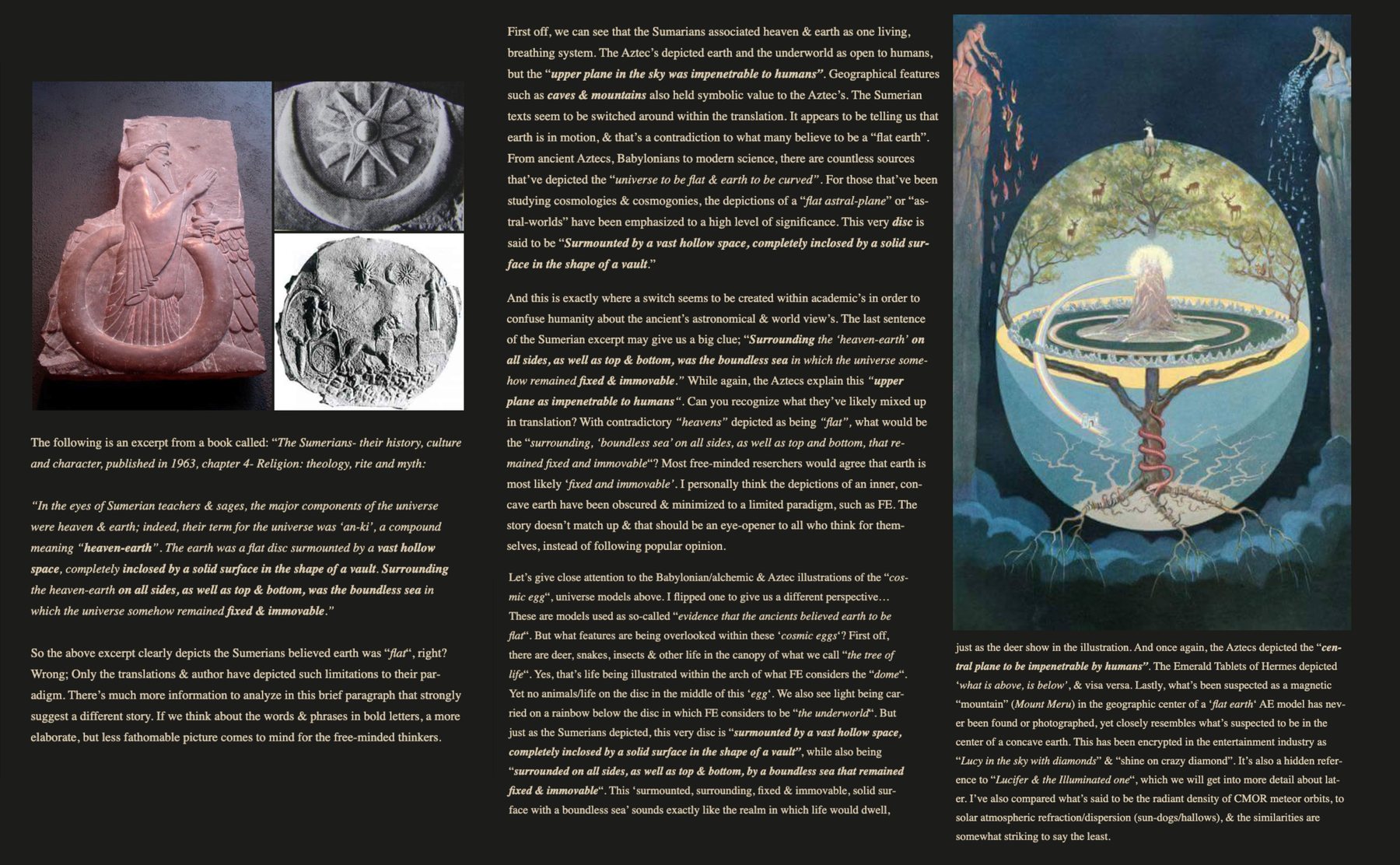
The Sumerian material keeps that same pressure: the inhabited world is an ordered enclosure.
A Short Detour: How Flat Earth Became Confused With the Cosmic Egg and Concave Earth
Across ancient cosmogonies—from the Orphic fragments to Vedic scriptures—the story of the cosmic egg is a universal archetype. These traditions describe the egg splitting into two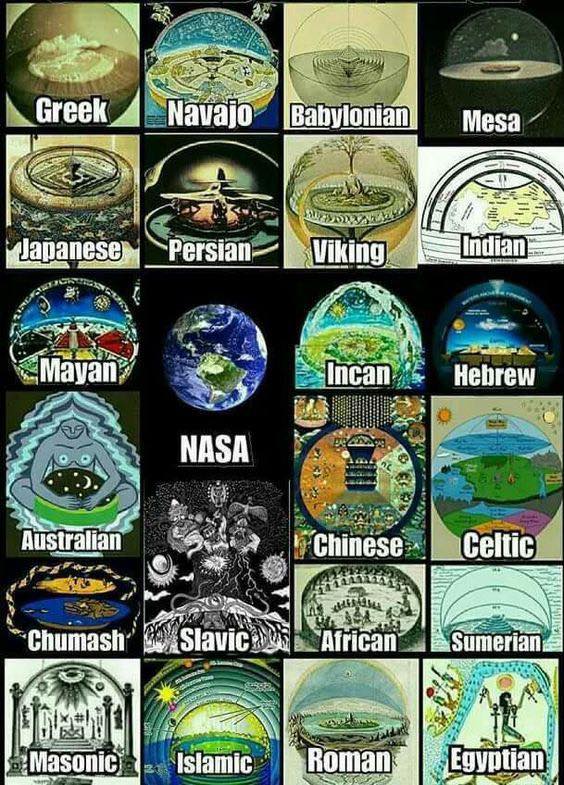 distinct realms: the heavens and the earth. However, modern translations often impose a ‘flat’ perspective on these texts, visualizing them as two separate hemispheres stacked like a map. This is a likely distortion of the original intent. If we view the myth from within the egg, the ‘lower’ realm doesn’t refer to a flat bottom, but to the inner shell (Earth), while the ‘upper’ realm represents the yolk of the egg, in the center. (the firmament of the heavens). By shifting from a flat-earth model back to this original, spherical interior perspective, we see that ‘upper’ and ‘lower’ weren’t about height on a plane, but about the relationship between the core(heavens) and the container(the globe earth)
It’s important to remember that we aren’t working with complete, pristine manuscripts; we are essentially looking at a shattered mirror. For the Orphic tradition specifically, much of what we “know” comes from doxographies—summaries written by later philosophers who often had their own agendas. When these fragments are pulled from their original context and forced into a new language, the nuances of ancient geometry often vanish. Transliteration—the process of moving words from one alphabet to another—is only the first hurdle; the real “obscuring” happens during translation. A translator might see a word for “below” and reflexively think “underneath a flat surface,” completely missing the possibility that the author meant “inward toward the center.” By the time these stories reach a modern English reader, the spherical, internal perspective of the cosmic egg has been flattened into a two-dimensional map, replacing a complex, nested reality with a simple, linear one.
If we shift our perspective to that of an inhabitant living inside the cosmic egg, the traditional labels of “upper” and “lower” undergo a radical and intuitive transformation. In this model, the inner egg shell is the true “lower” realm—the material curved foundation upon which all life walks. Because the shell encompasses everything, it serves as the ground beneath every foot, regardless of where one stands on the interior surface. Consequently, the yolk suspended in the absolute center becomes the “upper” realm. It is the singular point of “up” for every living being, a radiant core that hangs directly overhead from every vantage point on the shell.
Now Back to the Geocosmos
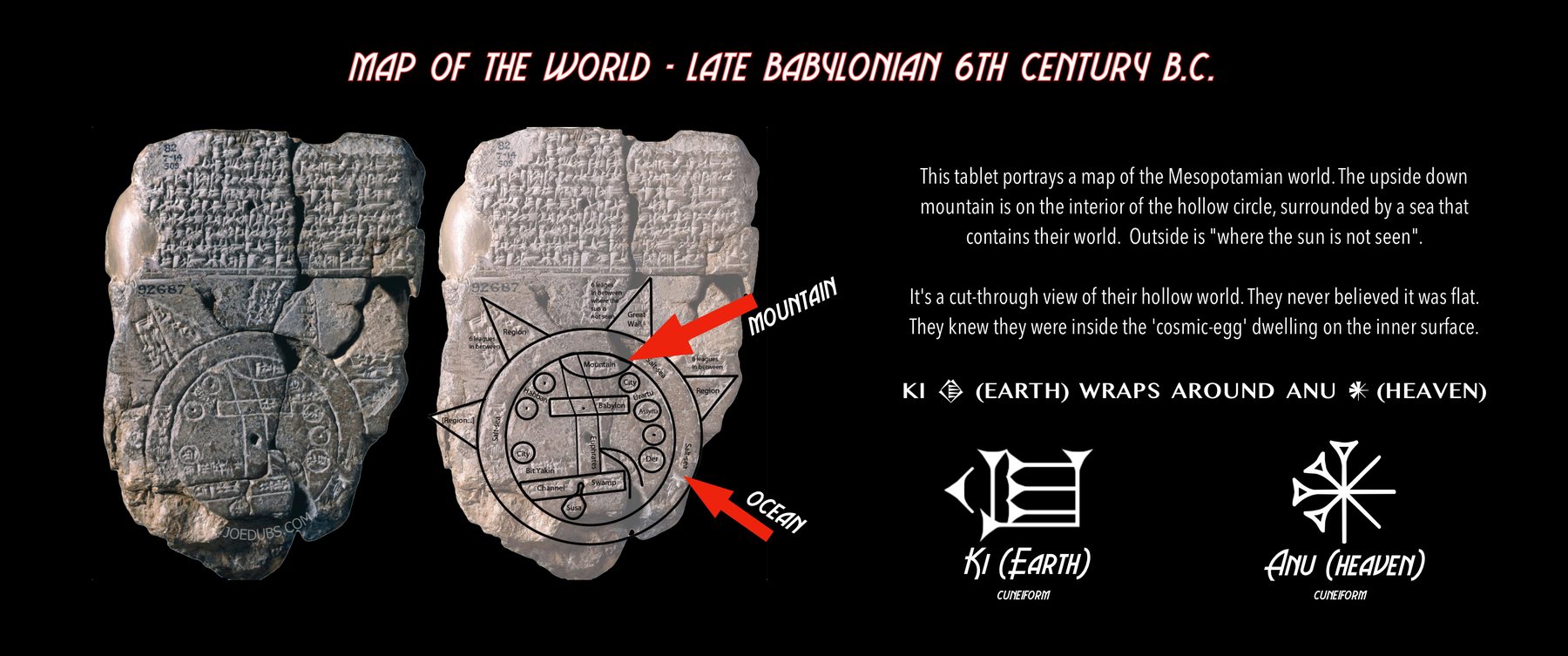
The Babylonian Map of the World shows a concave world.
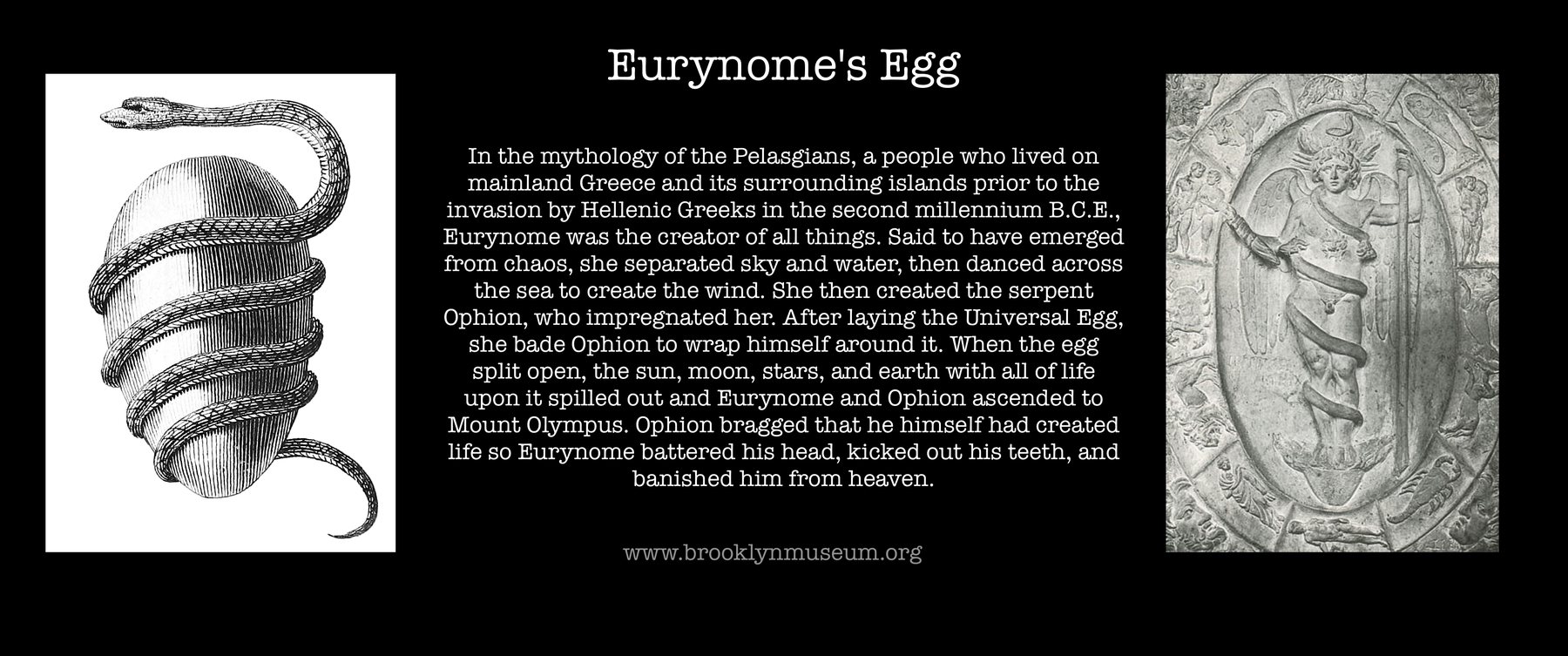
The Orphic-looking world egg changes the language from layers to birth. Instead of a built world, the cosmos is something gestating: enclosed, cracked open, and made visible from within.
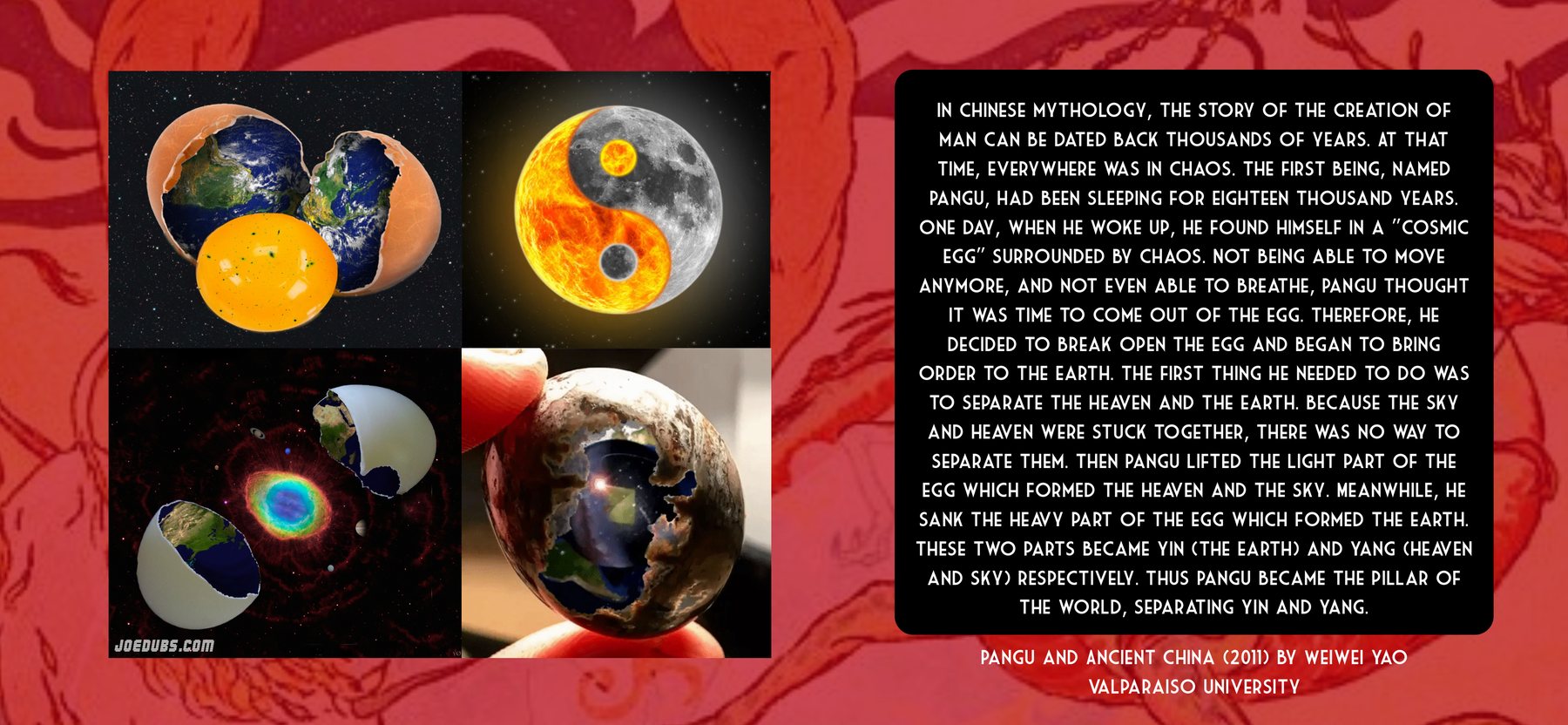
The Chinese Pangu story keeps the same image and gives it a body. Heaven and earth separate inside the egg, and the giant stands between them as the living axis of the world.
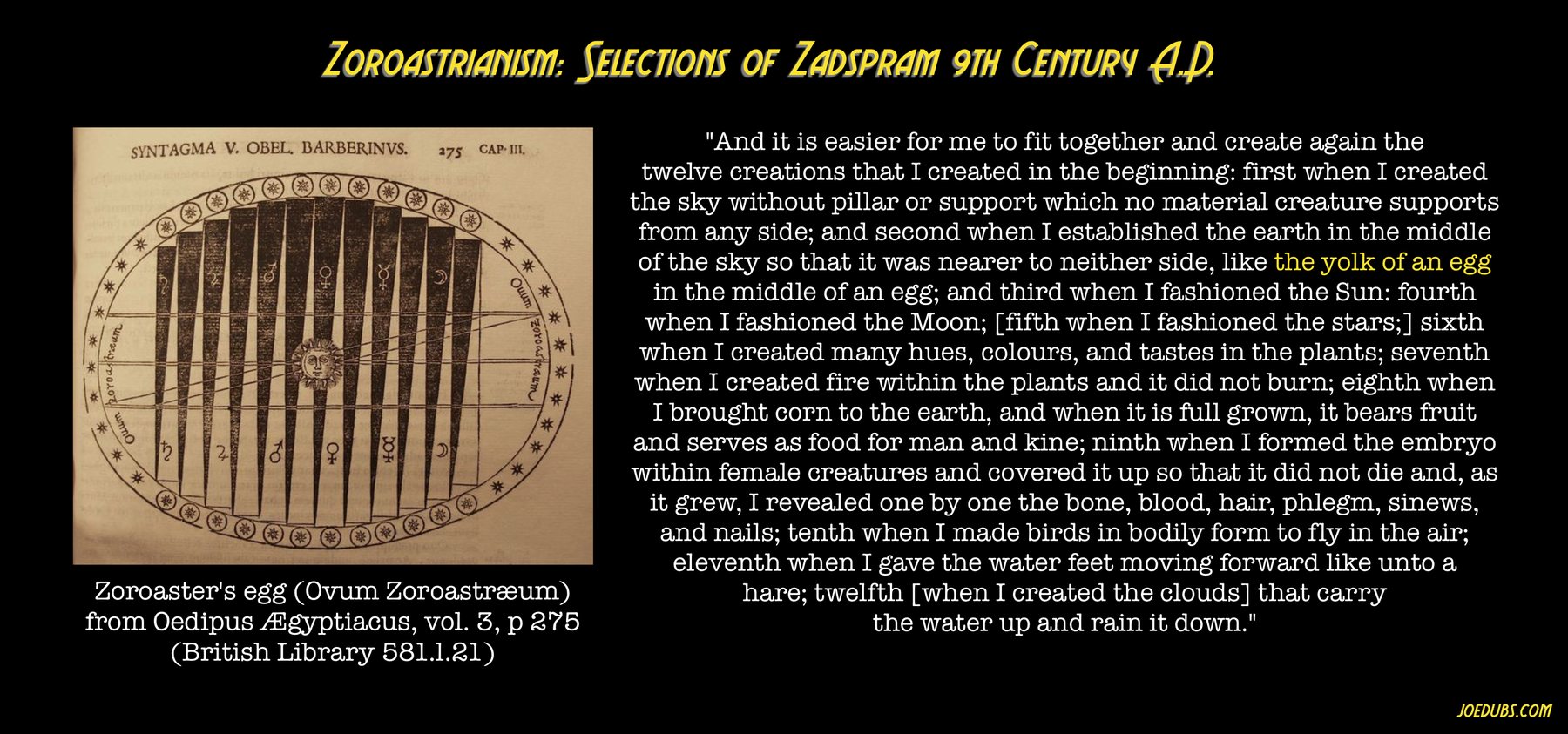
The Zoroastrian material brings the egg-form into a sharper religious frame. Creation is not just space. It is a bounded field where light, darkness, time, and moral conflict take form.
Vedic and Indian thought
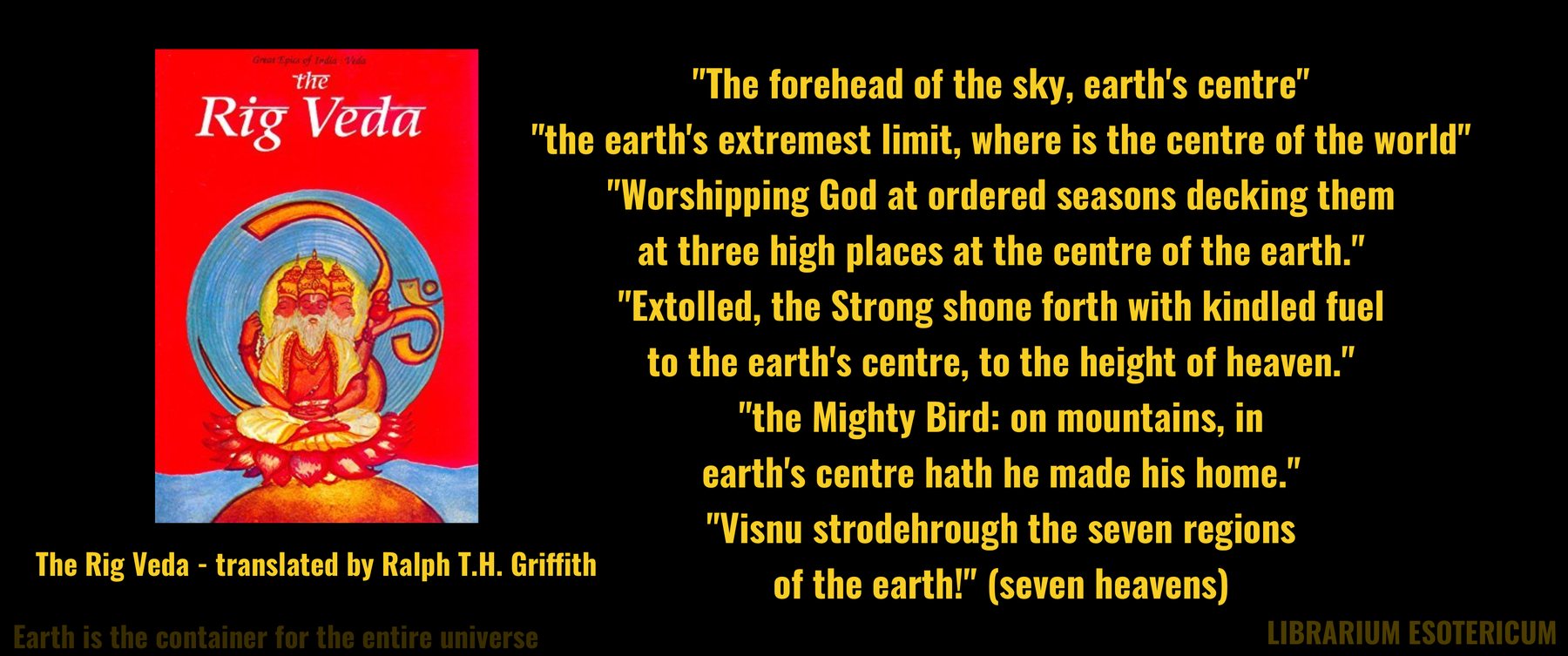
The Vedic language often treats earth as something established, spread out, upheld, and placed in relation to heaven. The image keeps the ancient habit of thinking in surfaces, supports, and regions rather than empty astronomical distance.
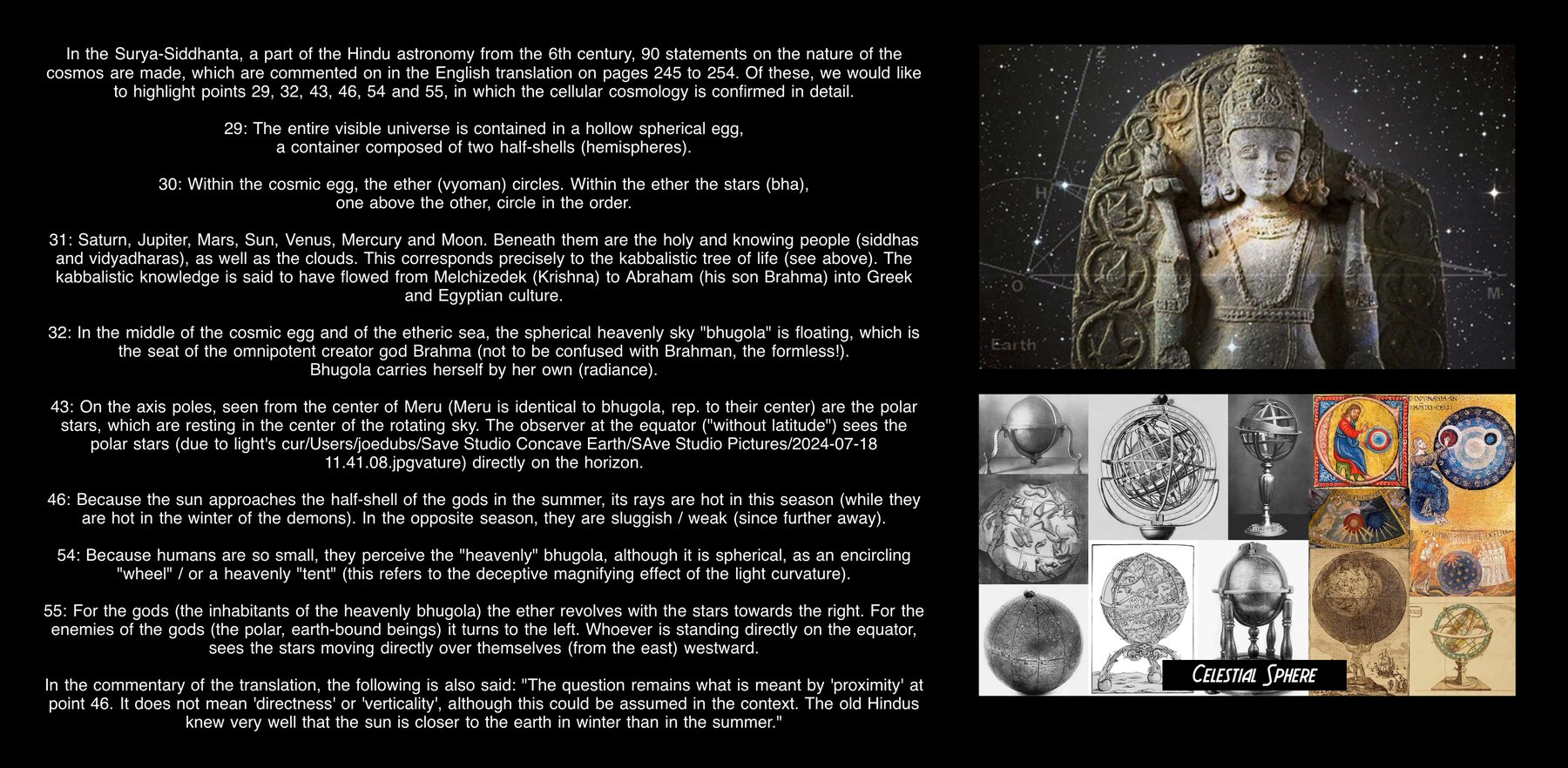
The Surya Siddhanta belongs to mathematical astronomy, but its visual vocabulary still feels architectural. The heavens are measured as nested spheres, with the Earth fixed as the shell that contains it.
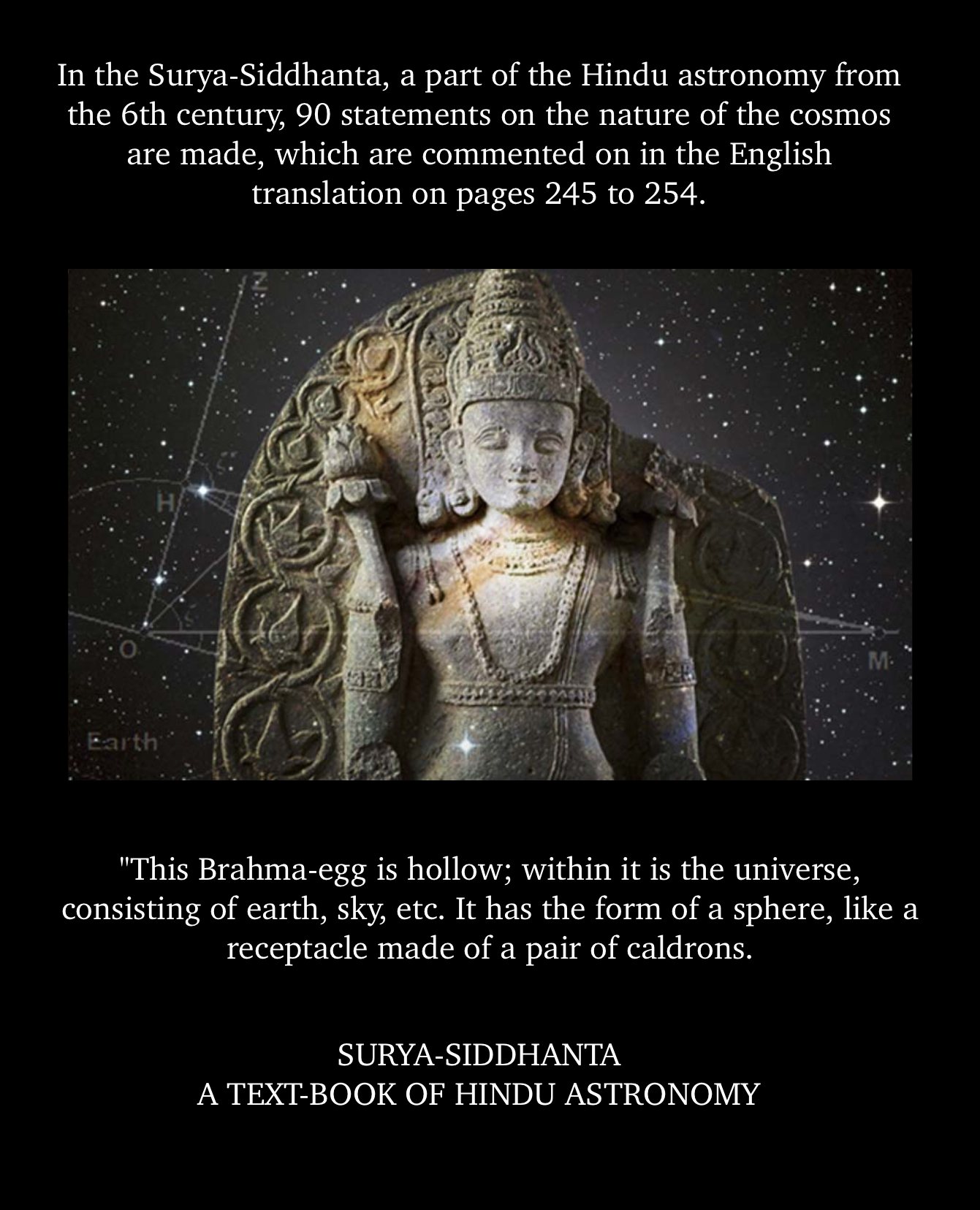
This companion image draws out the stranger implication: measurement does not flatten the old cosmos. It can make the enclosure more precise. The ancient sky becomes a calculable chamber.
Greek Sources & Myths
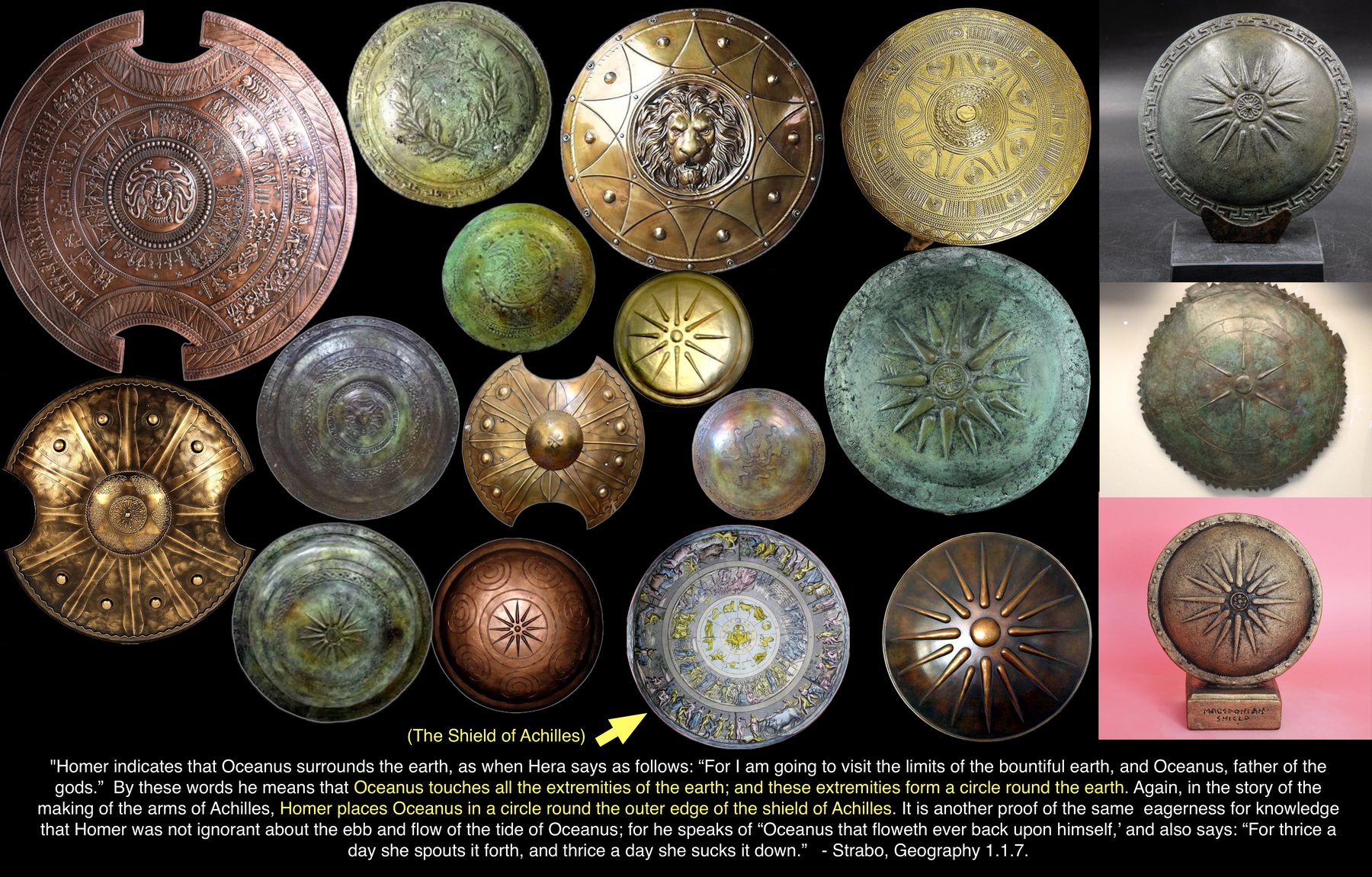
Greek shield imagery gives the world a metal edge. Achilles’ shield in Homer is not a simple ornament. It is a compact universe: cities, fields, stars, ocean, violence, work, and ritual pressed into one circular surface.
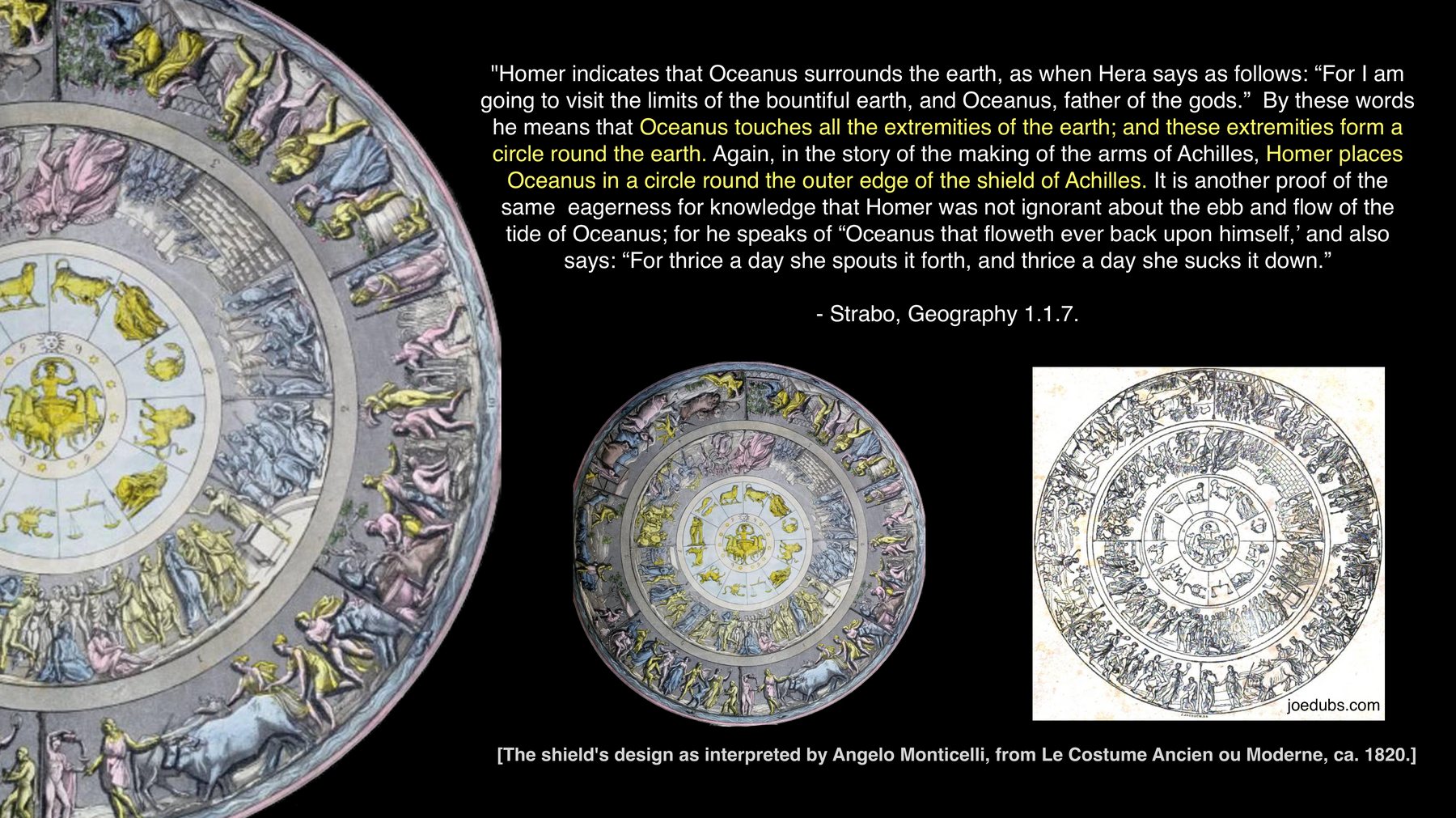
Strabo reads Homer through geography. Oceanus becomes the boundary of the inhabited world, and the shield becomes a way to talk about ancient cosmology without pretending it was a modern atlas.
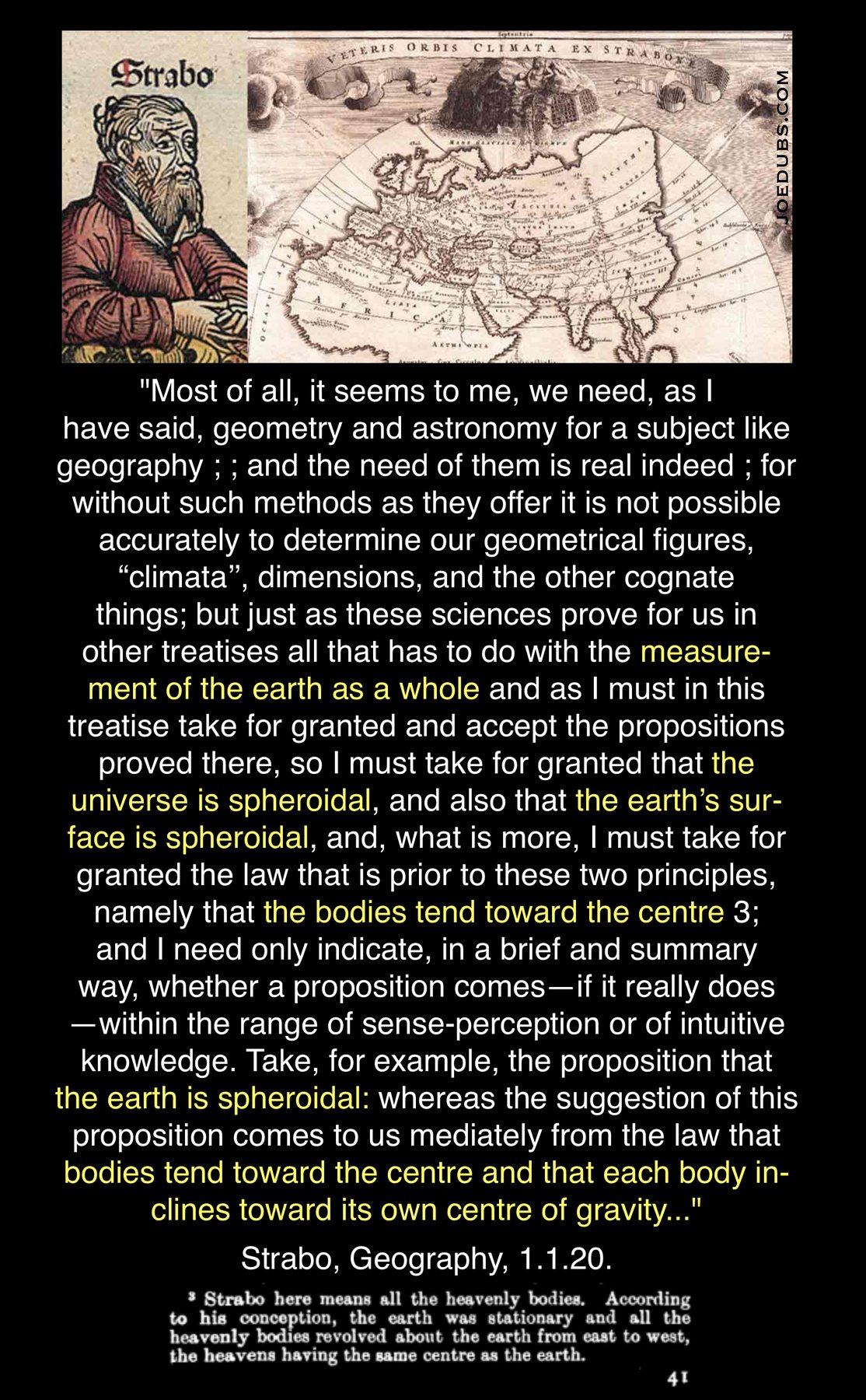
The Earth is at rest. The heavens move.
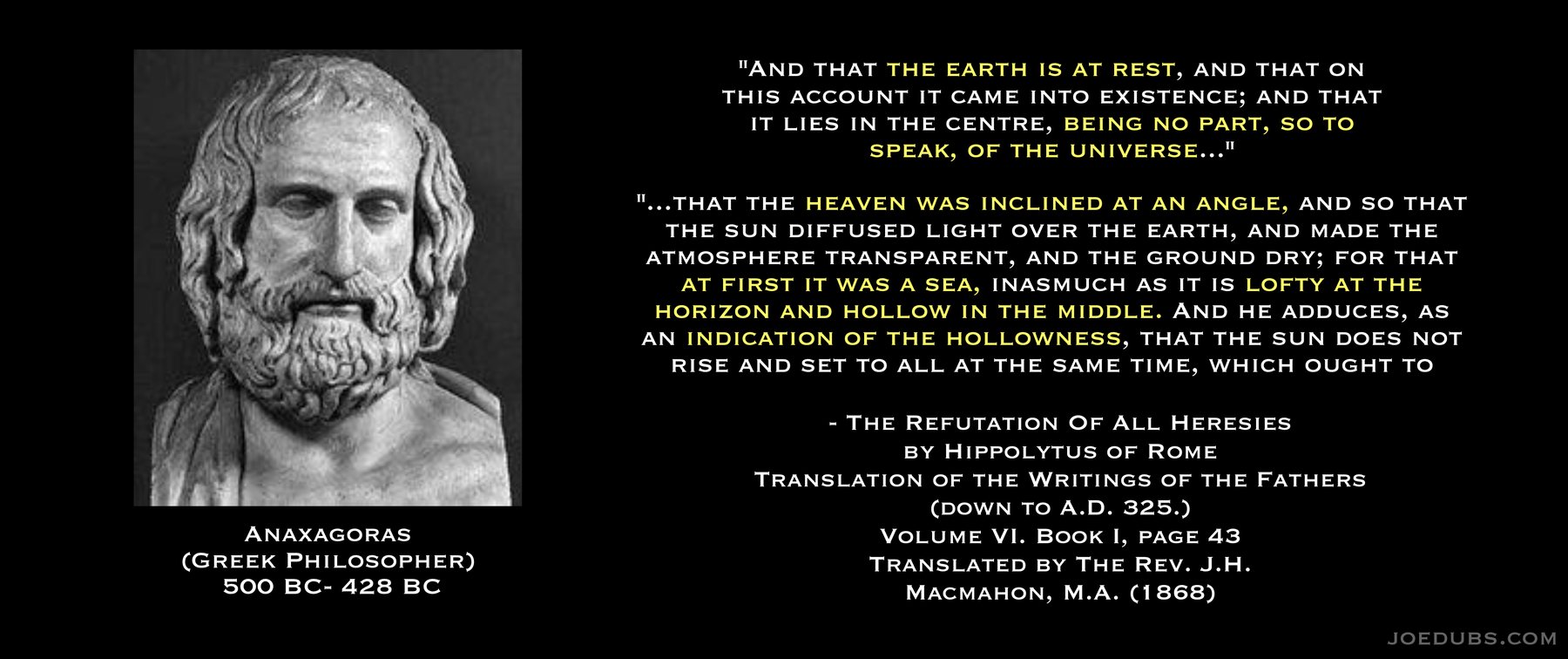
With Anaxagoras the language shifts from myth to physical explanation.
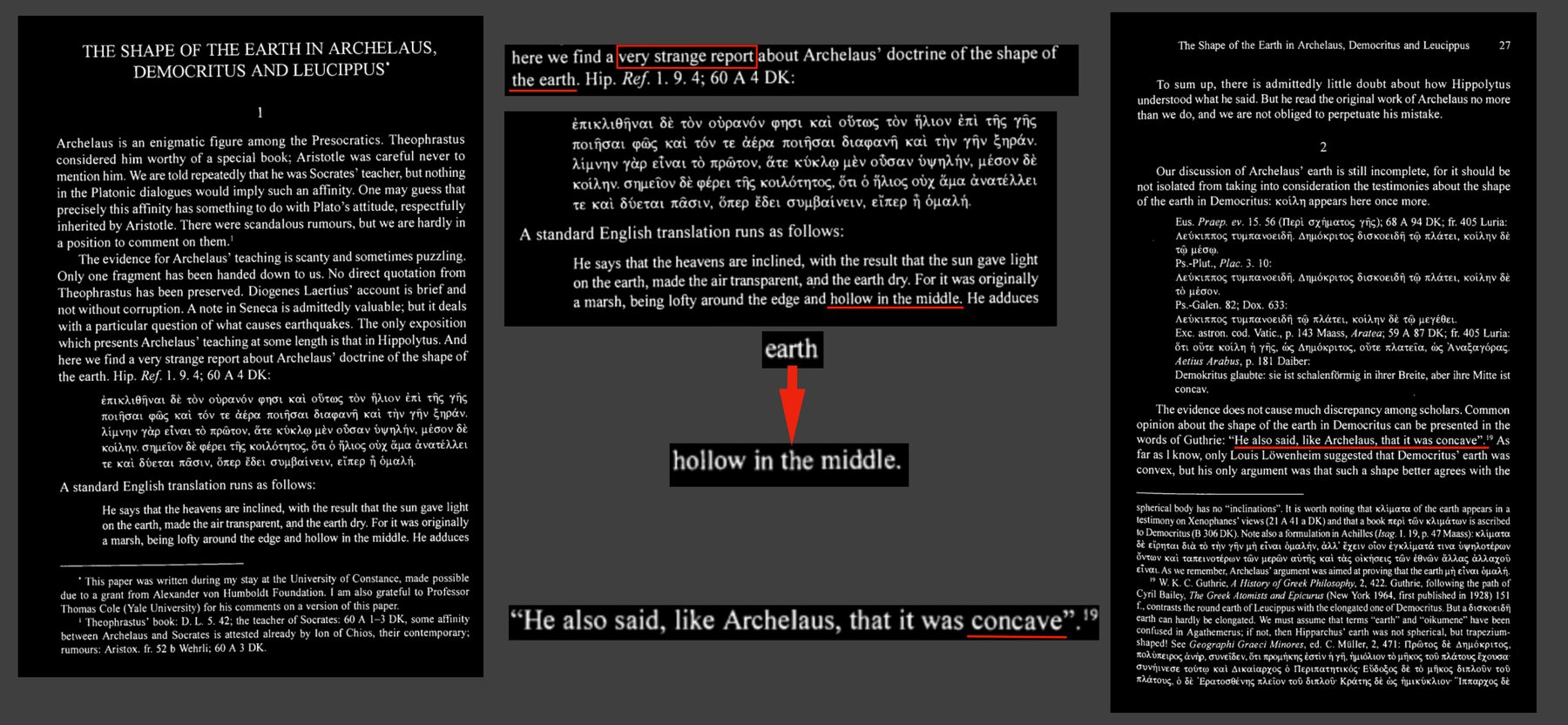
The Earth “hollow in the middle”. “He also said, like Archelaus, that it was concave”.
The atomists and their neighbors keep arguing over shape, depth, and suspension. The important thing is the habit of asking what kind of container the world is, and what sort of surface the human world occupies inside it.
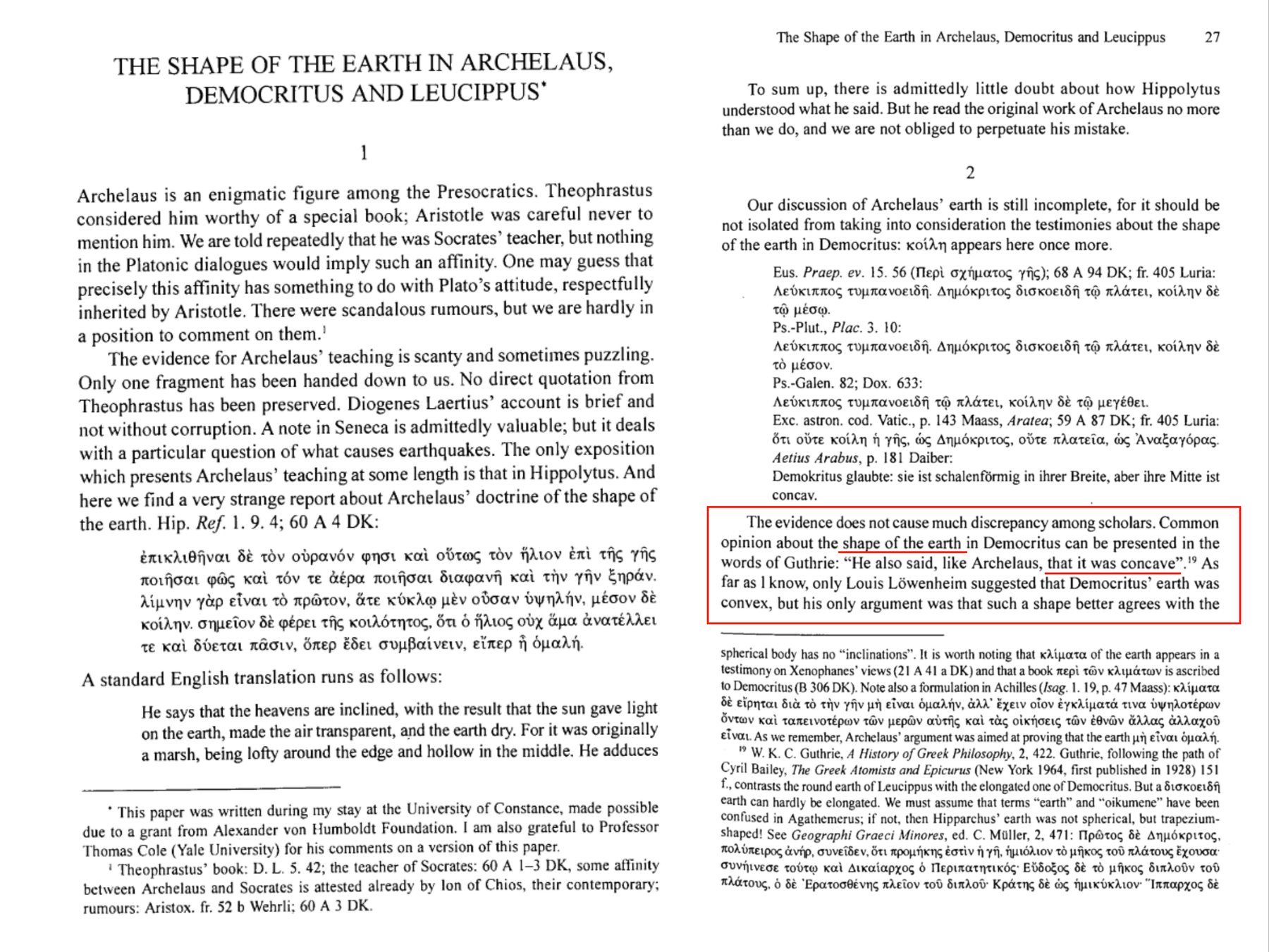
Modern histories of Greek philosophy preserve those fragments in careful paraphrase. The basin-like Earth shows up not as folklore, but as part of the early Greek attempt to make the cosmos mechanical.
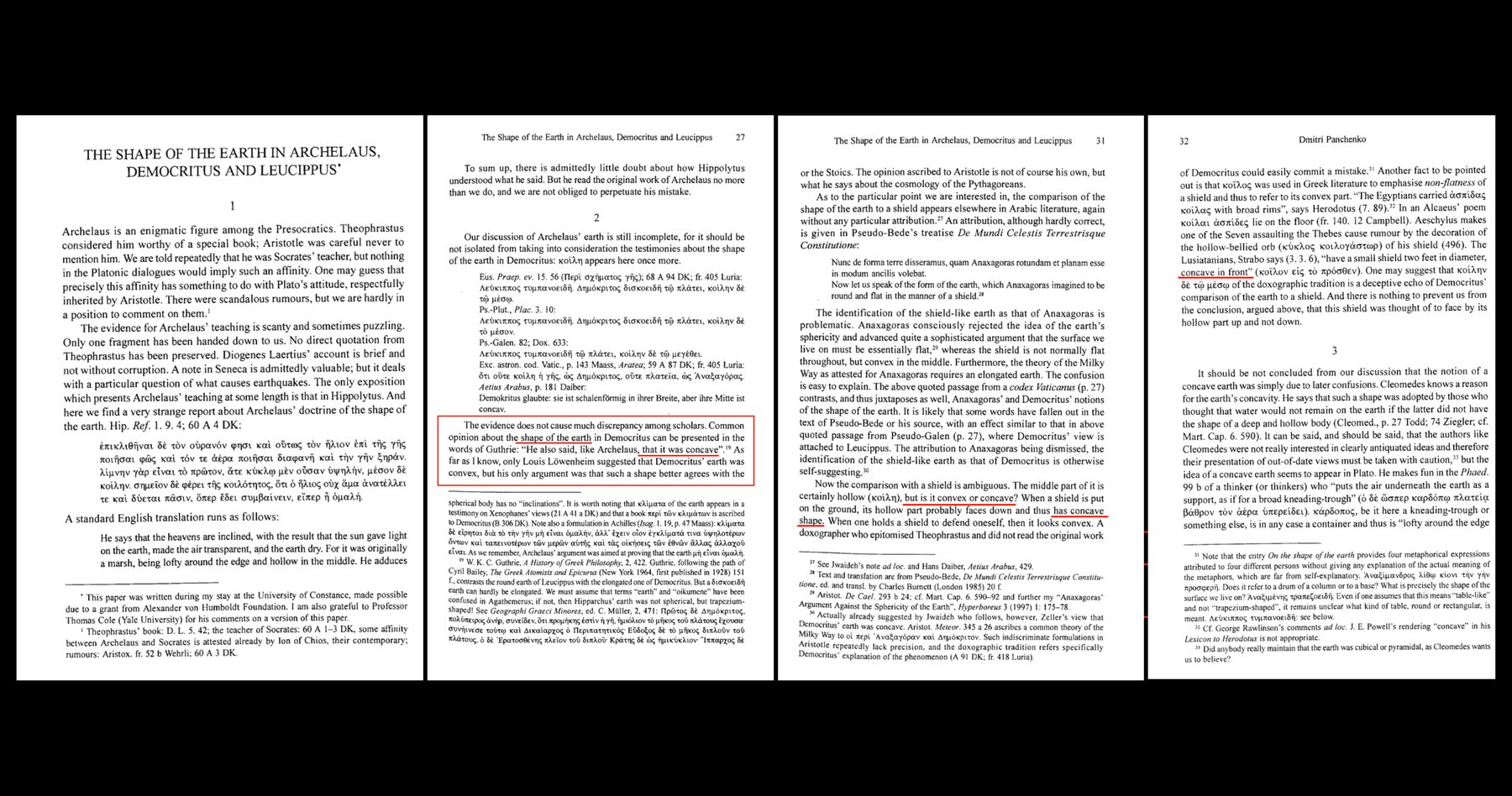
This second Guthrie plate keeps the source trail visible. The later reader is not looking at Democritus directly. He is looking through quotations, summaries, and scholarly reconstruction.
Plato and the geometry of the world
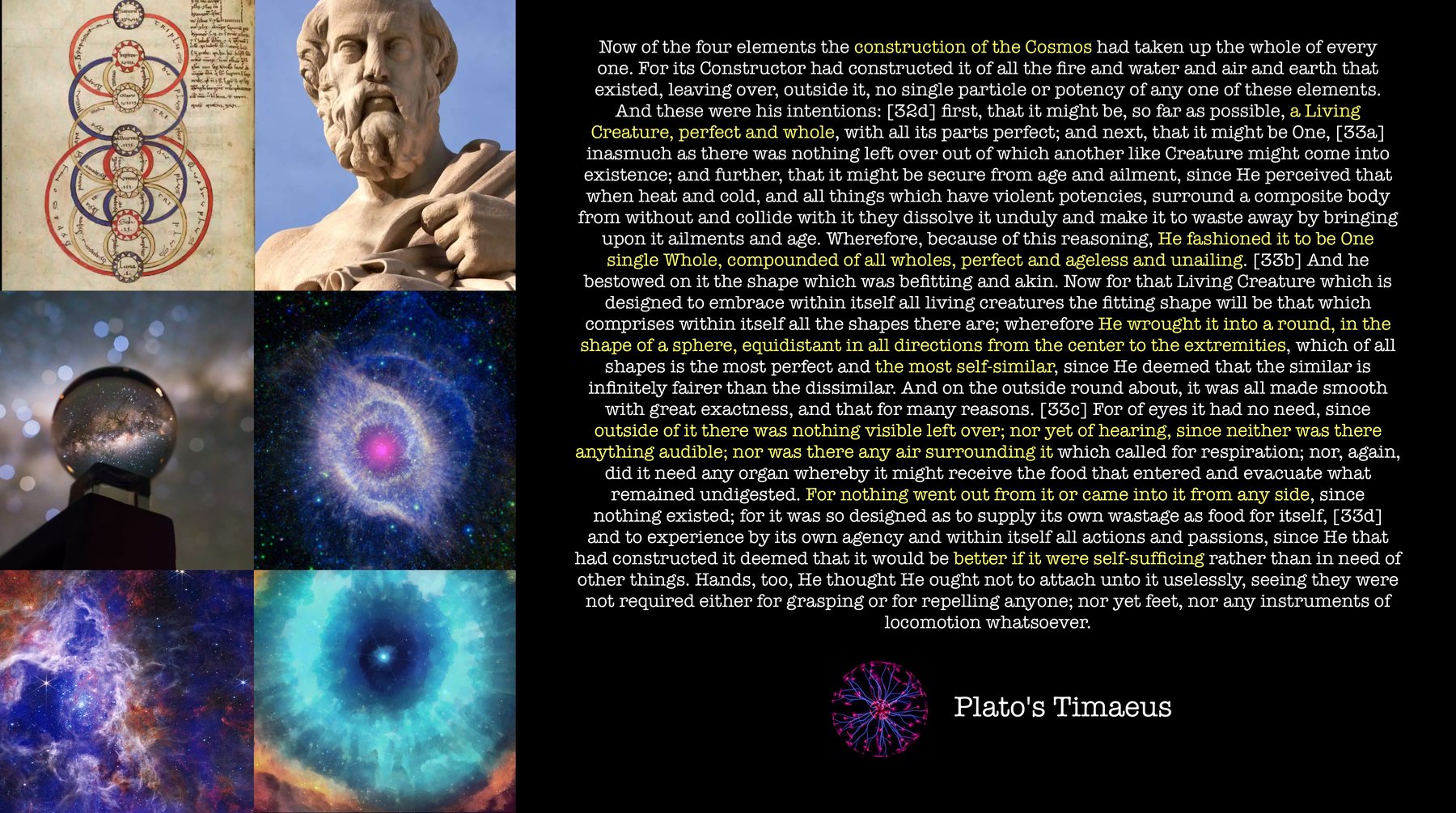
Plato’s Timaeus gives the old sky a geometric soul. The cosmos is alive, spherical, ordered, and proportioned. It is not just where things happen; it is the living whole in which things have their place.
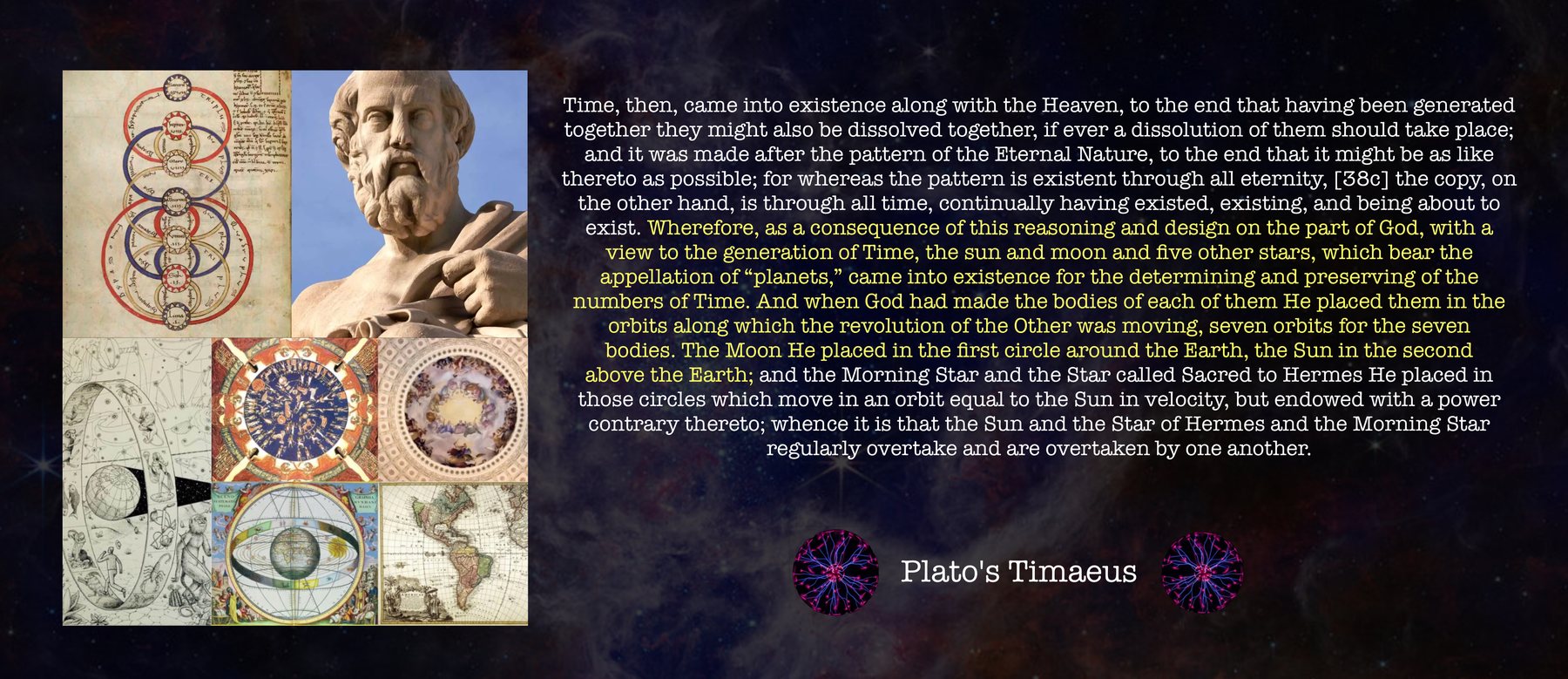
Here the created world becomes a craft problem. The maker imposes number, proportion, and figure on disorder. Geometry is not decoration. It is the method by which the visible world becomes intelligible.
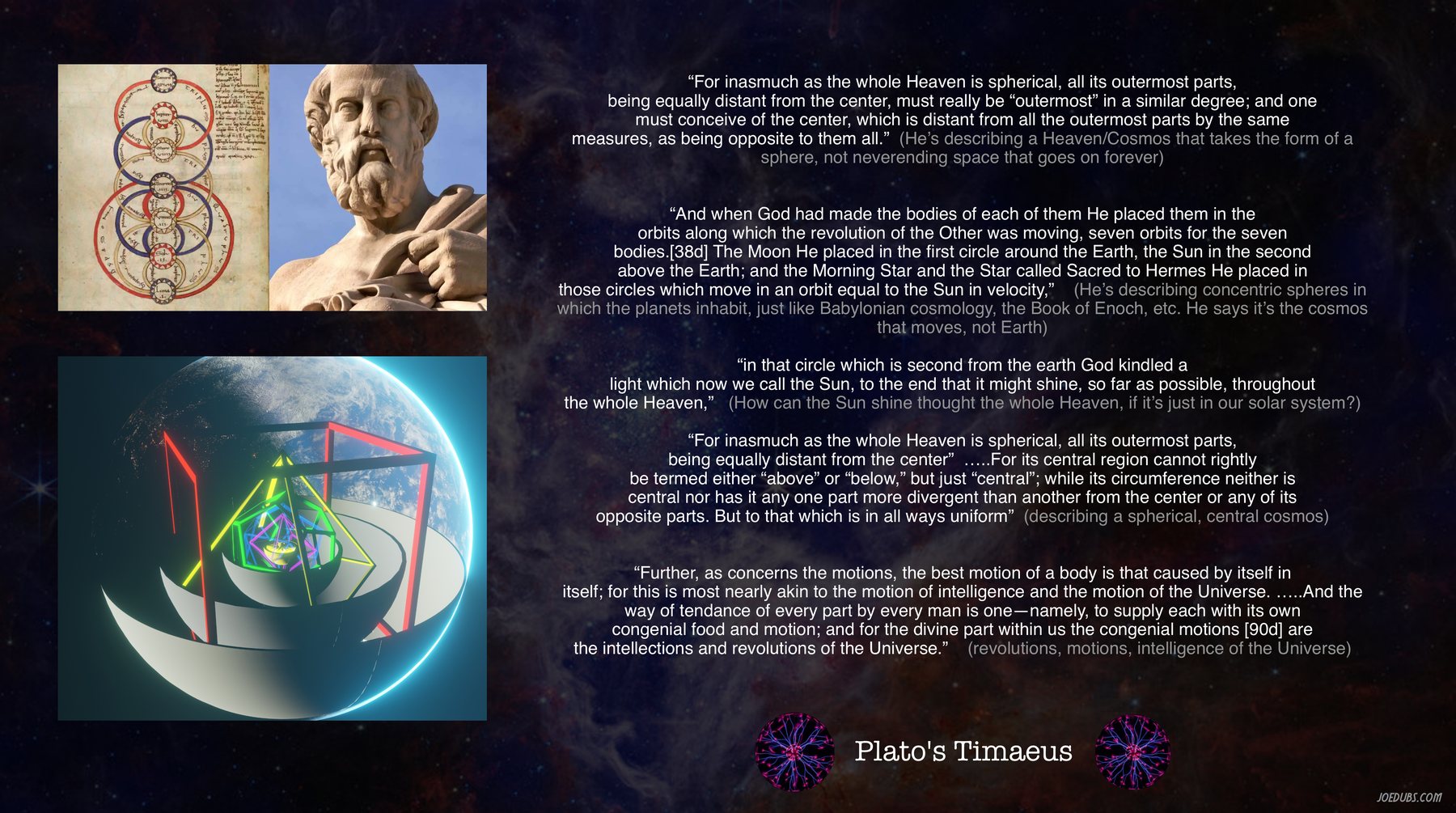
This plate pushes the same idea into the frame itself: the world is bounded, arranged, and internally related. Plato’s universe is a finished animal, not an endless warehouse.
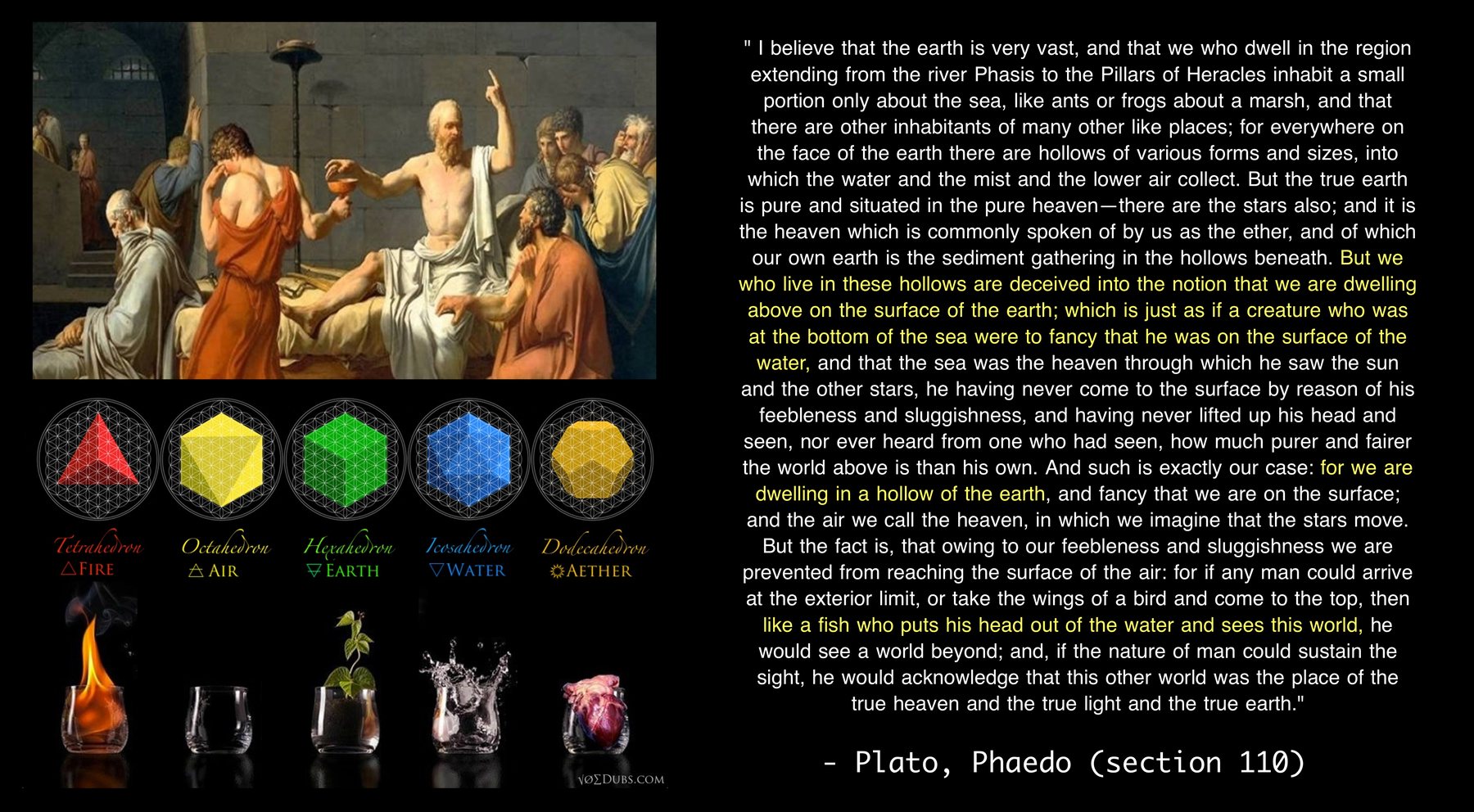
The Phaedo imagines the true Earth as something far stranger than ordinary sight suggests. Human beings live in the hollows.
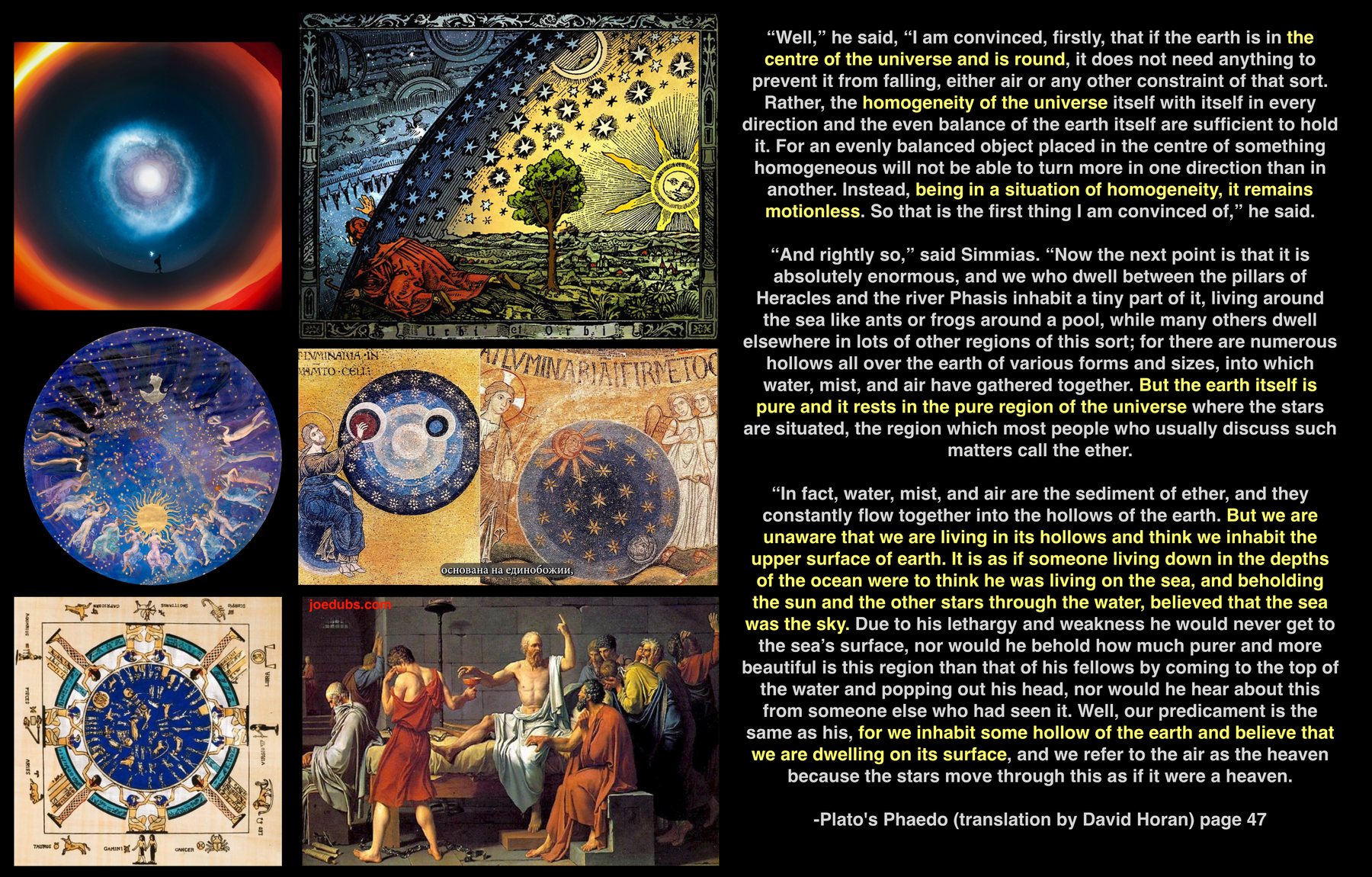
This image makes the Phaedo’s geography visual. The inhabited world becomes a depression or cavity, with the higher, truer Earth beyond ordinary experience.
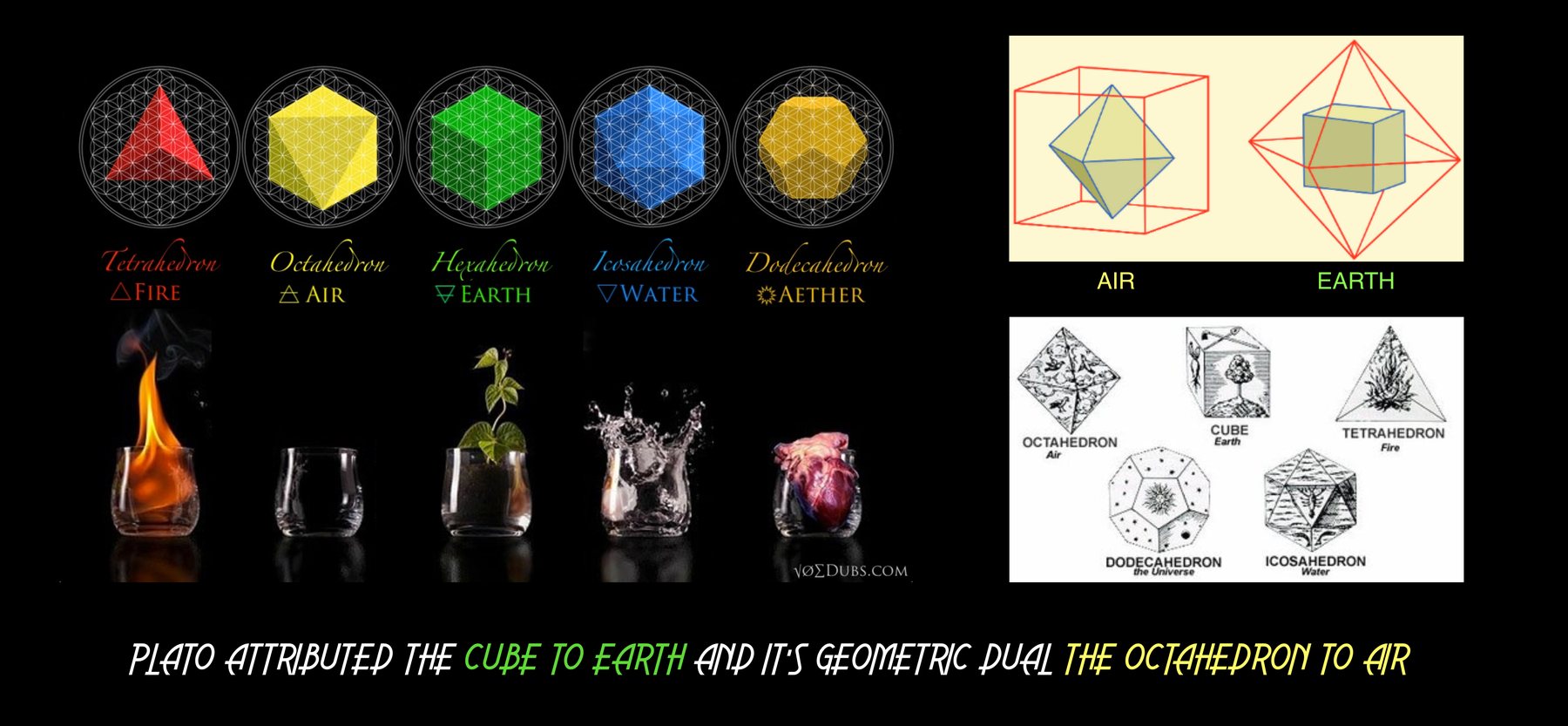
The solids in Plato are not classroom toys. They are a language for matter. Earth, air, fire, water, and the heavenly order are tied to shape, as if geometry sits underneath sensation.
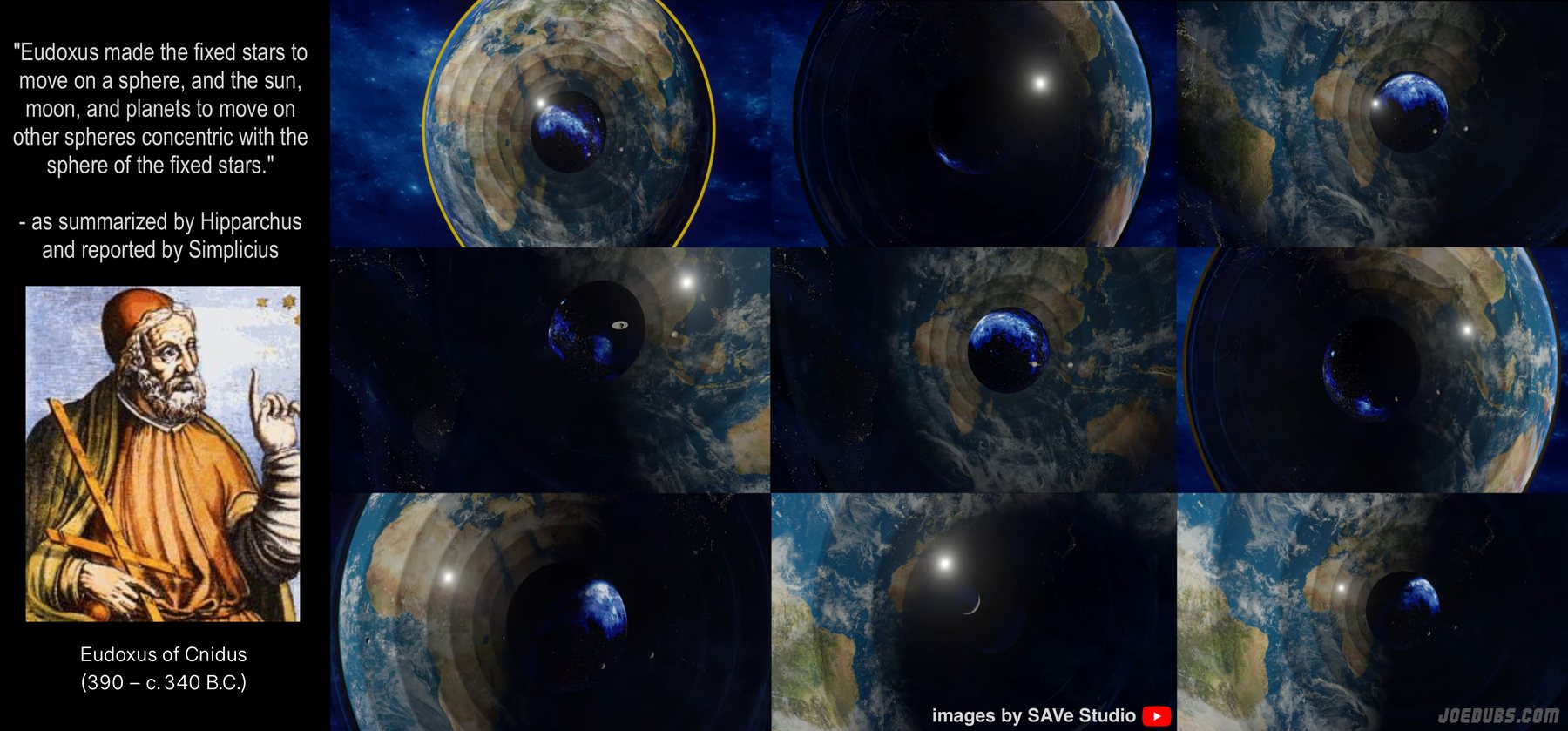
Eudoxus turns cosmic order into machinery. Concentric spheres explain wandering lights without abandoning the intuition that the heavens are nested around the world.
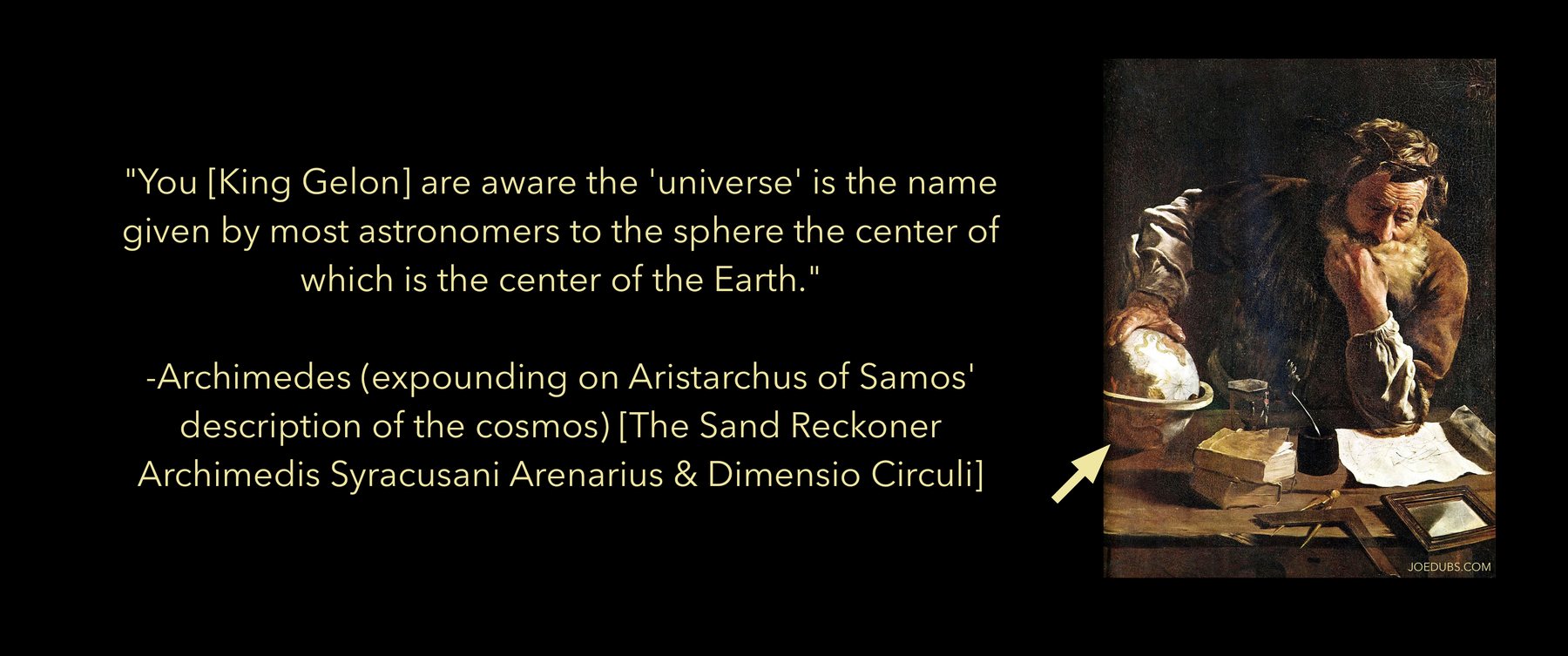
By the time Archimedes reports Aristarchus, Greek astronomy has become a debate over scale. The center can move in theory, but the old spherical architecture remains the grammar everyone is speaking.
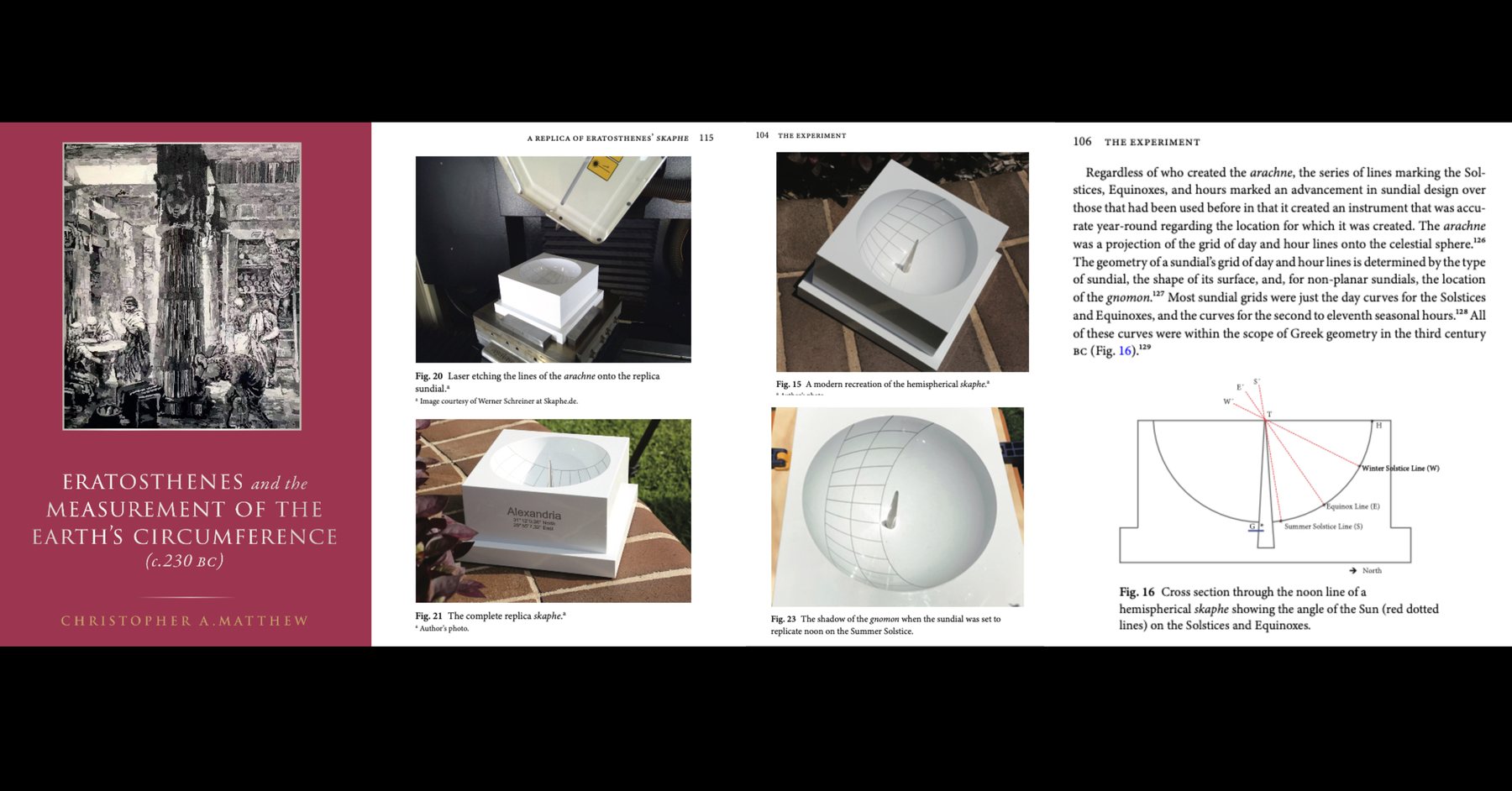
Eratosthenes brings the sky down to an instrument: shadow, bowl, angle, distance. The skaphe is small, but it lets the heavens leave a measurable mark on the Earth.
Roman, late antique, and the central earth
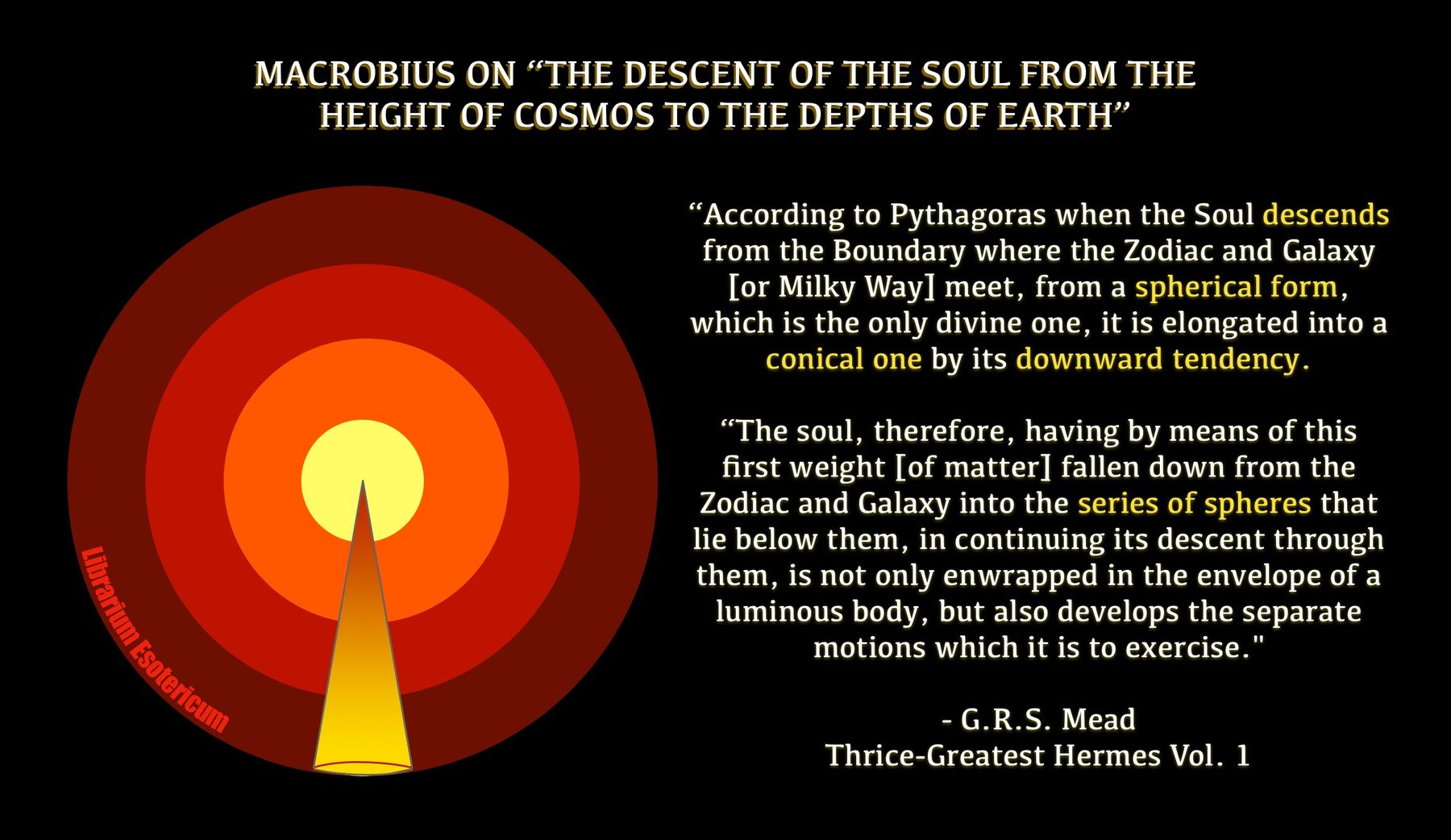
Cicero’s Dream of Scipio turns astronomy into moral ascent. The soul looks down through ordered spheres toward the Earth, and the human world becomes small because the heavens are so arranged.
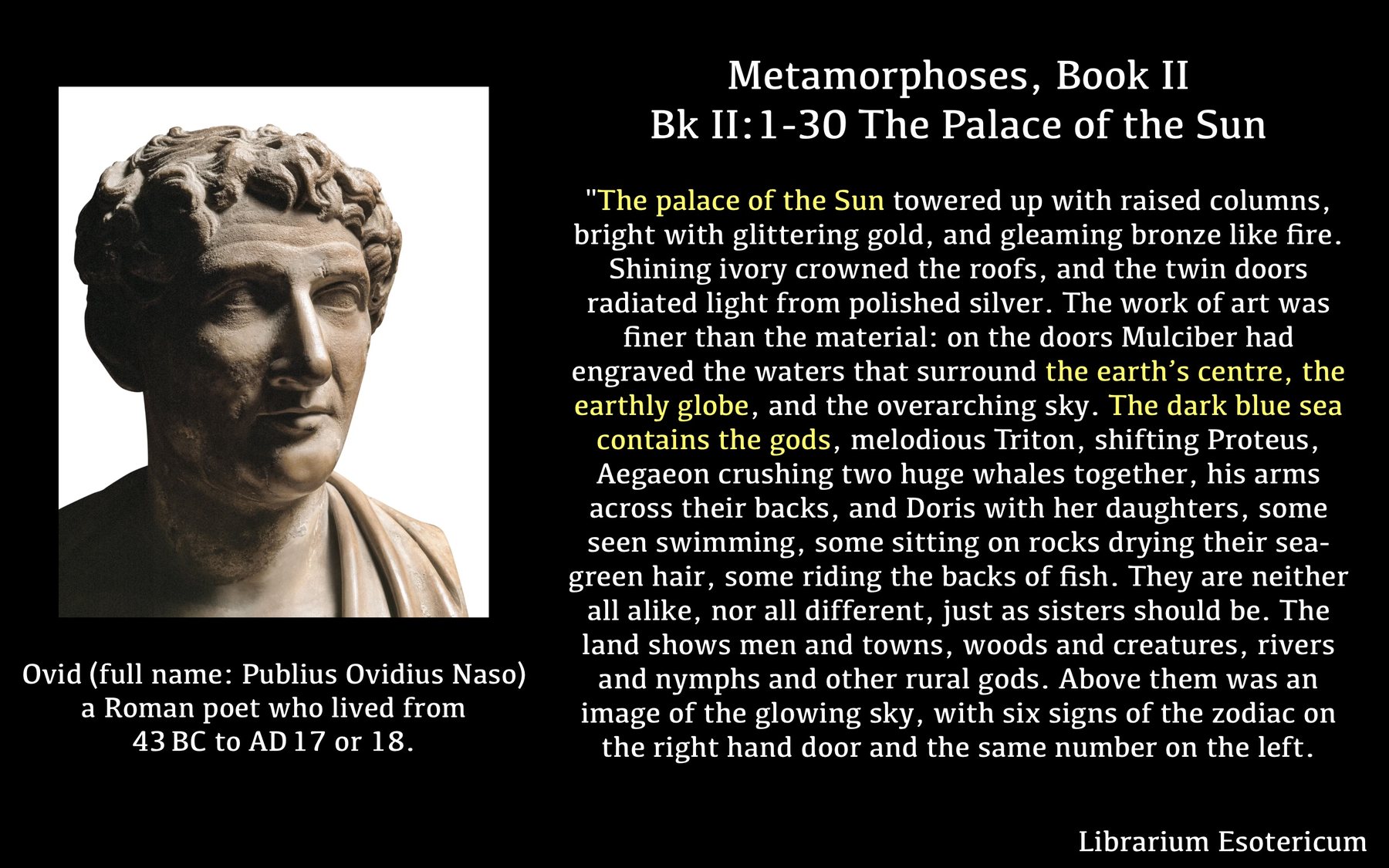
Ovid gives the cosmos a dramatic address. The palace of the Sun stands inside a literary universe where gods, stars, seasons, and earthly regions are arranged like a court.
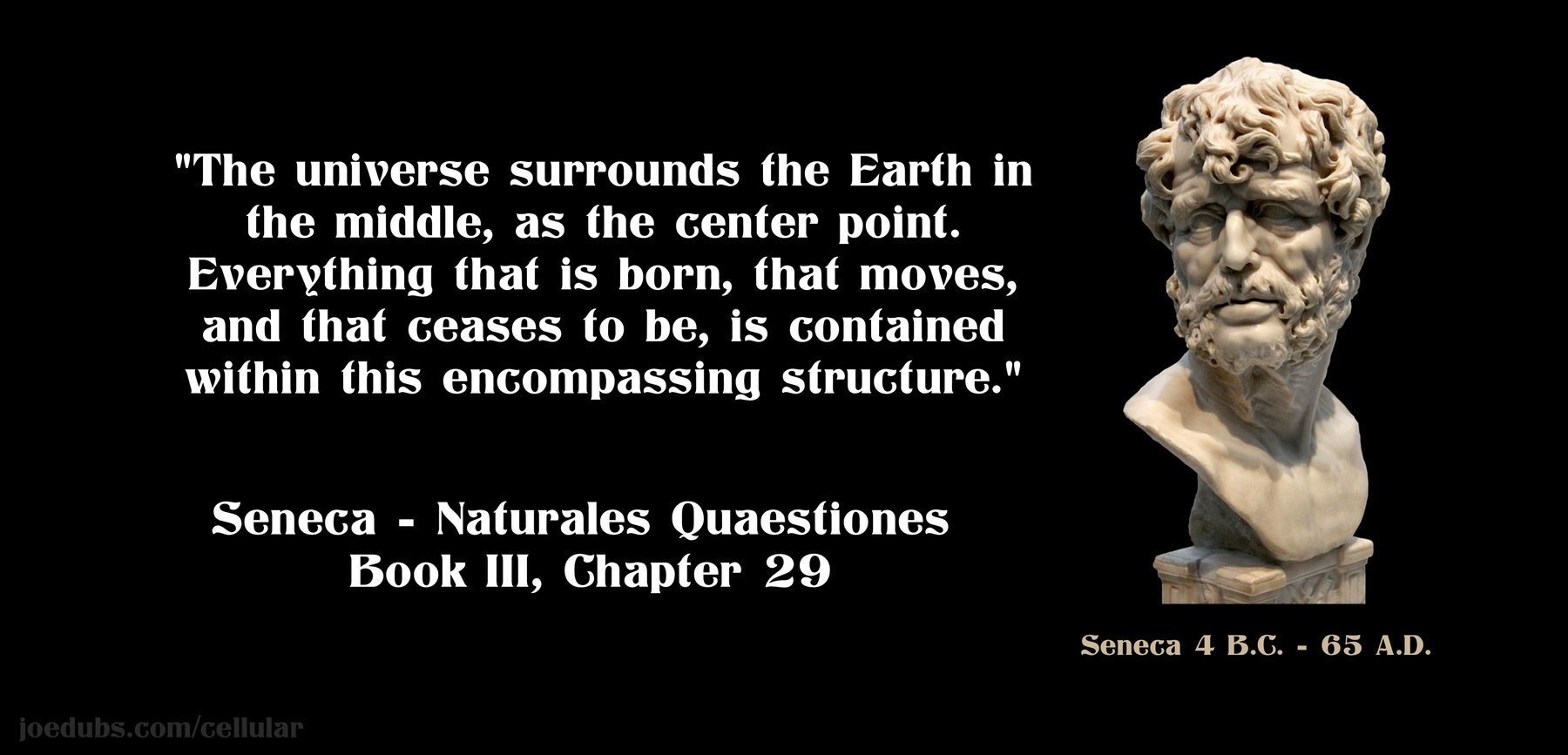
Seneca keeps the philosophical language tight: the Earth occupies the middle, and the surrounding heavens define its place. The cosmos is a centered system before it is a scientific diagram.
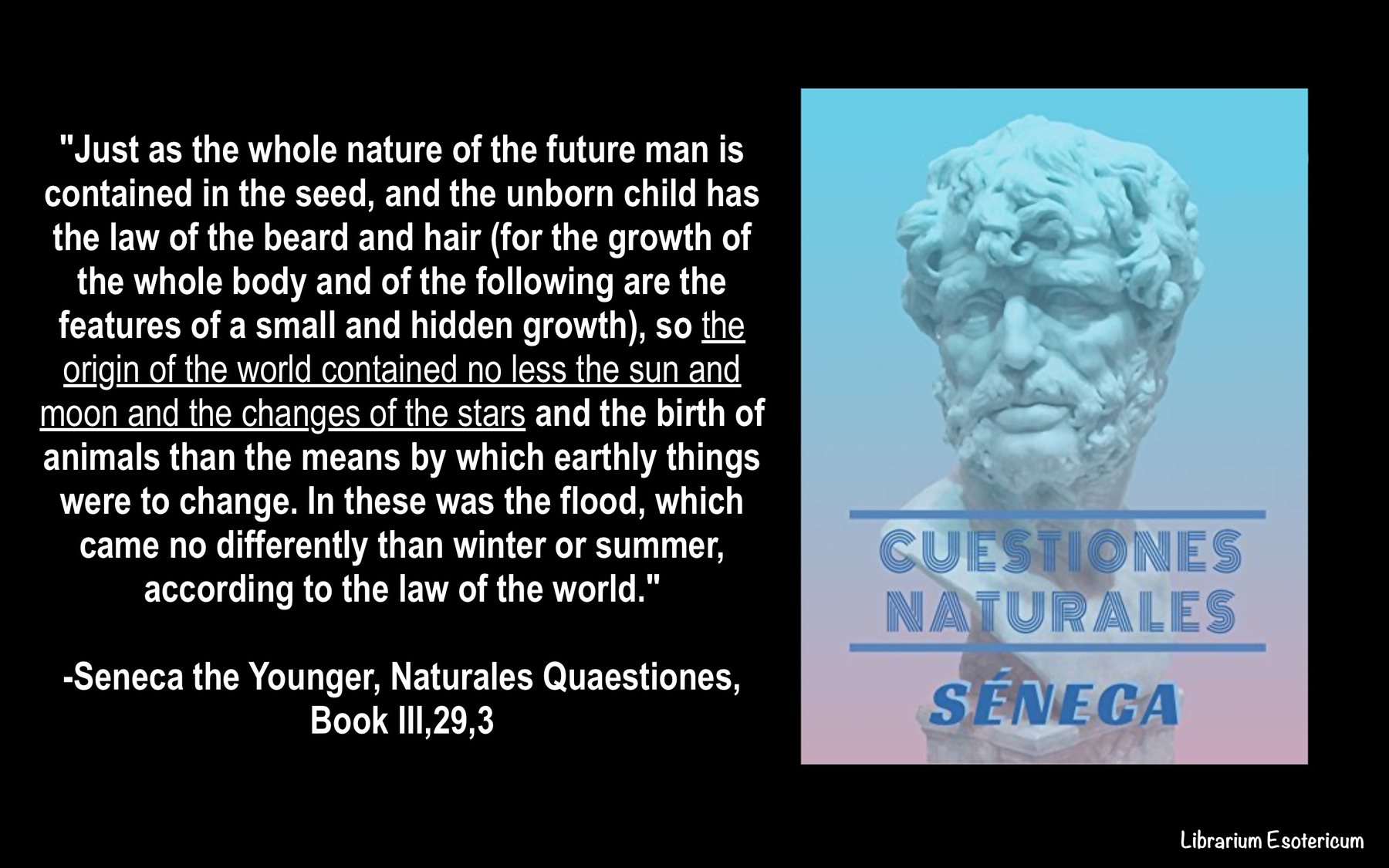
In Naturales Quaestiones, the heavens are not loose lights scattered into nothing. They belong to a contained order. Seneca writes as a natural philosopher, but the old enclosure is still there.
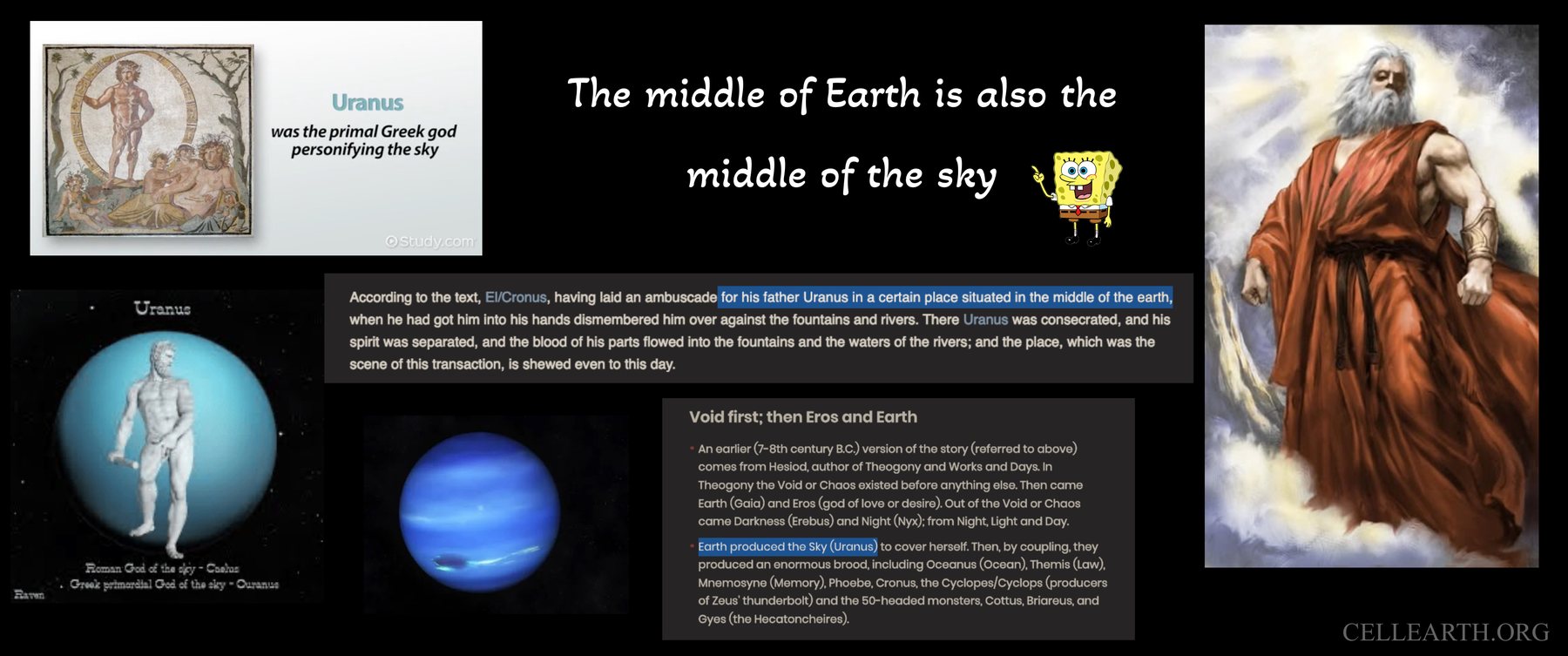
This image brings the Greek sky-god back into the structure itself. Earth is not floating in a blank void; it is held in relation to the surrounding heaven.
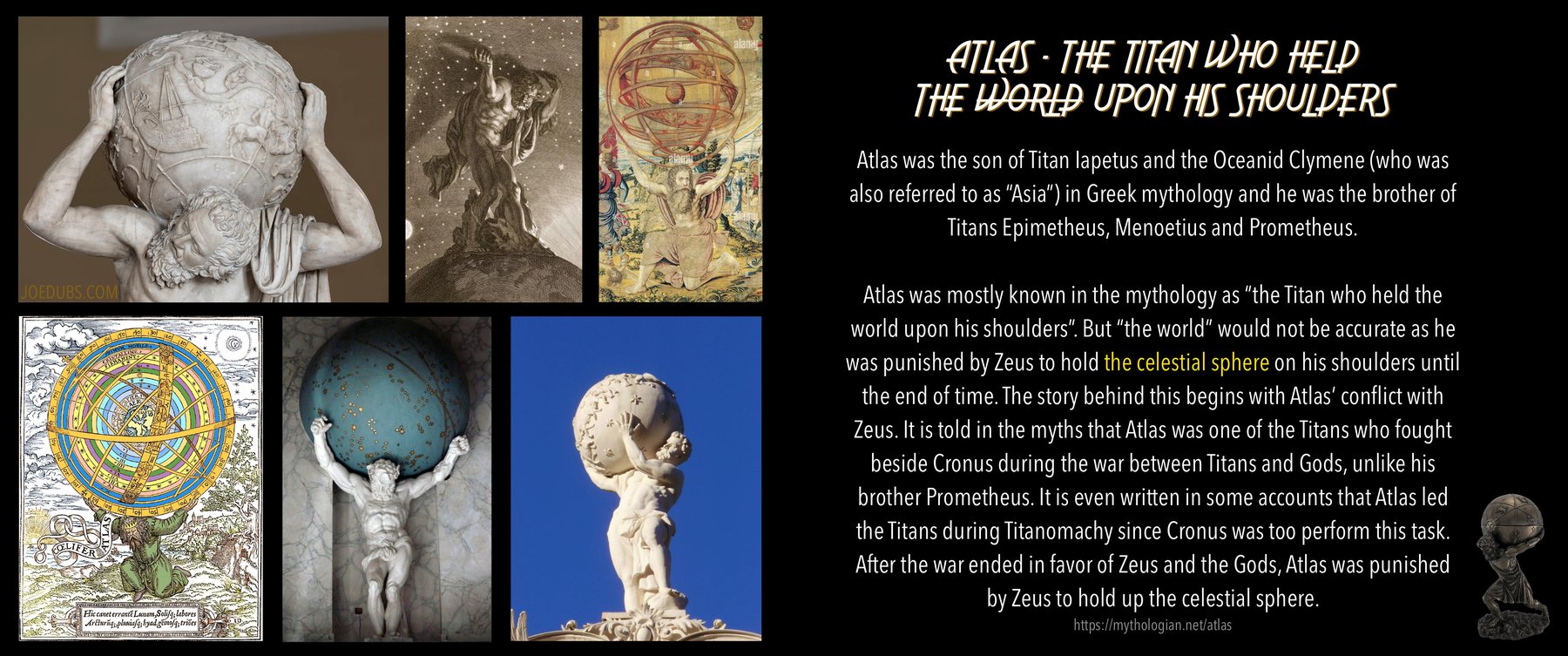
Atlas is generally known now as the figure who carries the world on his back, but the older wording and the artwork point somewhere else. In the classical sources, Atlas carries the heavens, the celestial sphere, not a planet. The inversion became easier once “world” started narrowing from cosmos to Earth. Read the older sense back into the image and the burden changes: Atlas is not holding up the ground beneath our feet. He is bearing the sky around it.
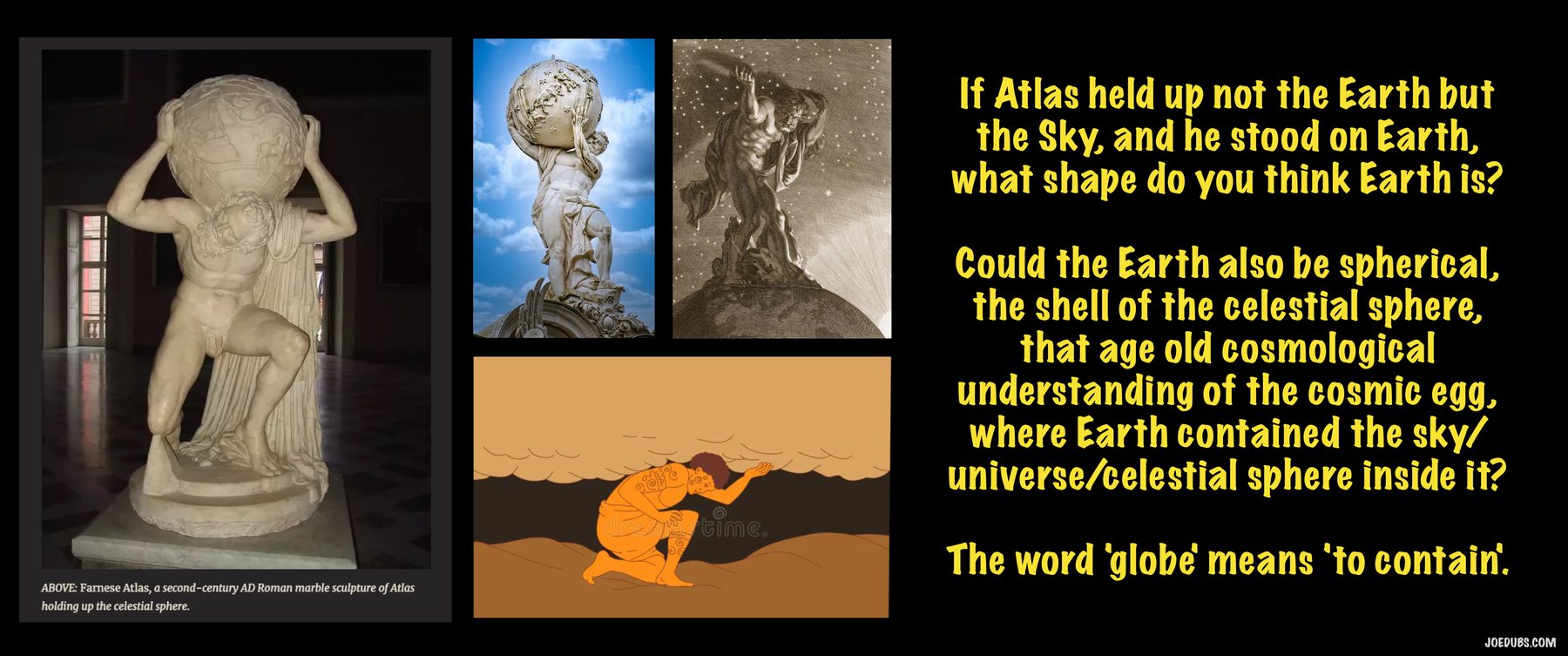
Once Atlas is read cosmologically, the body becomes a measuring device. The shoulders, sphere, and ground form a human diagram of the world’s upper boundary.
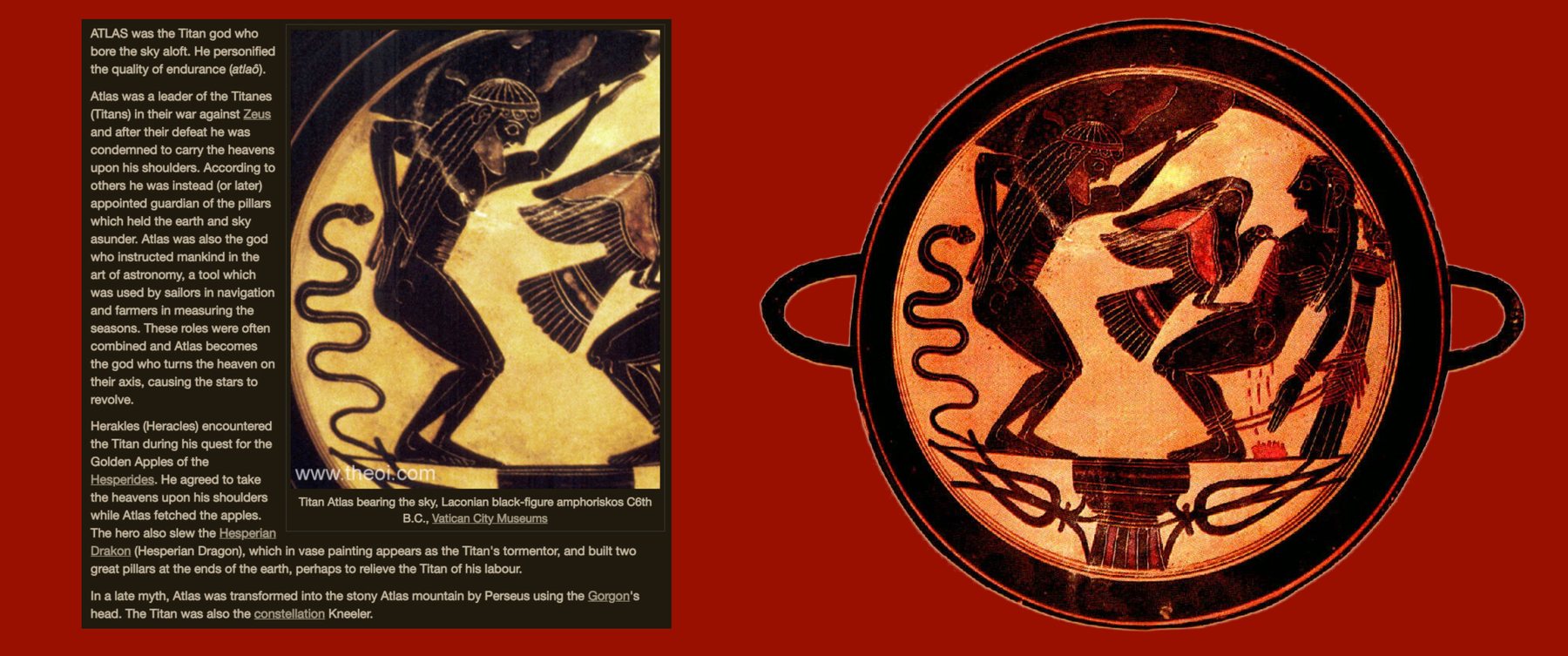
Atlas and Prometheus belong to boundary stories. One holds the heavens; the other brings fire into the human zone. Together they mark the line between cosmic order and human theft.
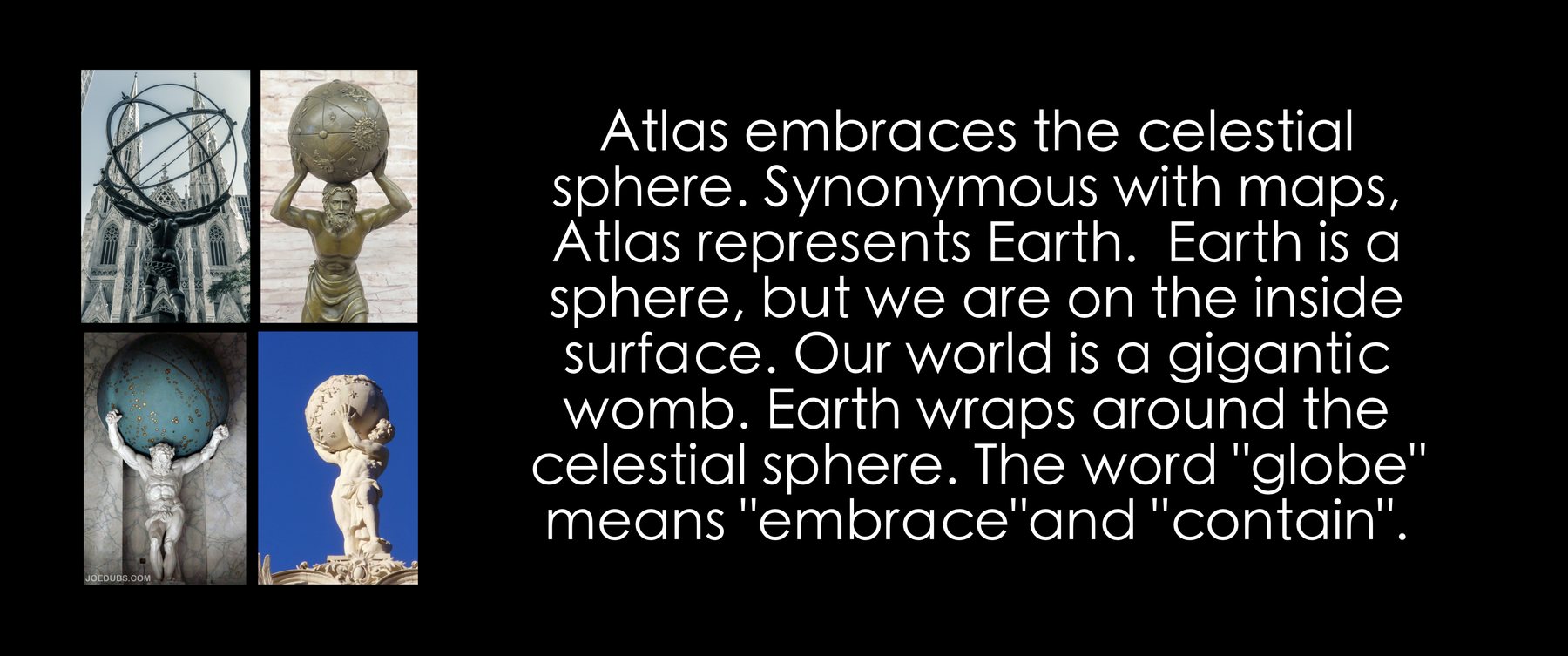
This plate makes the inside-surface reading explicit. The interesting part is not the mythic strongman. It is the old habit of imagining the world as an interior under a curved heaven.
Biblical, Gnostic, and womb cosmologies
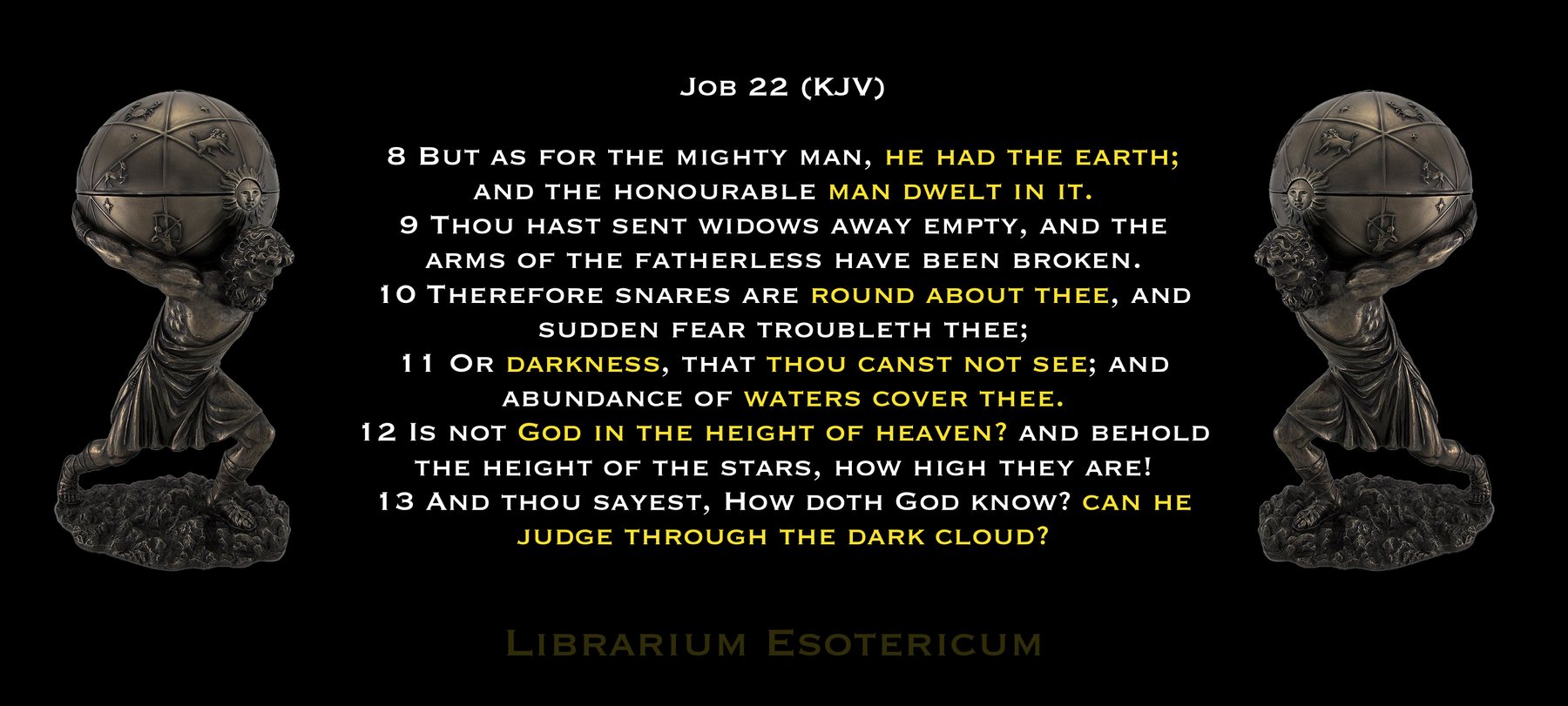
Job’s language is full of weight, height, depth, and boundary. The heavens are not abstract space. They are a raised region with structure, distance, and a kind of terrifying architecture.
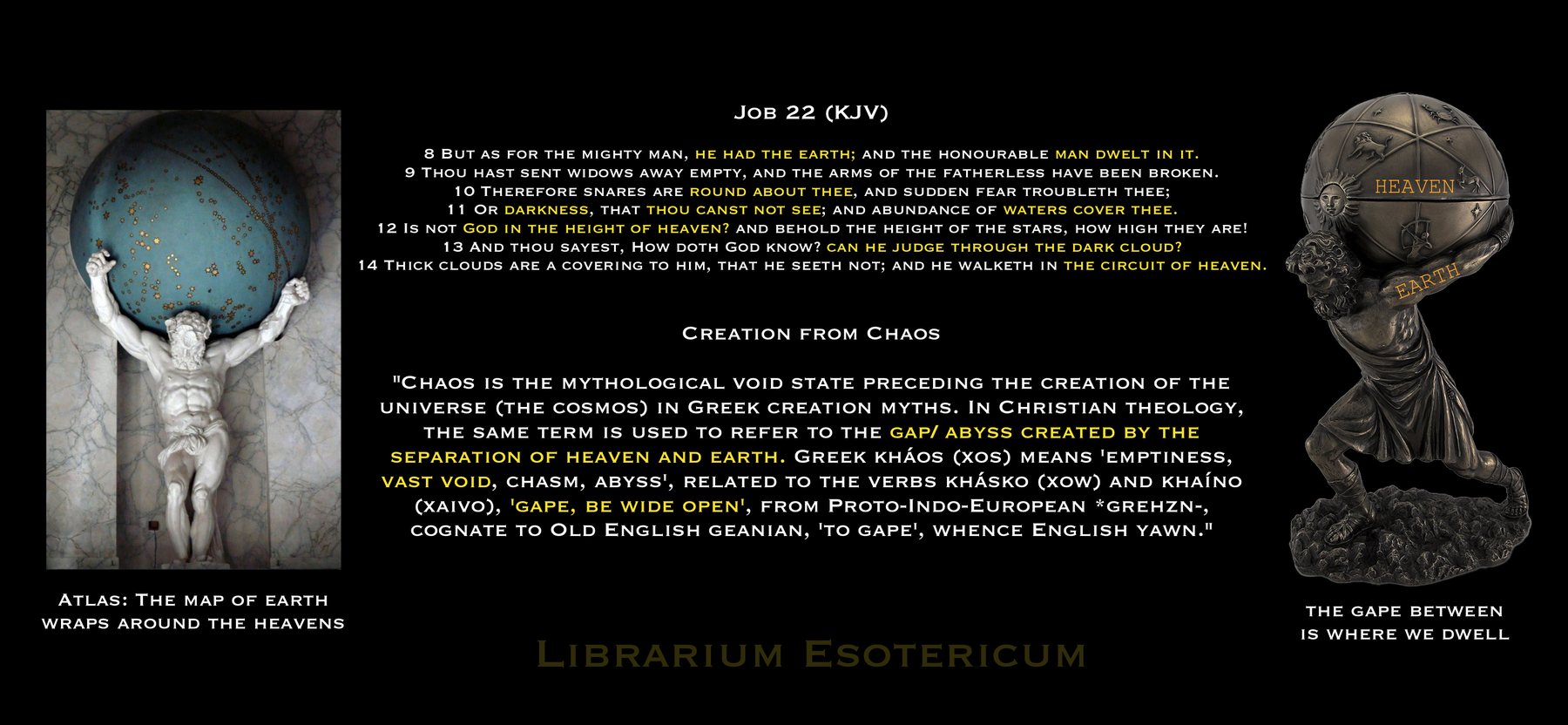
Creation appears as a gap, a mouth, a hollow, an interval between powers. The old world is spatial before it is theoretical.
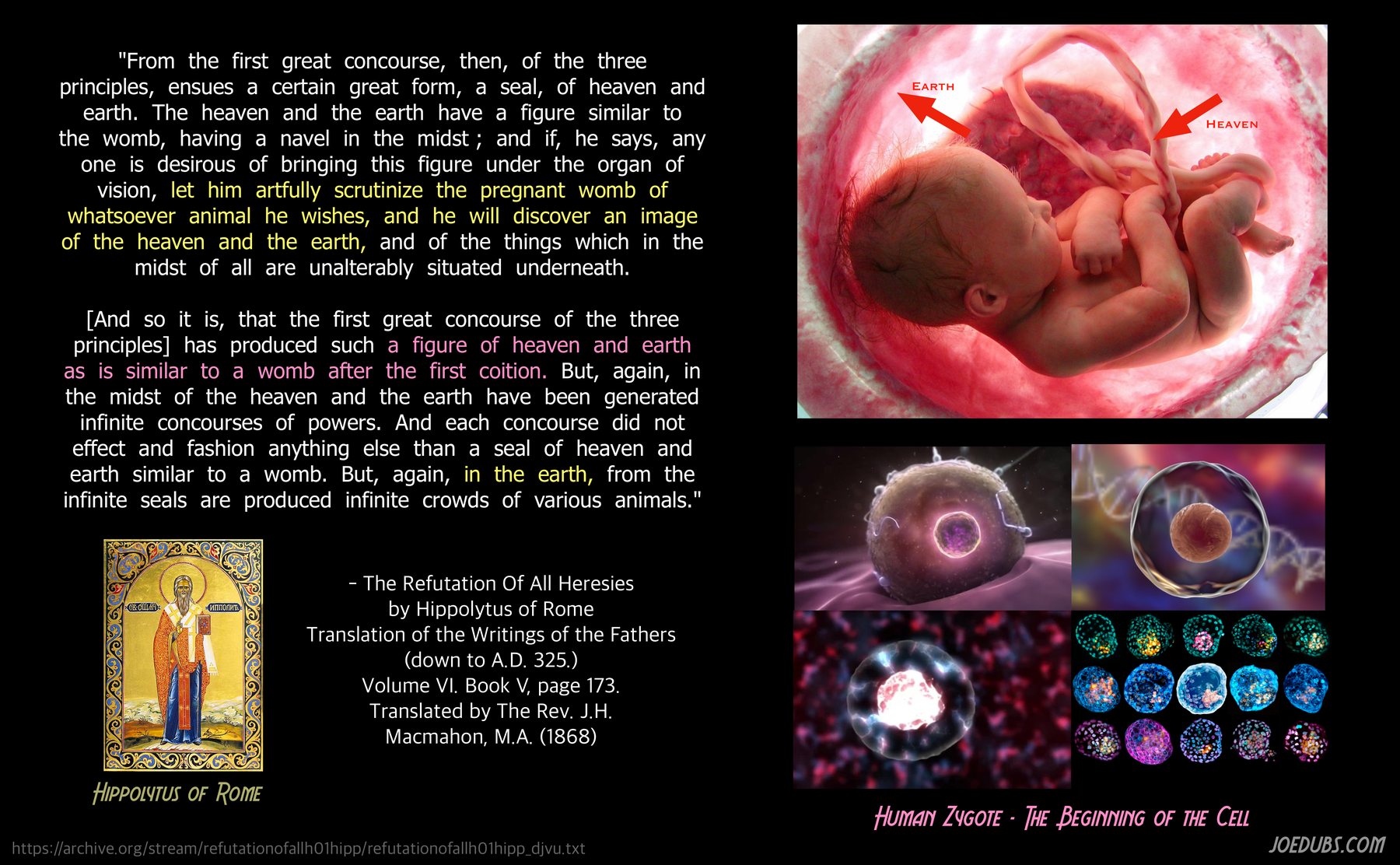
Hippolytus preserves strange cosmological language from the heresiological record. The Earth becomes womb-like: a place of enclosure, generation, darkness, and emergence.
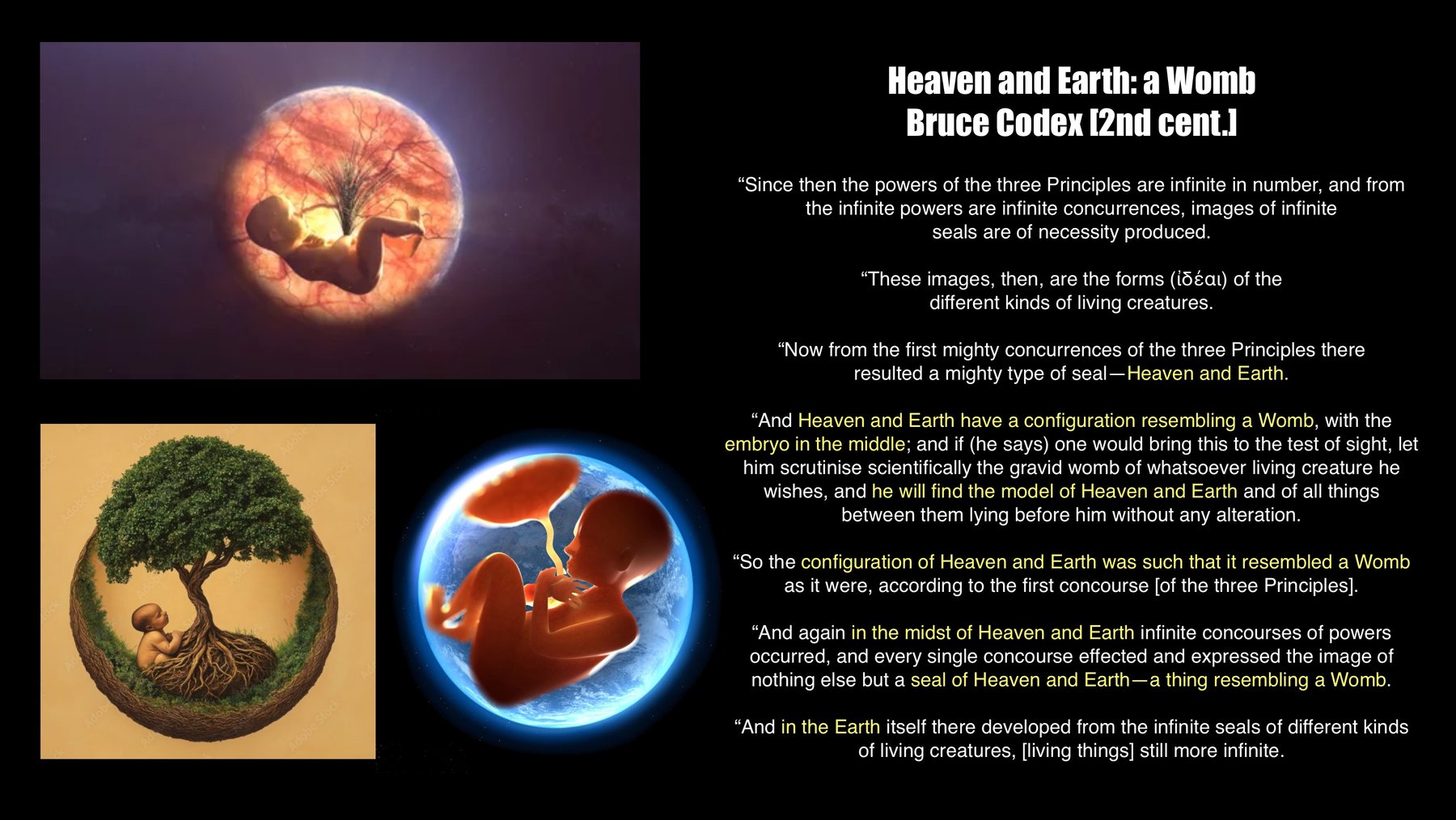
The Bruce Codex carries that womb imagery into a Gnostic register. Heaven and Earth are not merely two locations. They become a generative chamber, a world inside a world.
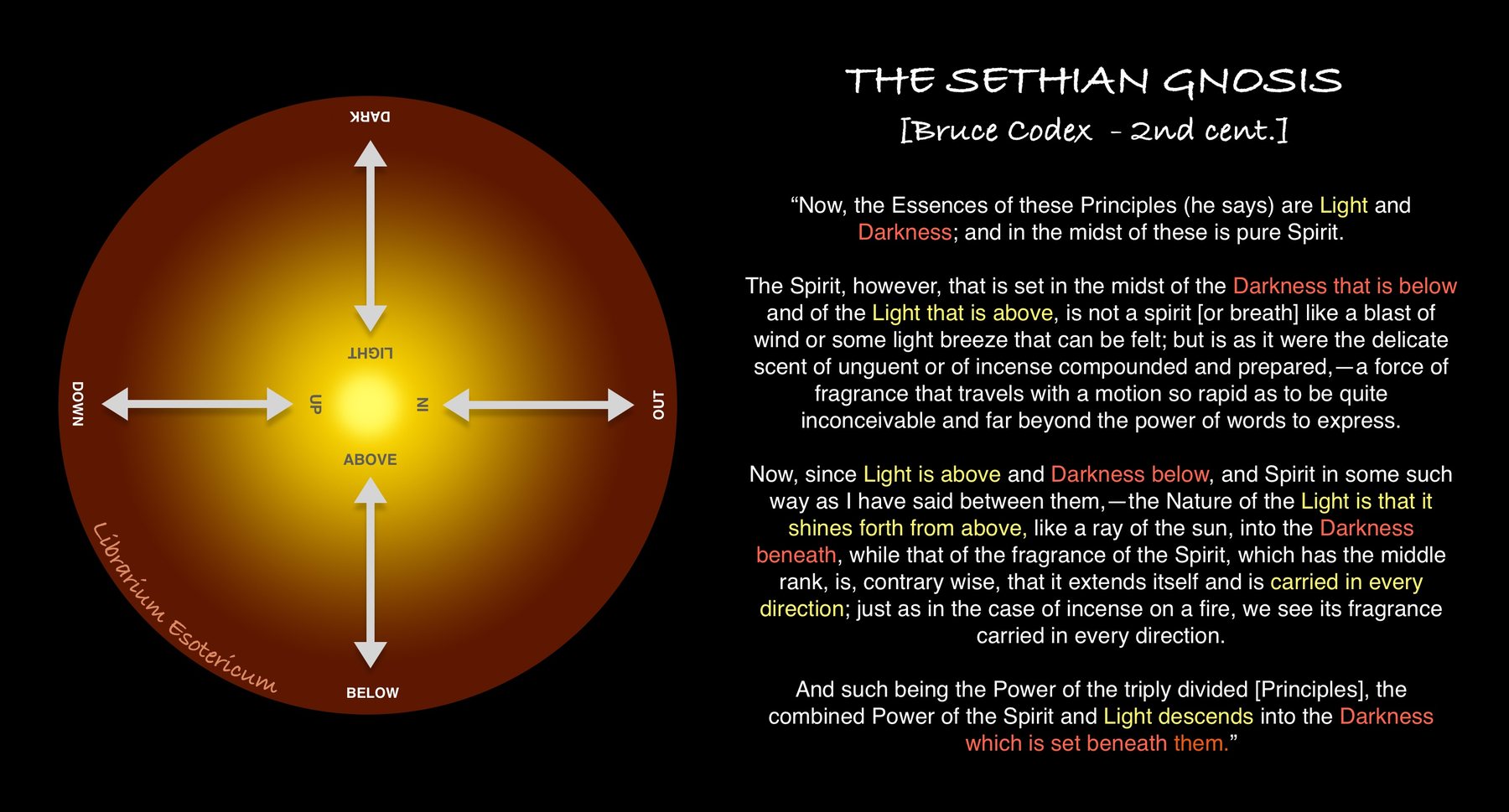
Light and darkness in this tradition are spatial forces. They divide the cosmos into zones, and the drama of salvation becomes a journey through those zones.
Medieval systems and Sacred Centers
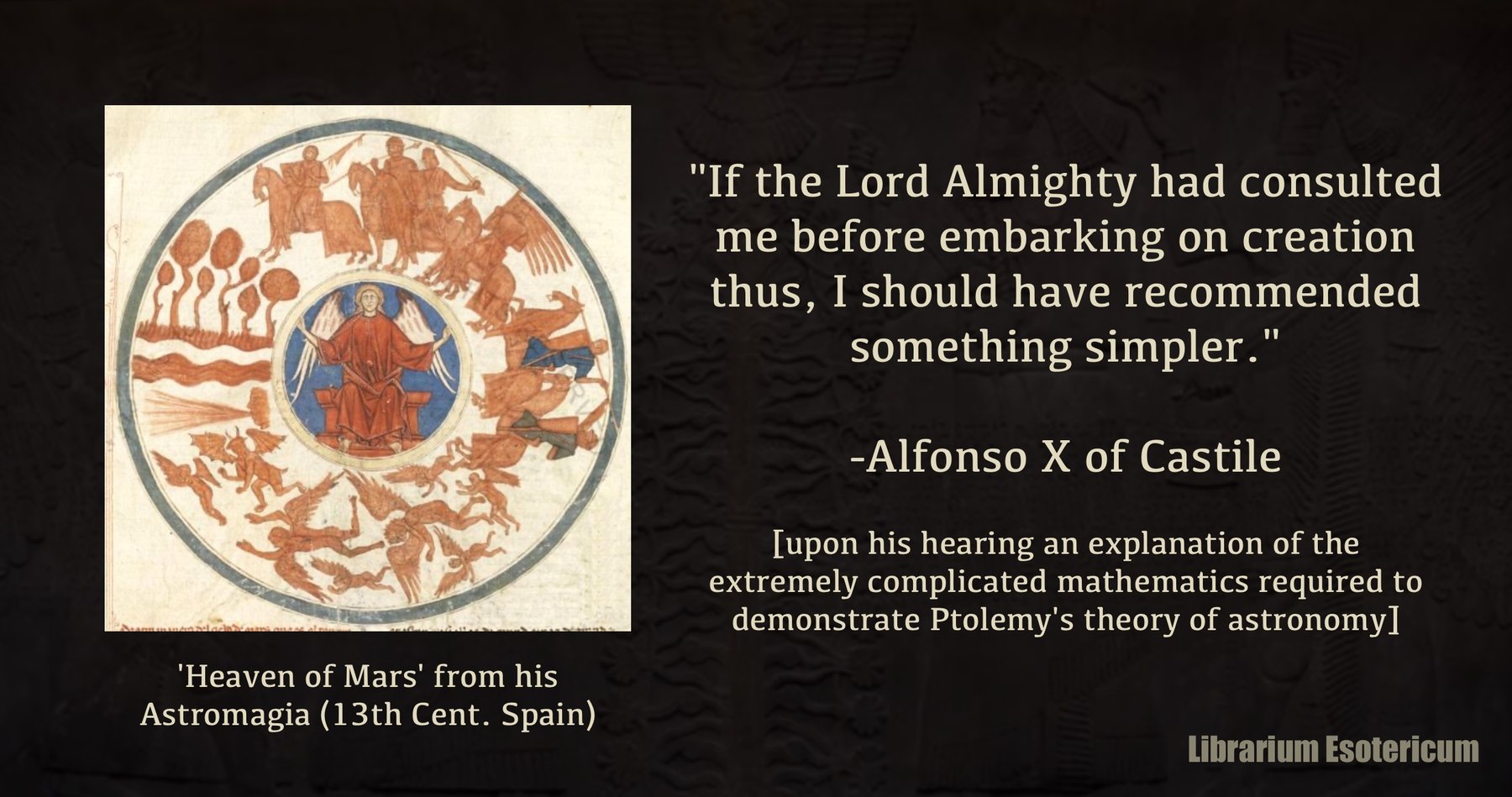
Alfonso X stands at the medieval hinge between inherited cosmology and organized calculation. Tables, translations, and court astronomy turn the old spheres into administrative knowledge.
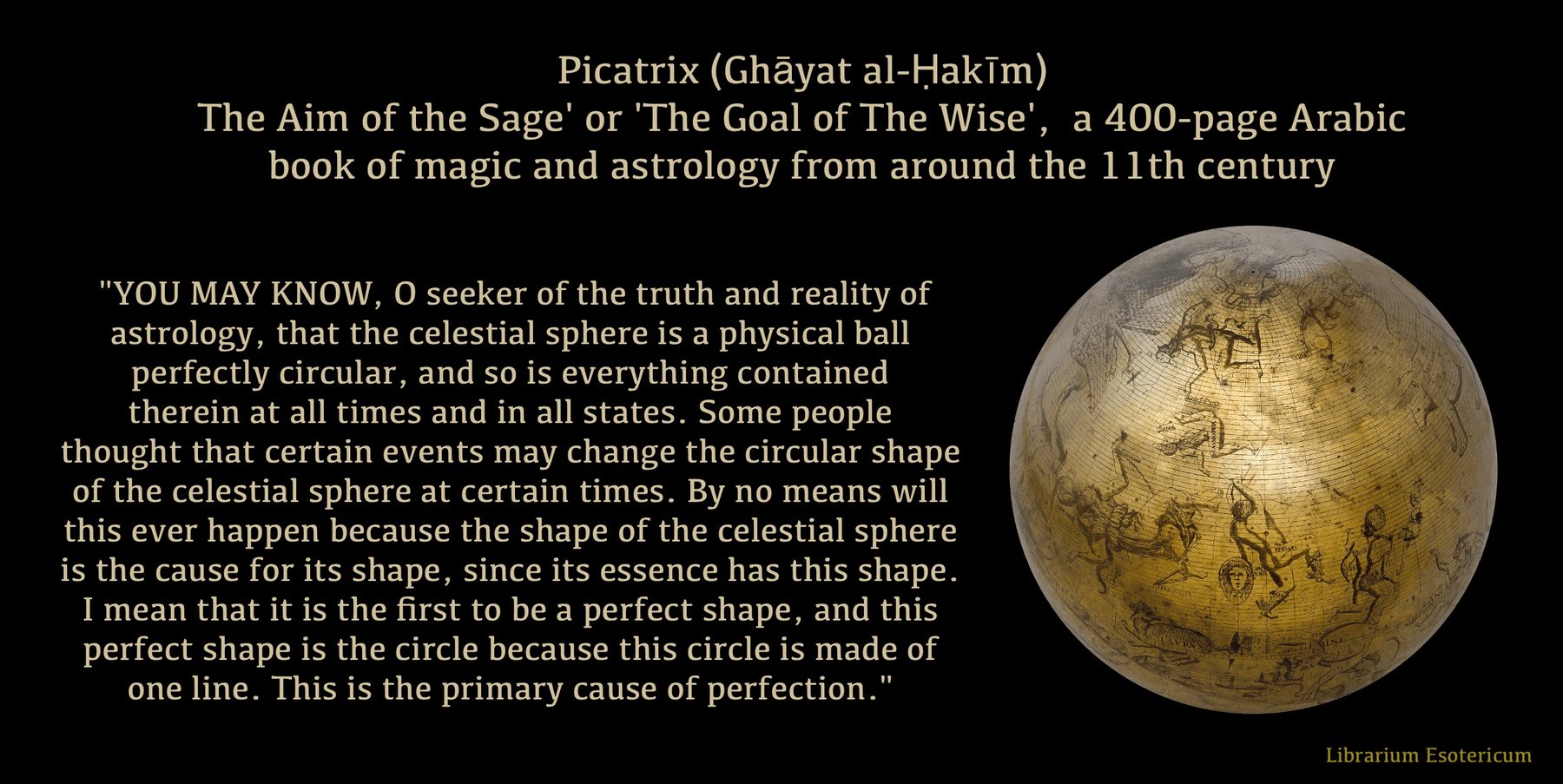
The Picatrix belongs to the magical-astronomical tradition where planets, images, metals, and timings all interlock. The celestial sphere is not passive scenery. It acts.
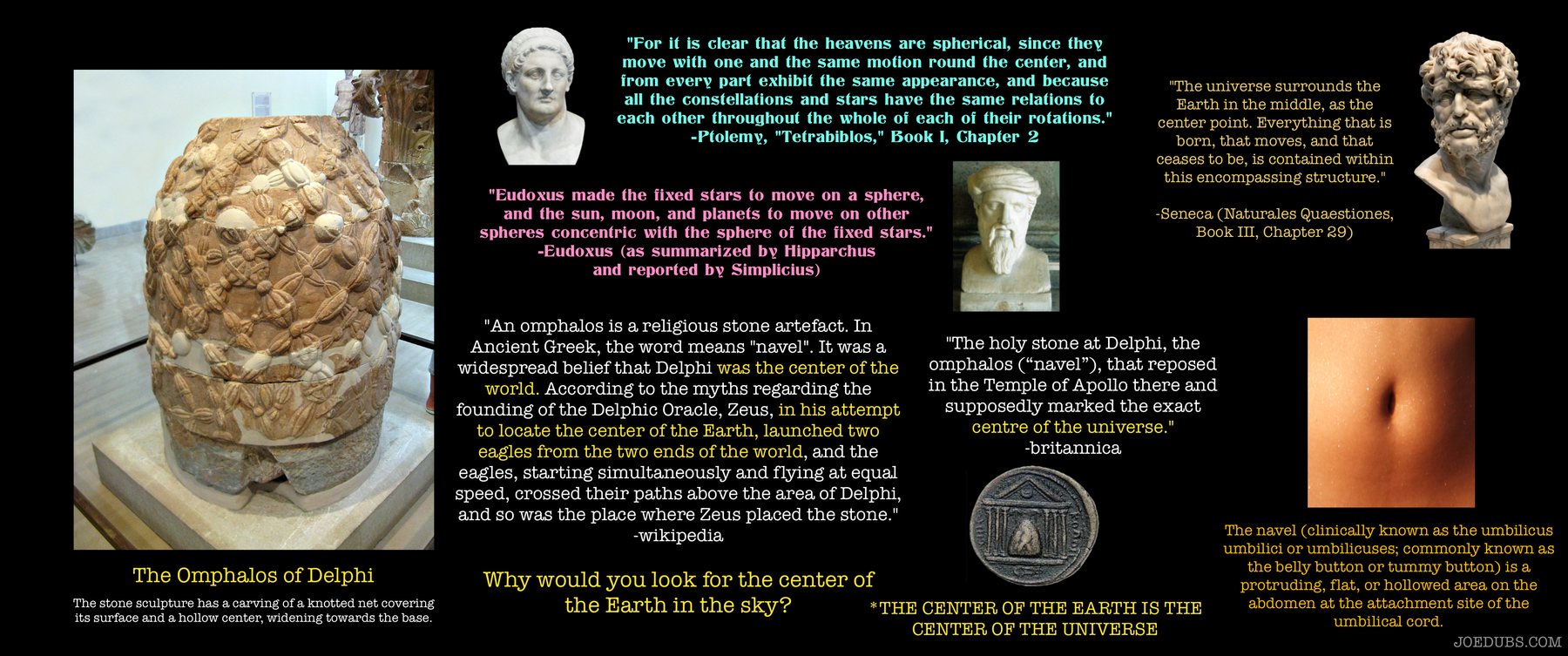
The omphalos image brings cosmology into sacred geography. Every world-system needs a center, and ancient cultures often made that center a stone, mountain, temple, or navel.
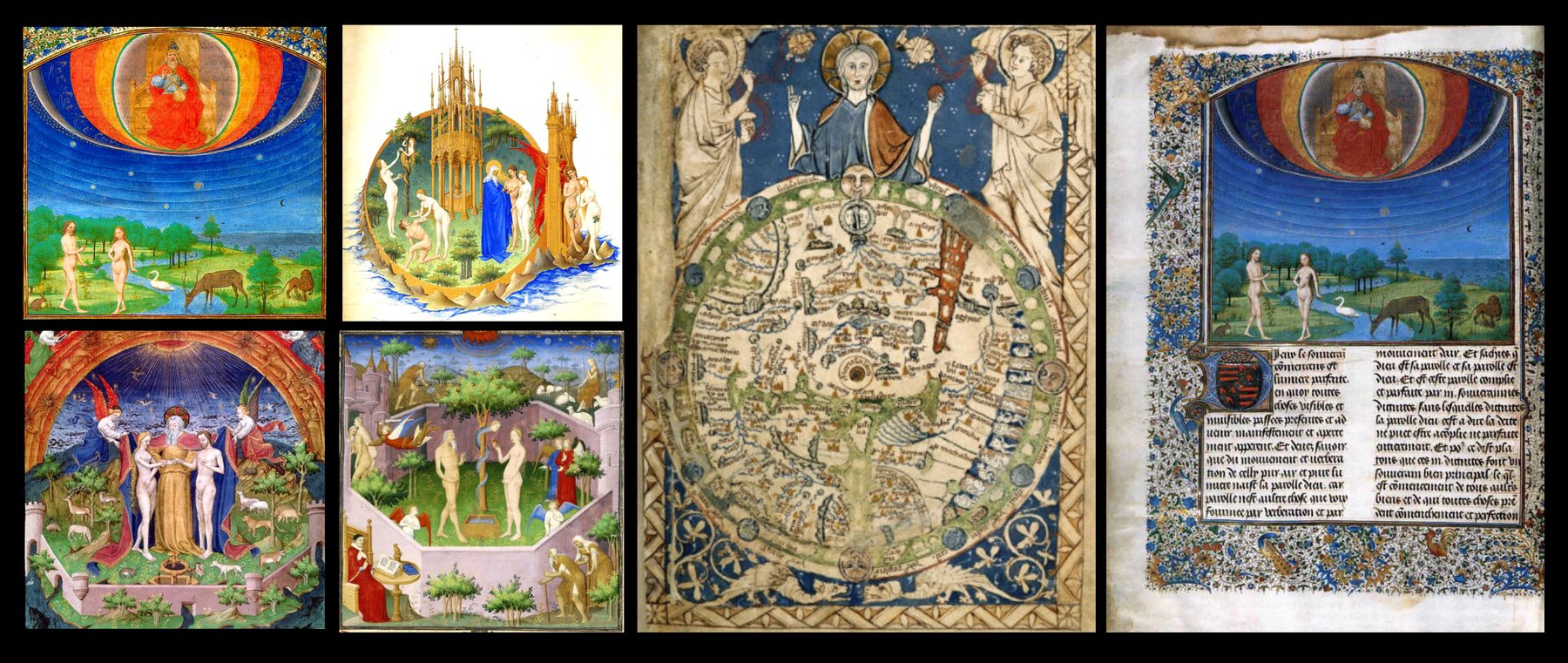
By the fifteenth century, the old enclosed cosmos could be drawn with technical confidence. The image looks late, but the instinct is ancient: a human world under a curved, ordered heaven.
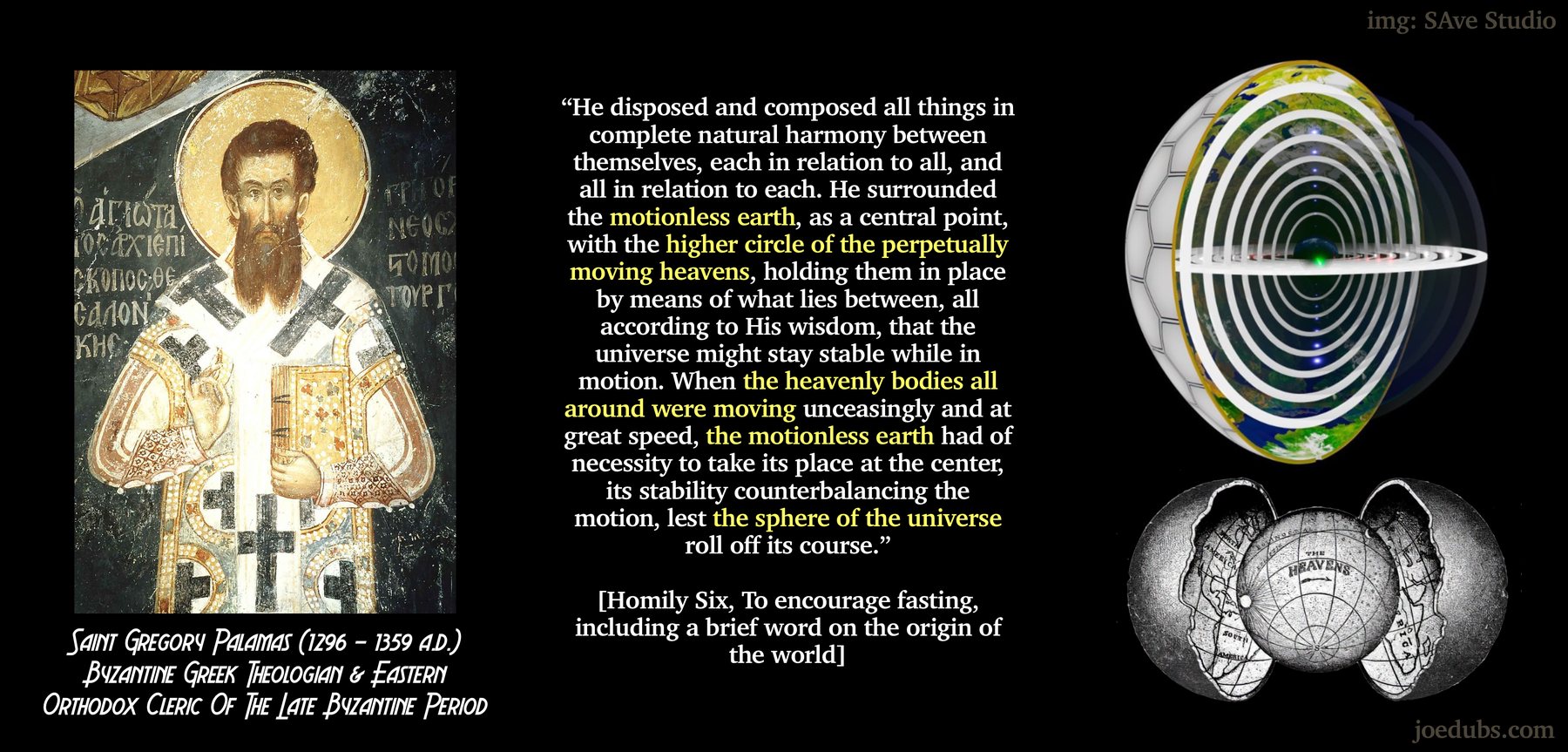
Palamas keeps the theological cosmos stable. Earth rests; the spherical heavens move. The point is not merely physics, but the moral and spiritual placement of humanity inside creation.
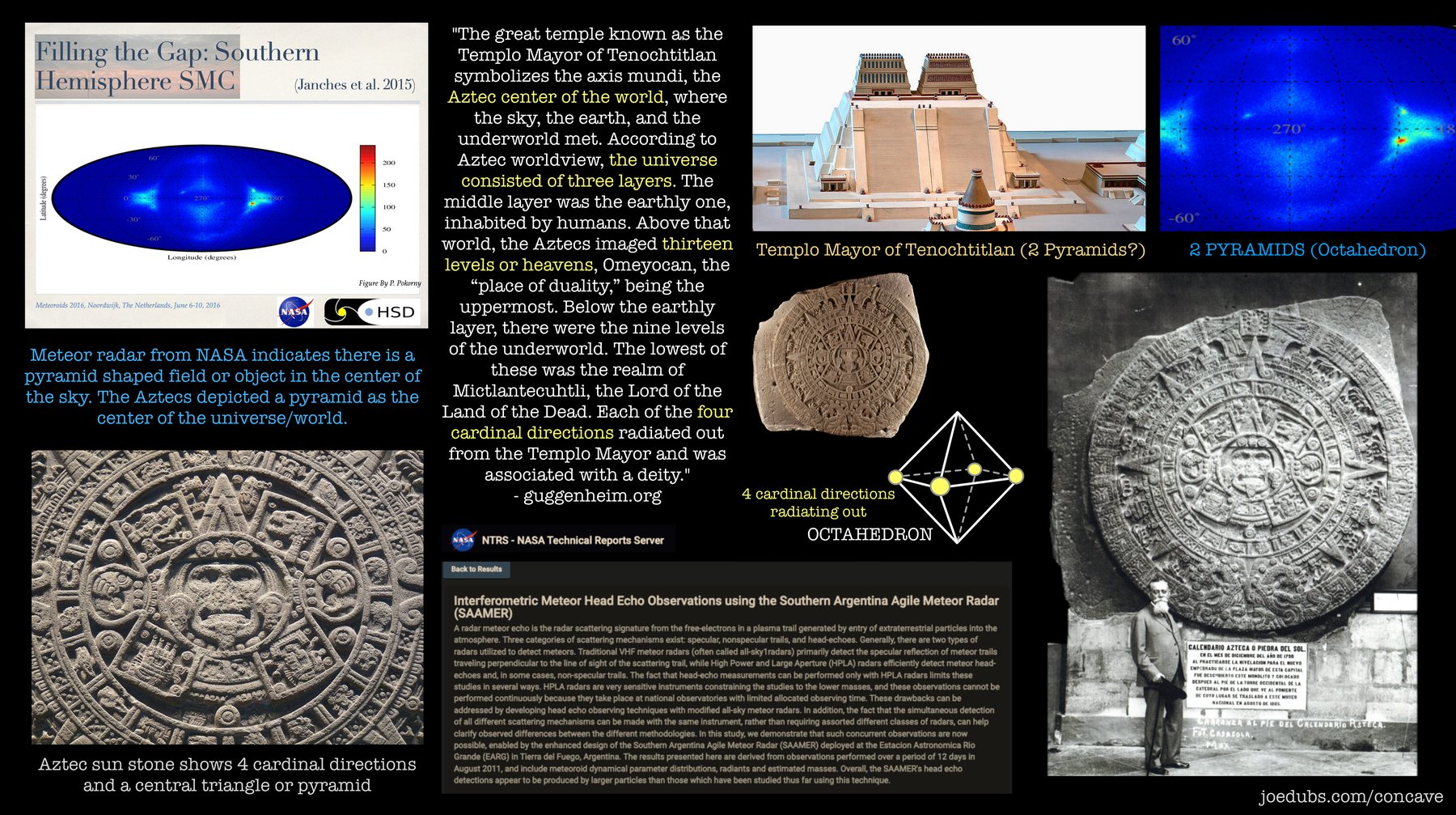
The Aztec temple image moves the center into ritual architecture. A pyramid is not just a building; it is a vertical model of world-order, with ascent, descent, sacrifice, sky, and underworld tied to a single place.
Hermetic and Esoteric Interiors
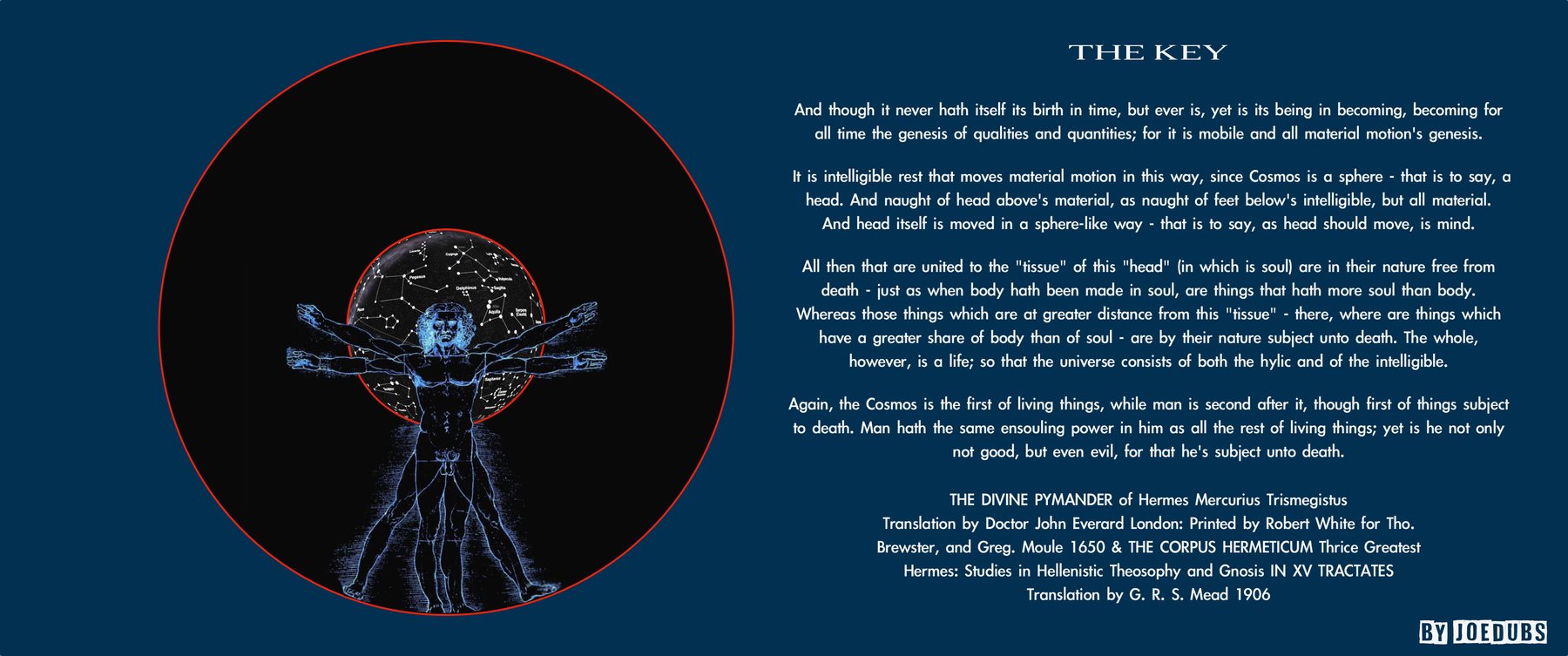
The Vitruvian figure turns the body into a cosmic scale. Man stands inside circle and square, not as a modern individual, but as a measure linking earth, heaven, proportion, and form.
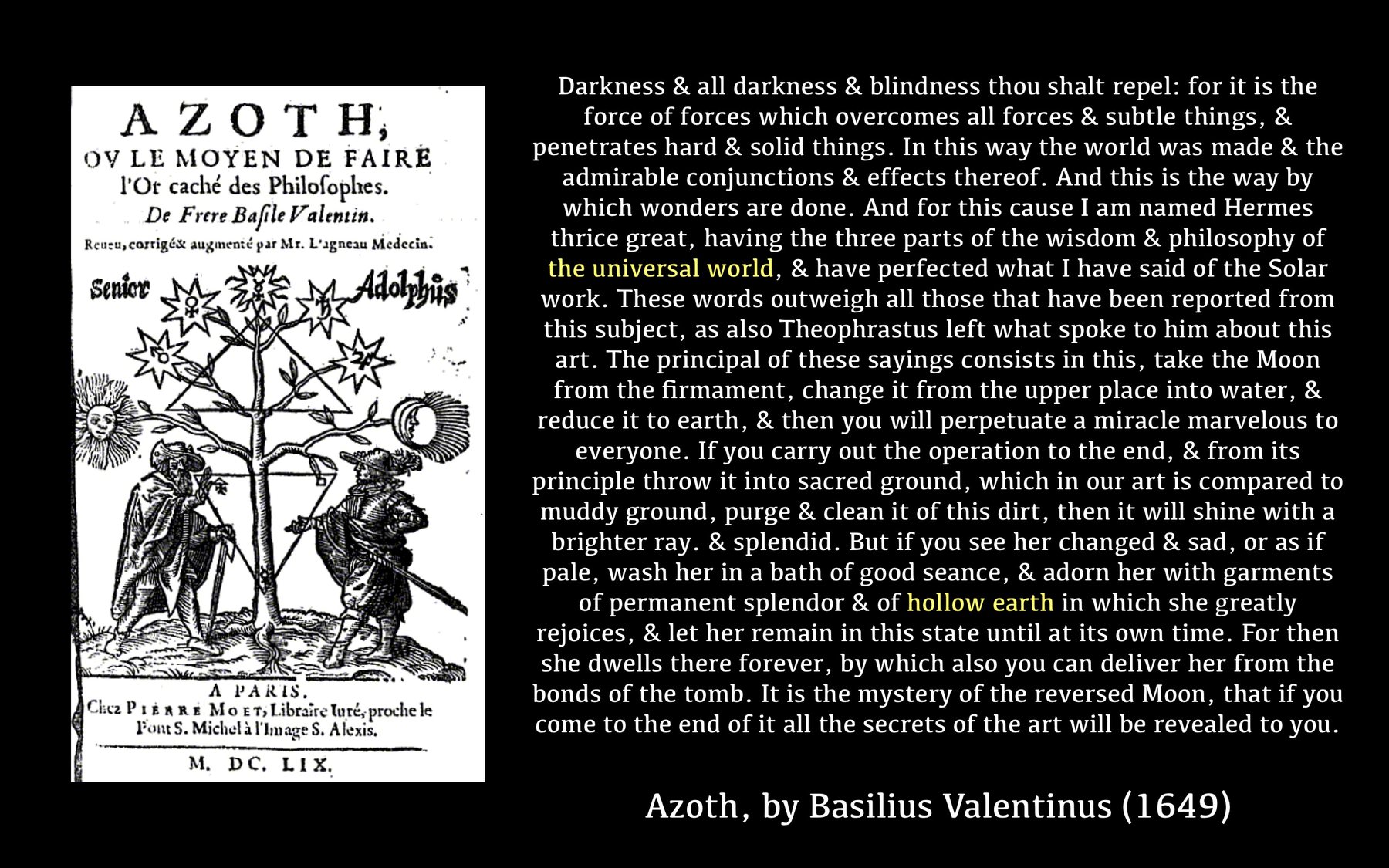
The Azoth image comes from the alchemical imagination, where the world is full of hidden circulation. Above and below mirror one another, and the interior becomes the place where transformation happens.
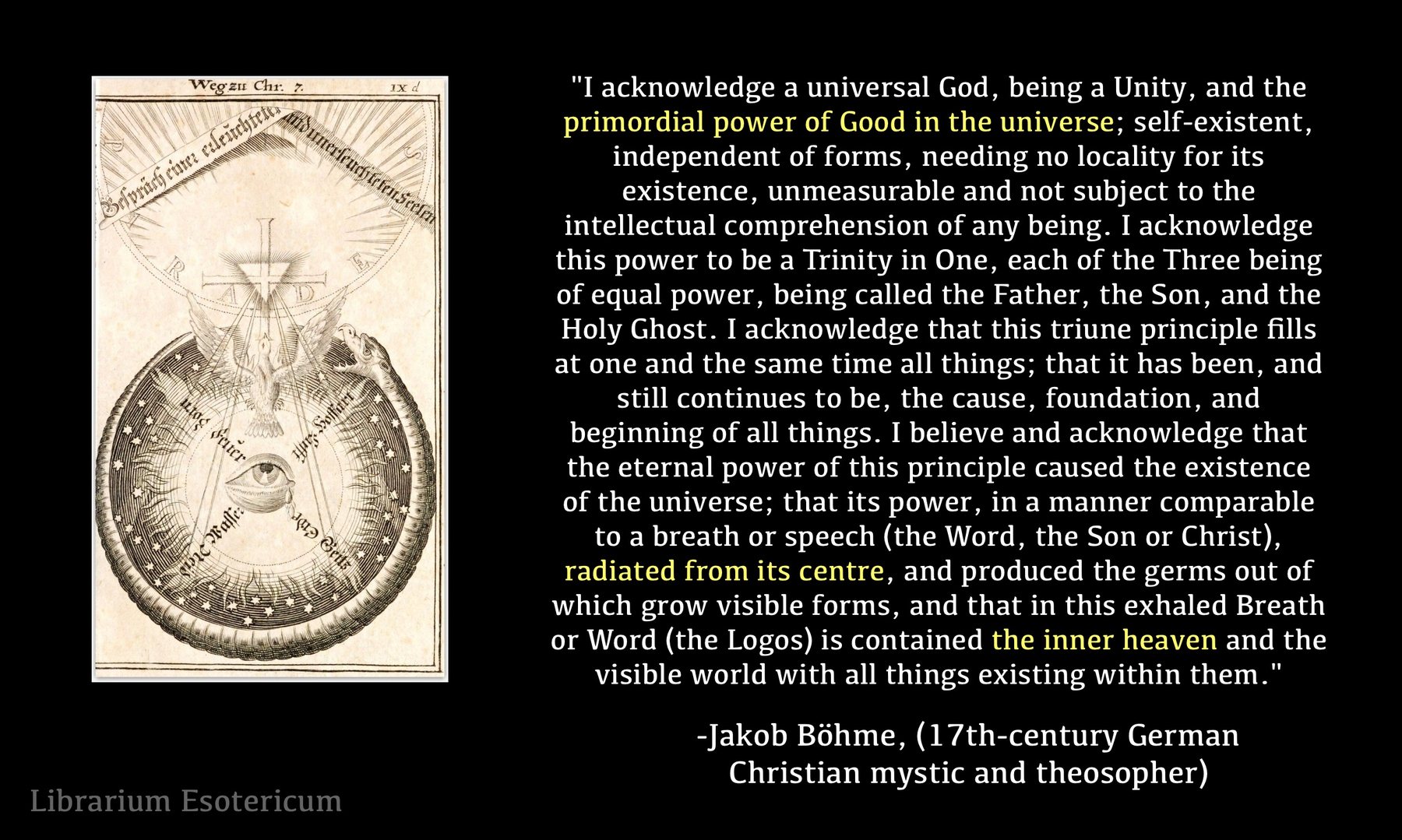
Boehme internalizes the cosmos without making it small. Heaven, hell, light, and darkness become states of being, but they still keep the shape of a world one can move through.
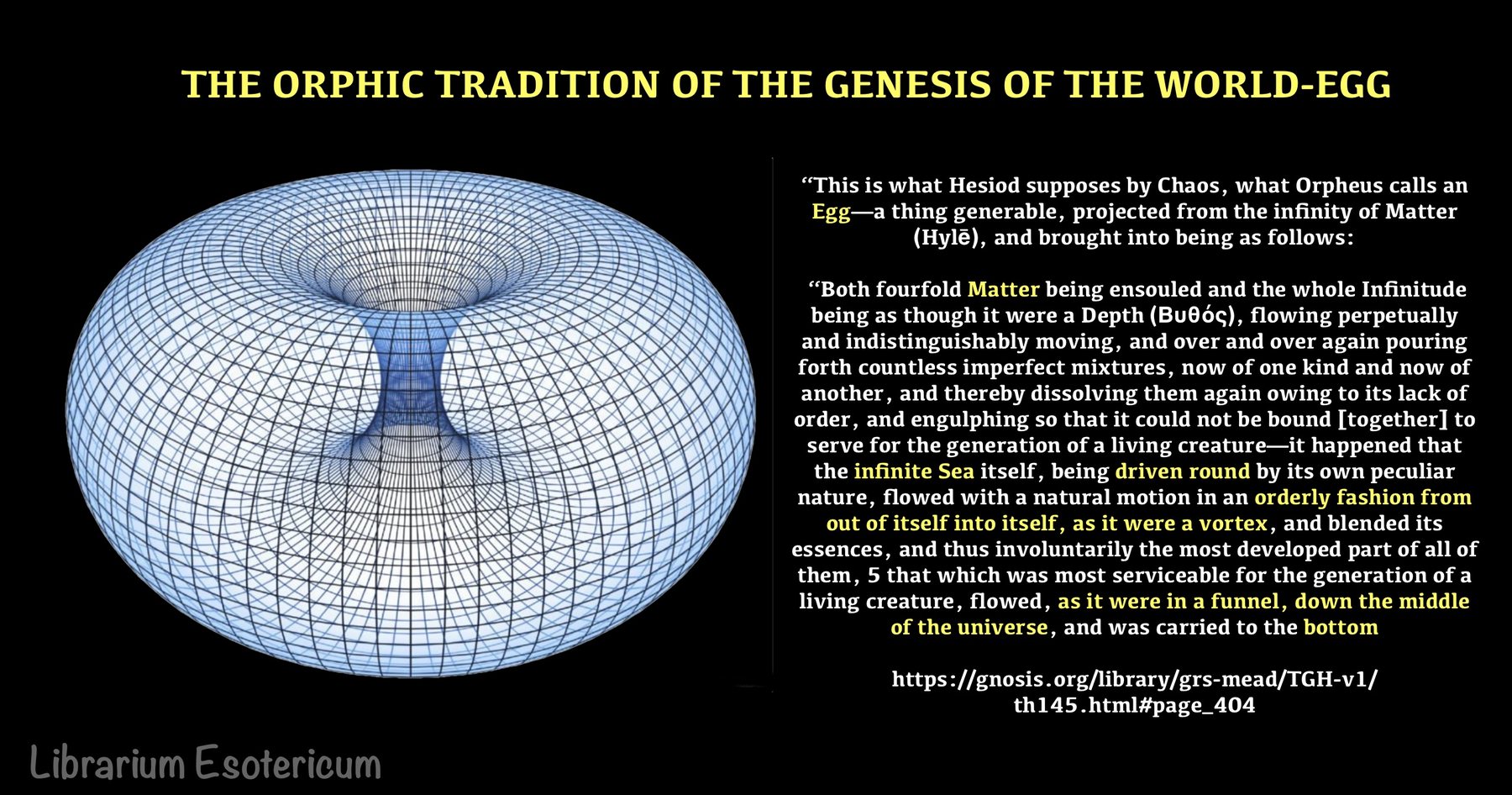
The vortex image belongs to a later mechanical imagination. The heavens turn as fluids, wheels, or whirling systems. The old spheres have started to move like machinery.
Northern Epics and folk memory
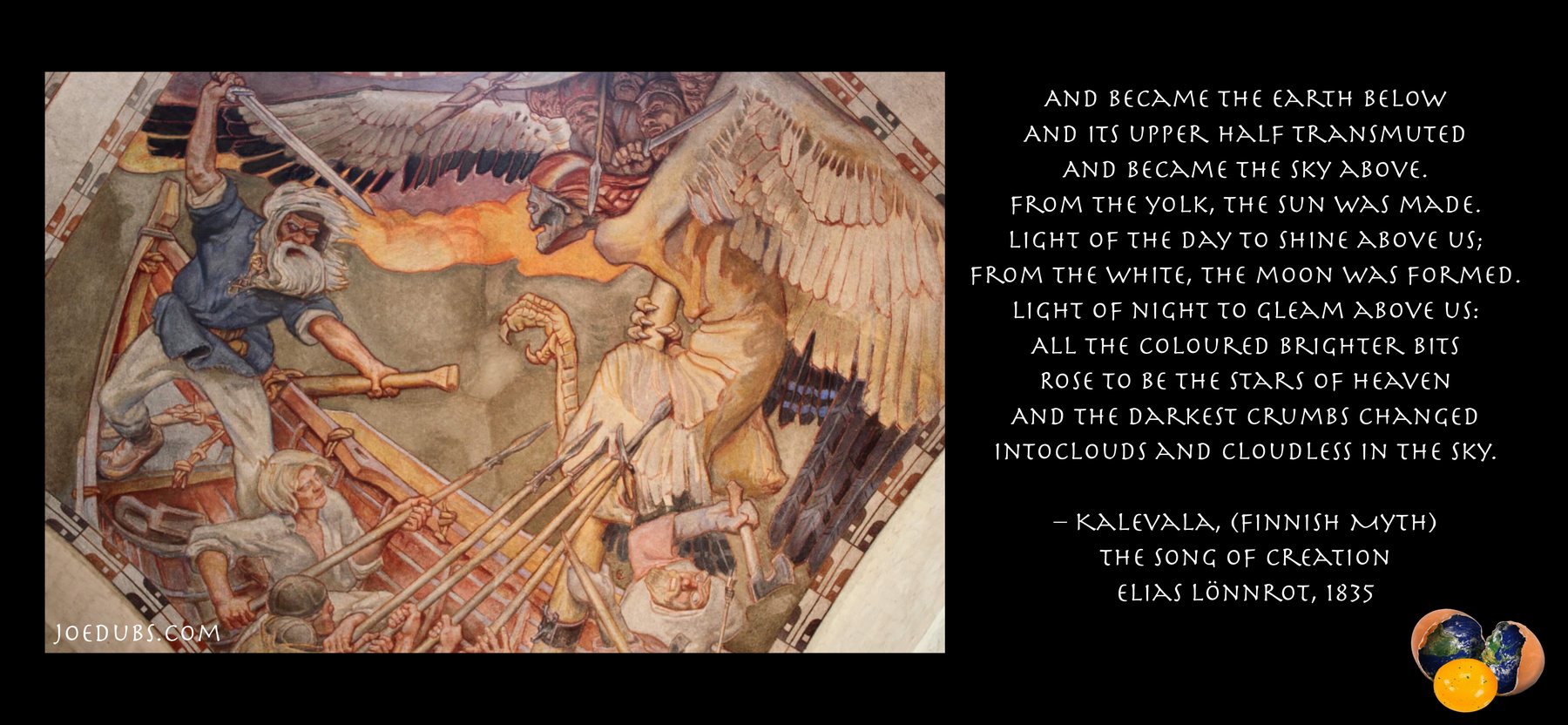
The Kalevala brings cosmology through epic song rather than philosophical proof. Its world is made in narrative: bird, egg, water, sky, land, singer.
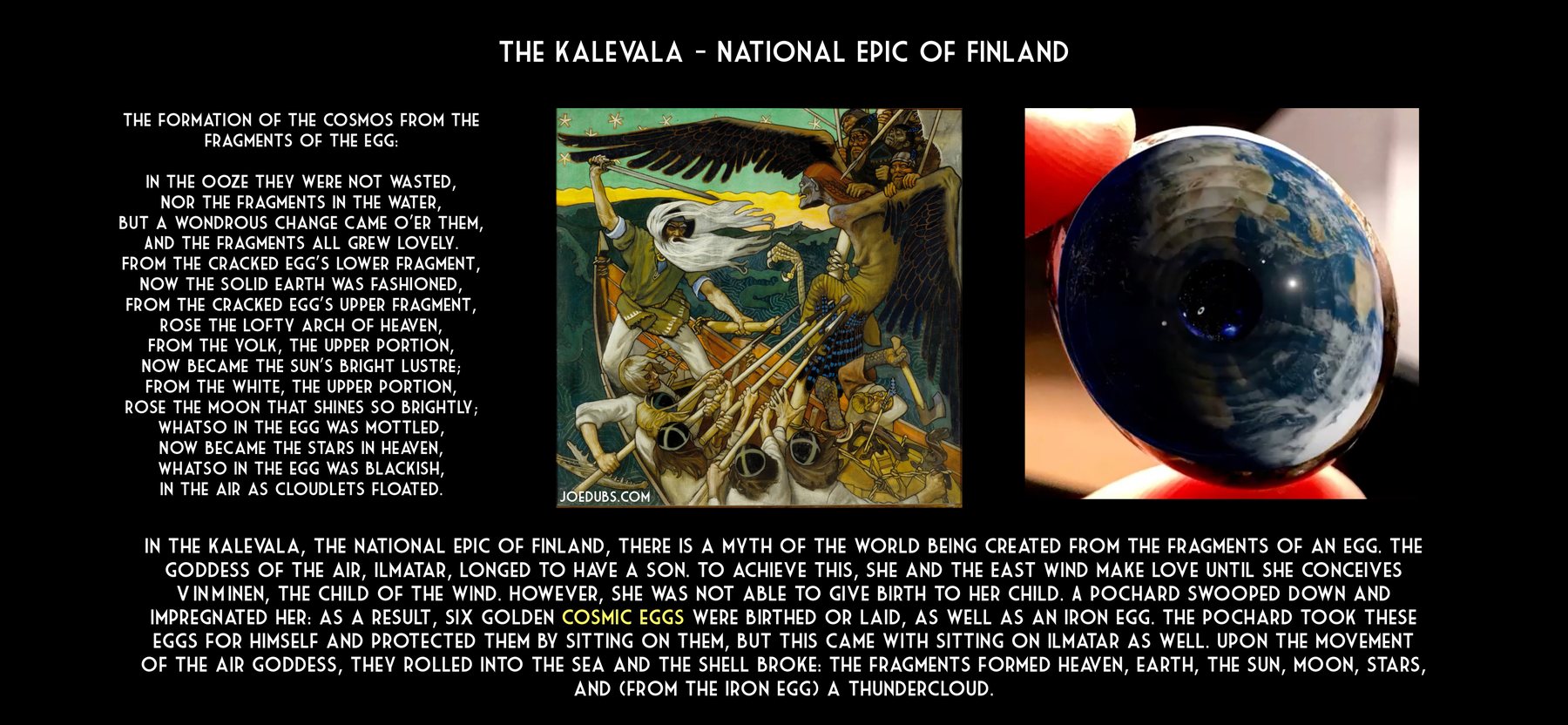
This plate returns to the egg motif, but with a northern voice. The fragments of the egg become heaven, Earth, Sun, Moon, and cloud. Creation happens by breaking.
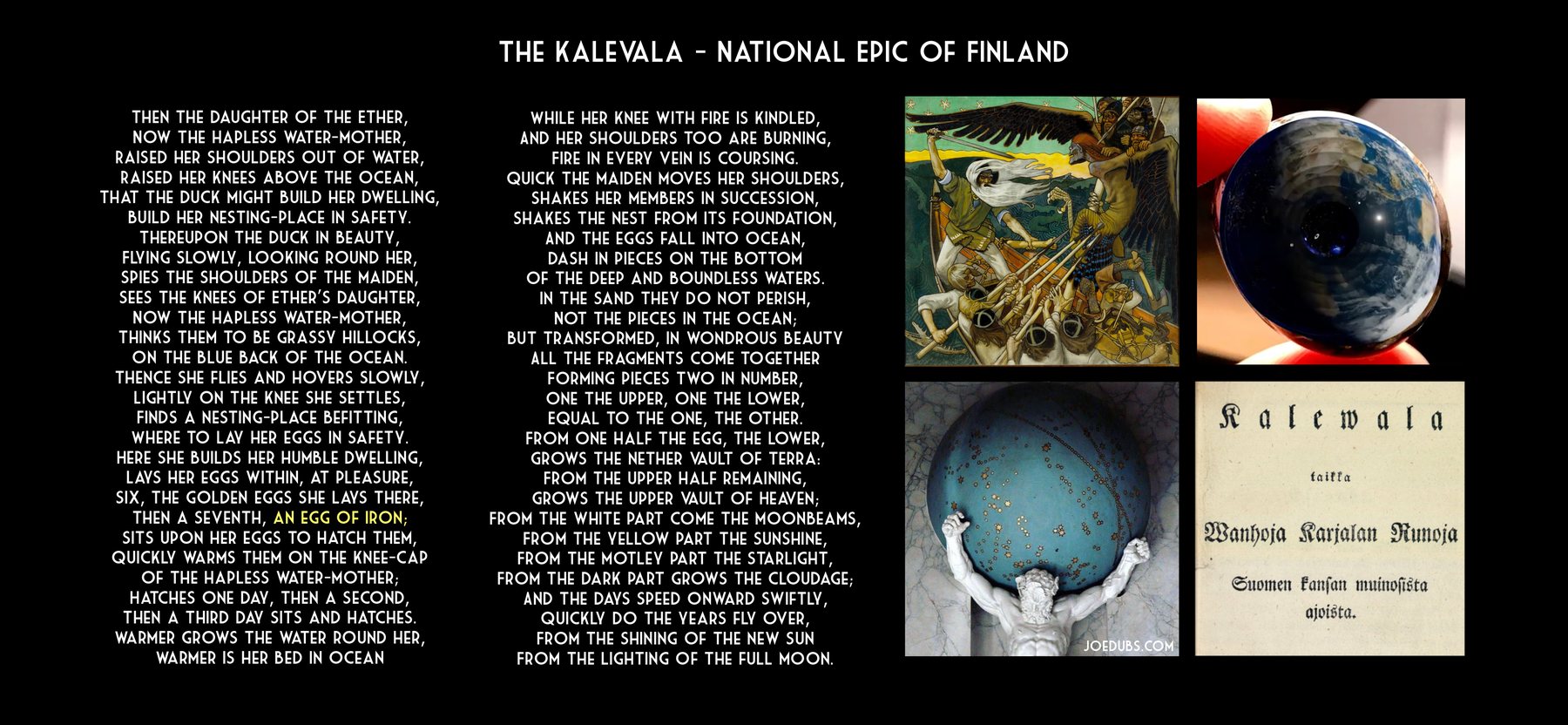
The second Kalevala image lingers on the mechanics of that break. The cosmic pieces do not vanish into metaphor. They become the visible world.
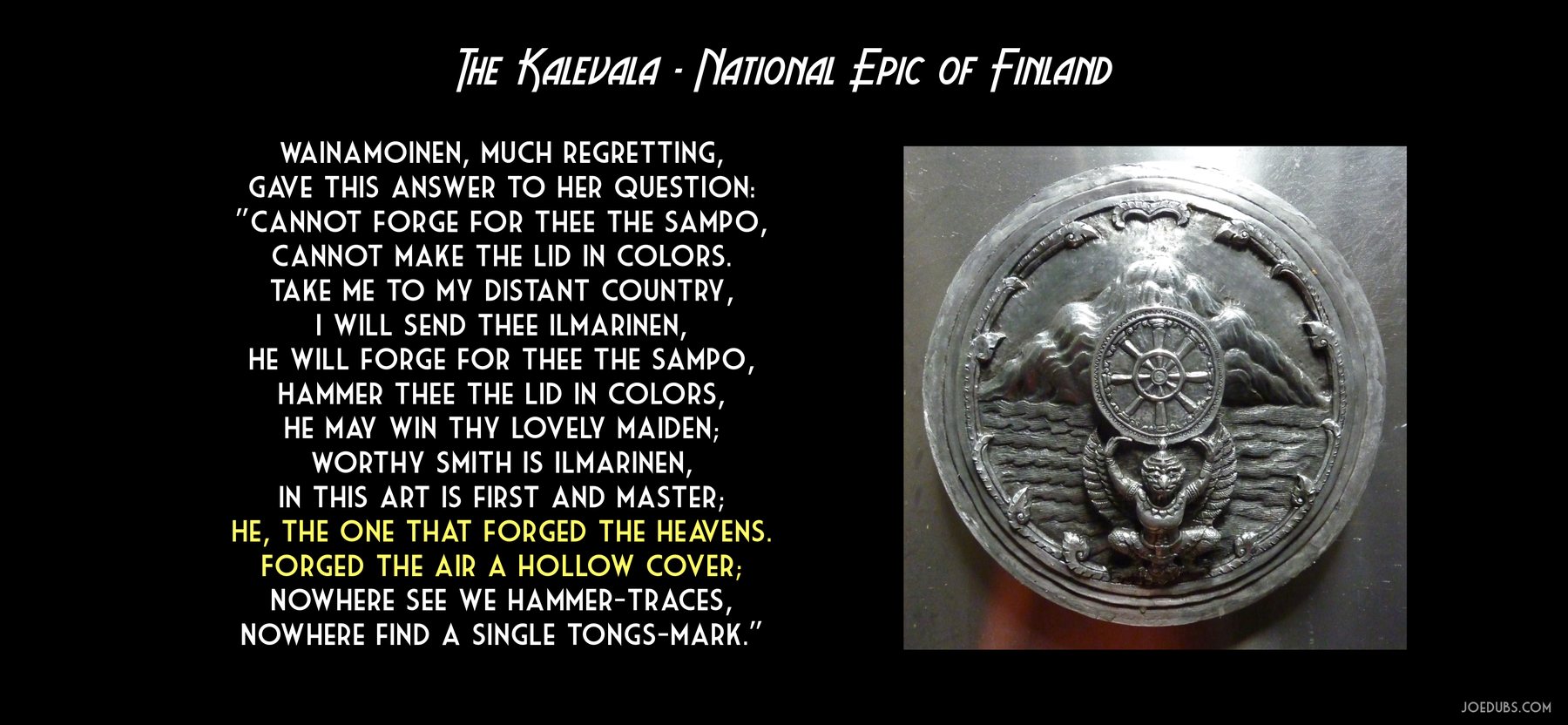
Water matters in the Kalevala because the world begins before land is stable. The cosmos rises from a moving surface, not from empty space.
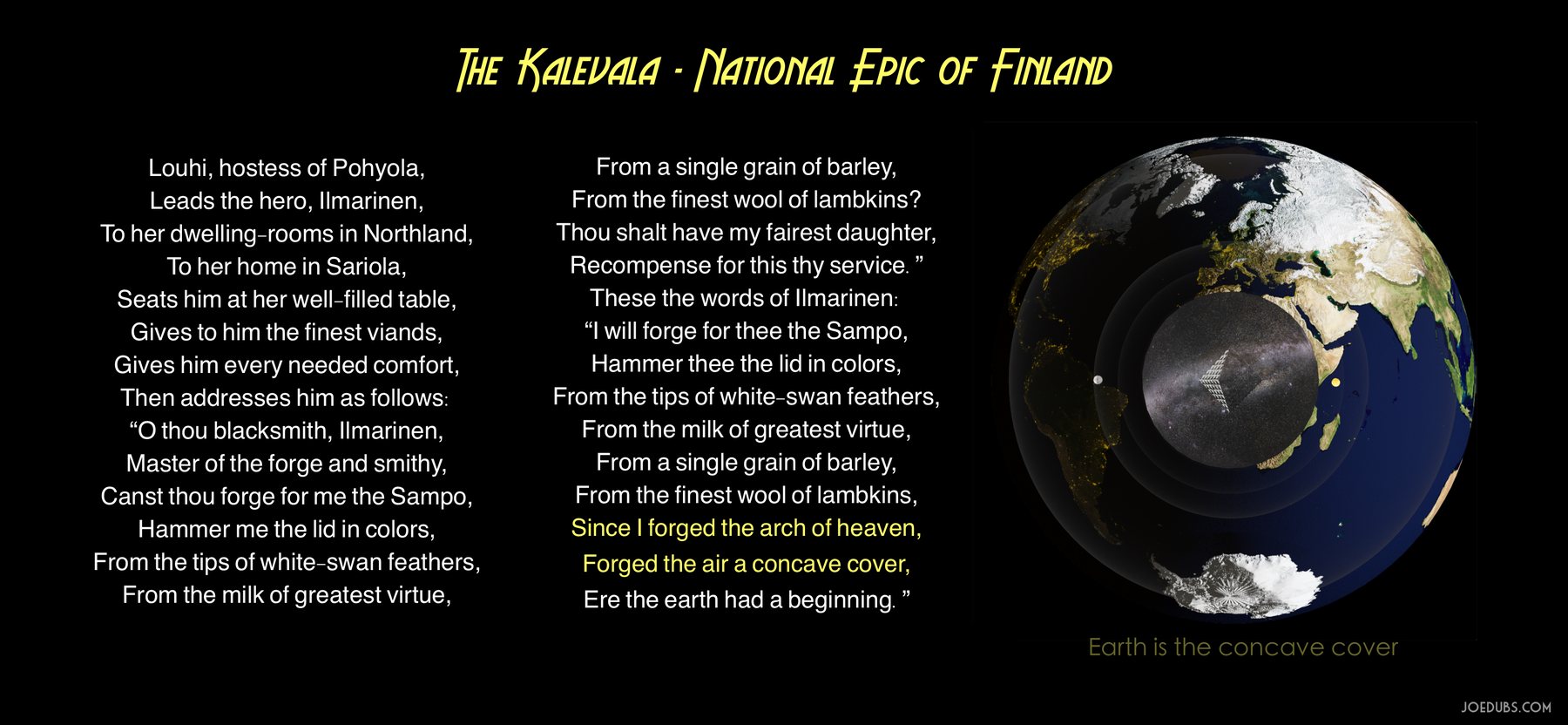
This cover-style image pulls the whole tradition into a single visual: world, sky, depth, and enclosure. It reads like folk cosmology drawn as a chamber.
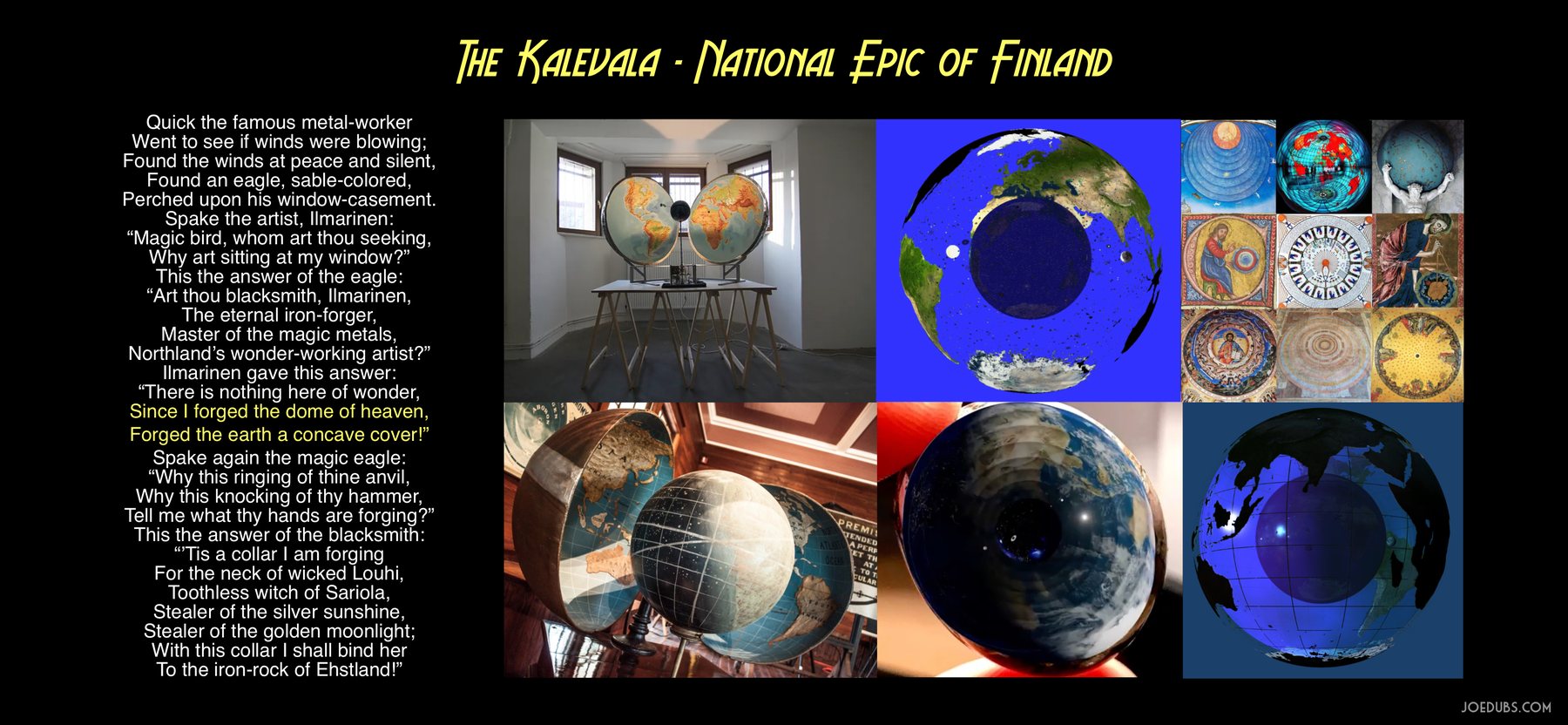
By the final Kalevala plate, the scattered pieces have become a world people can inhabit. The song has done what geometry does elsewhere: it gives the cosmos a shape.
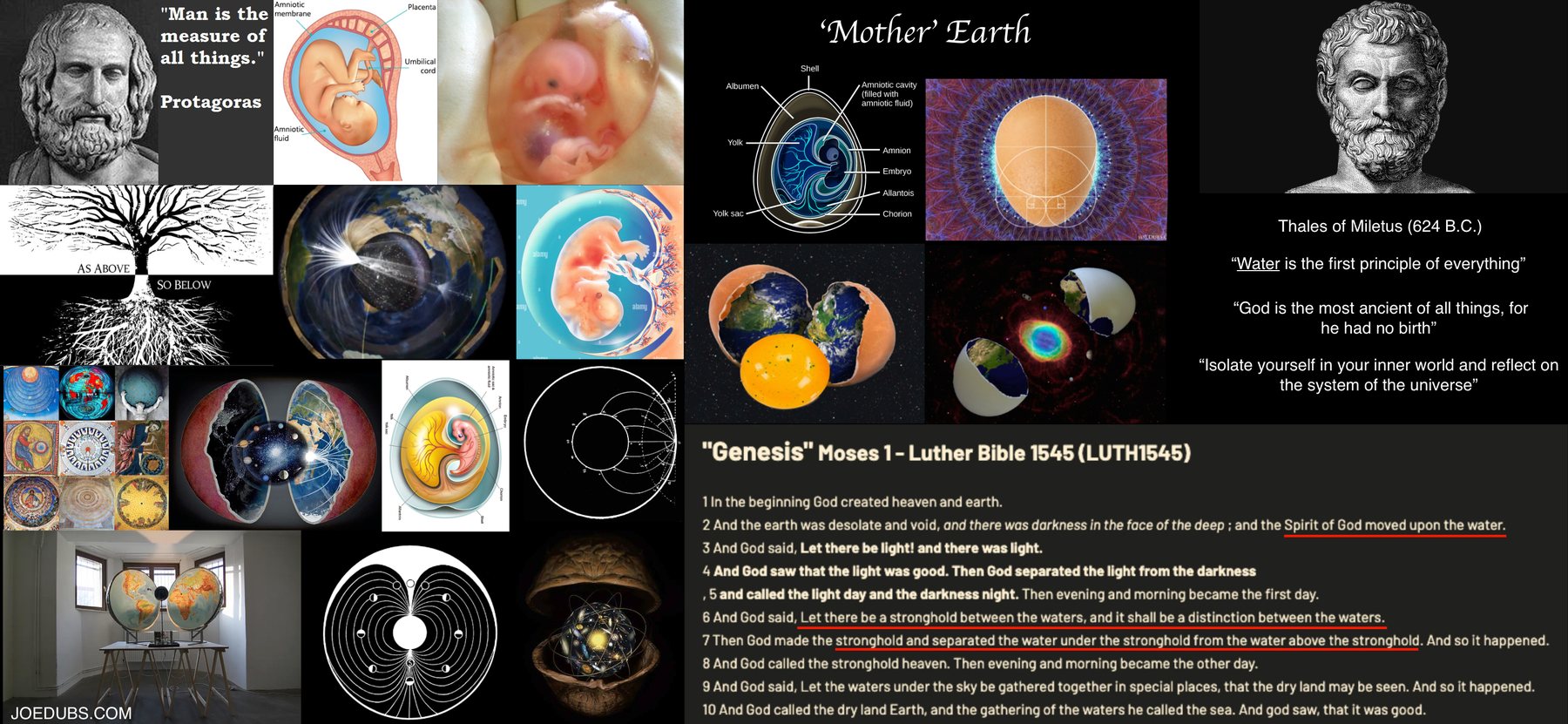
Mother Earth keeps the old intuition in human form. The world is not an object under the feet; it is a body, a mother, an interior that nourishes and contains.
Dante and the inverted medieval cosmos
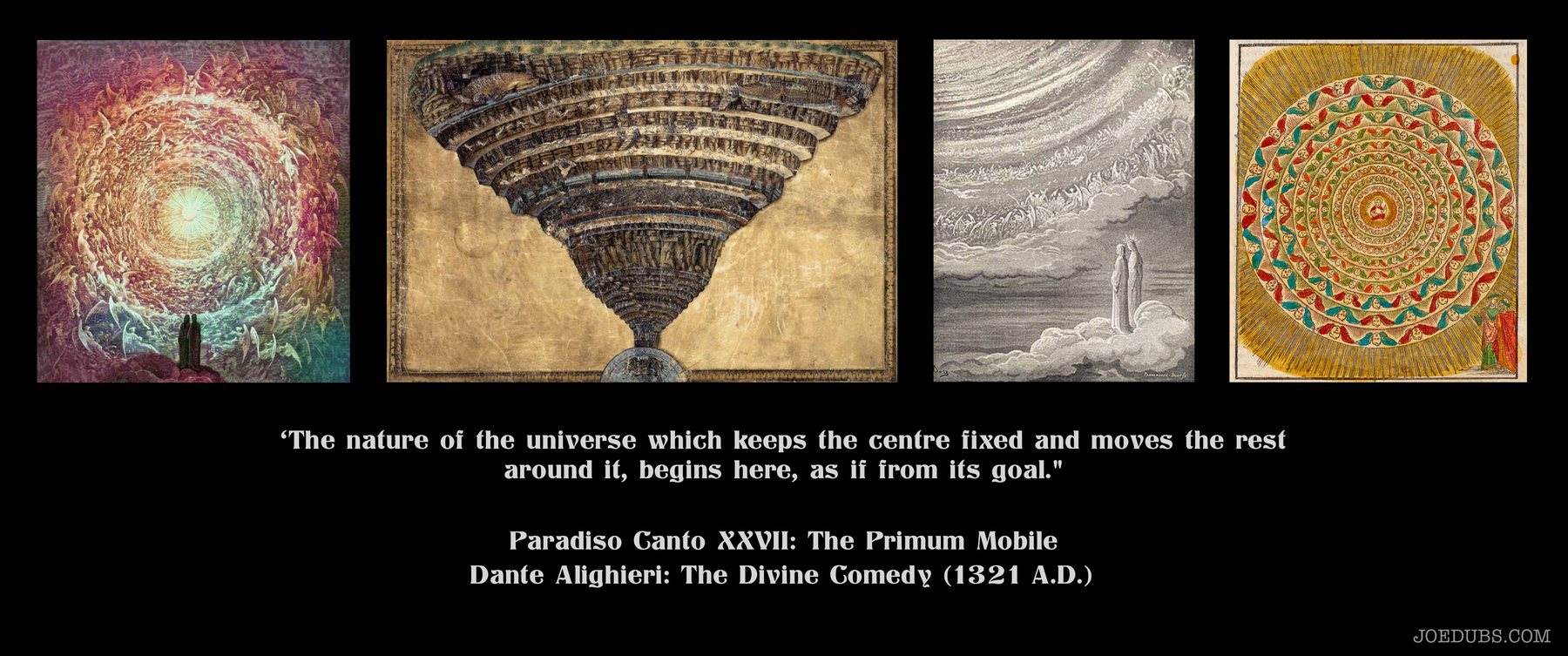
Dante turns the cosmos into a journey through interiors. Hell is not an abstract punishment zone. It is a structured cavity underfoot, with moral geography carved into depth.
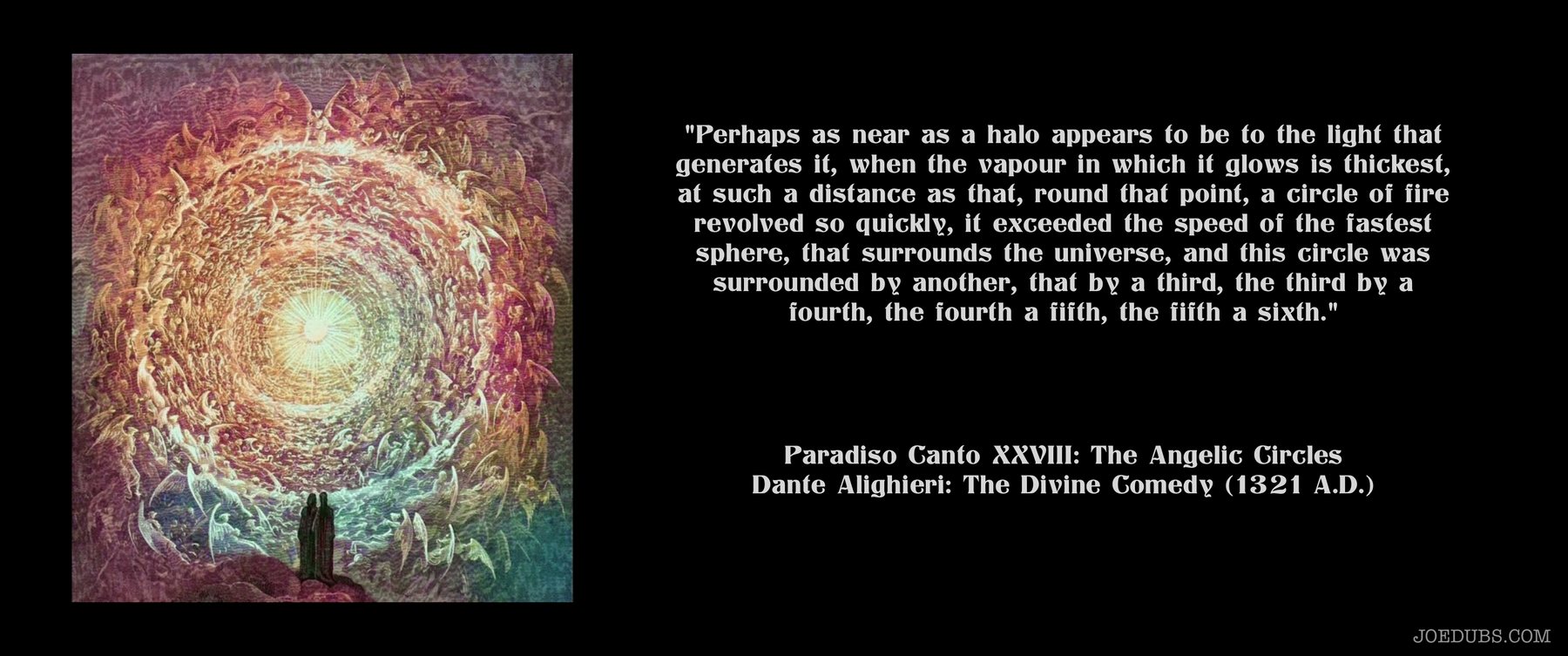
At the opposite pole, Dante’s angelic circles reverse the reader’s sense of size. The closer one gets to the divine center, the more the geometry stops behaving like ordinary space.
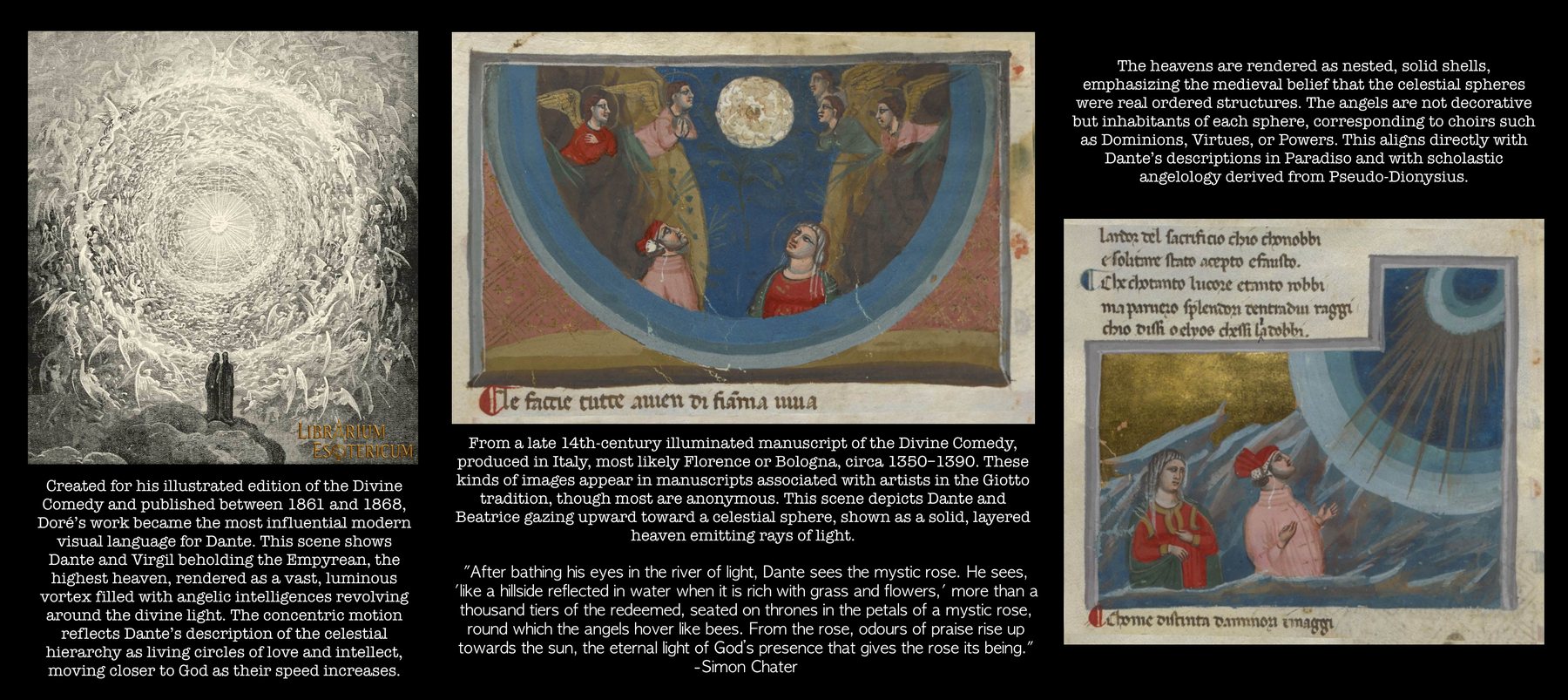
This image catches the strange center of Dante’s universe. The medieval cosmos can be both geocentric and theocentric because the physical center and spiritual center are not the same kind of place.
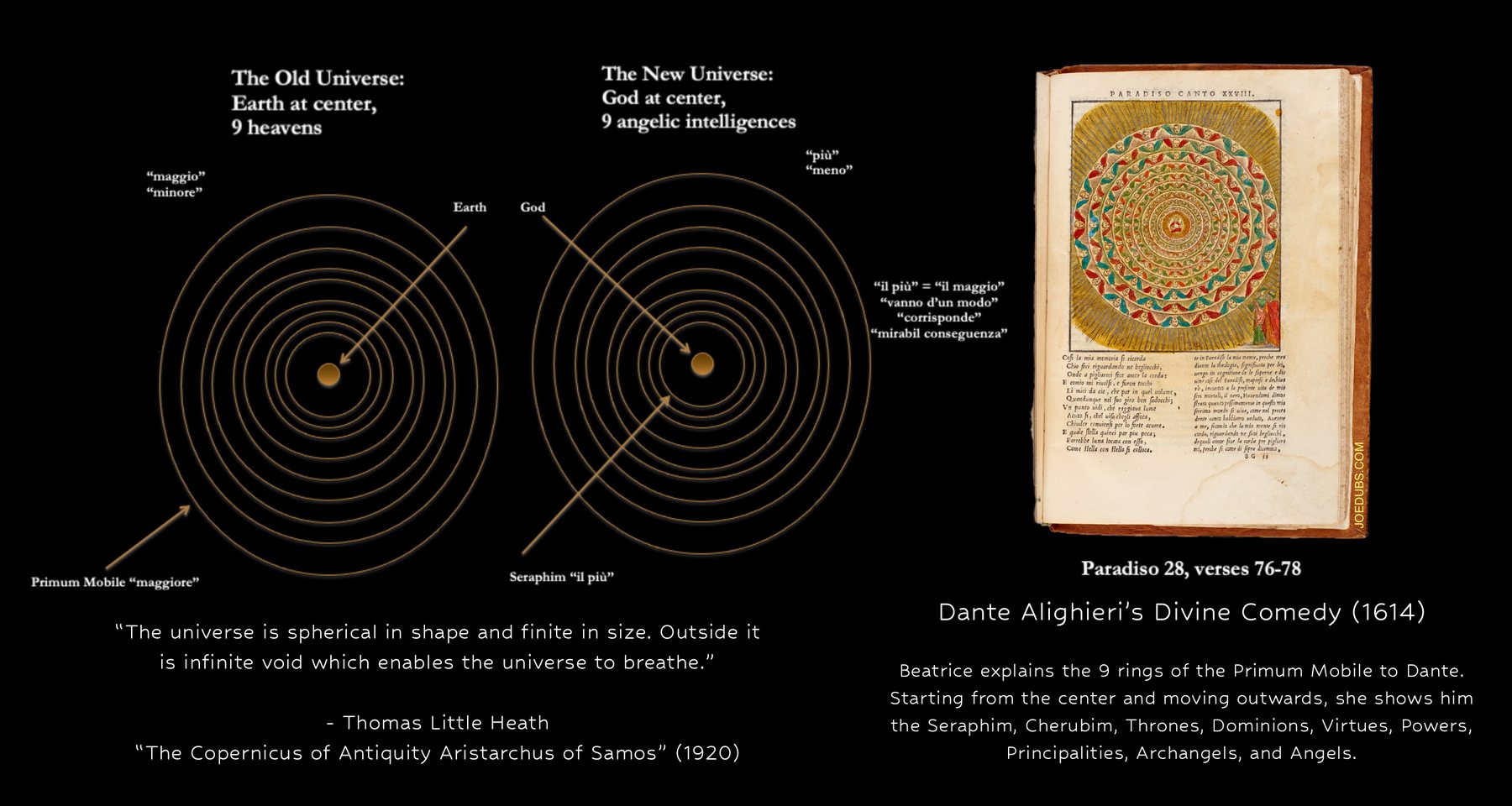
The complete Dante universe is a map of motion: down through the Earth, up a mountain, out through the spheres, inward toward God. It is the old enclosed cosmos turned into pilgrimage.
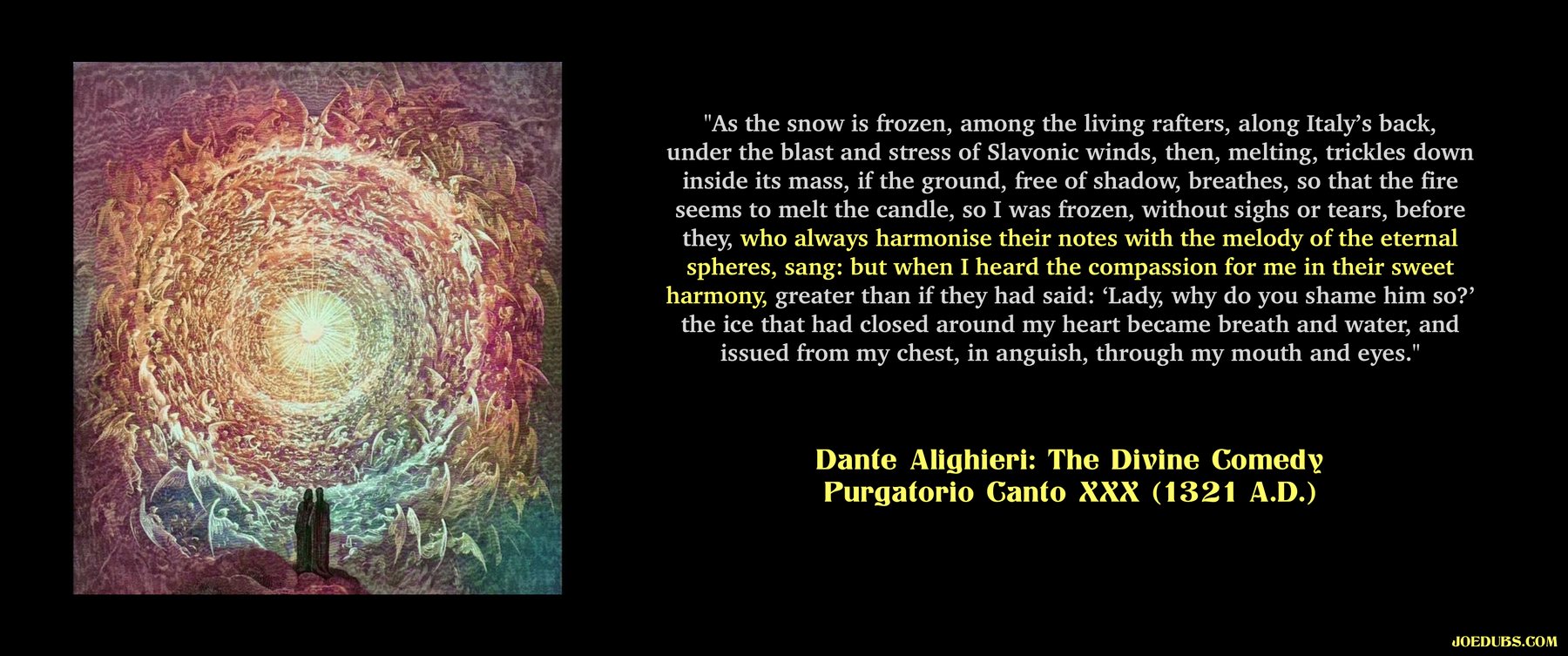
The music of the spheres gives sound to the structure. The heavens are ordered not only by position, but by harmony.
Proclus and the late antique inheritance
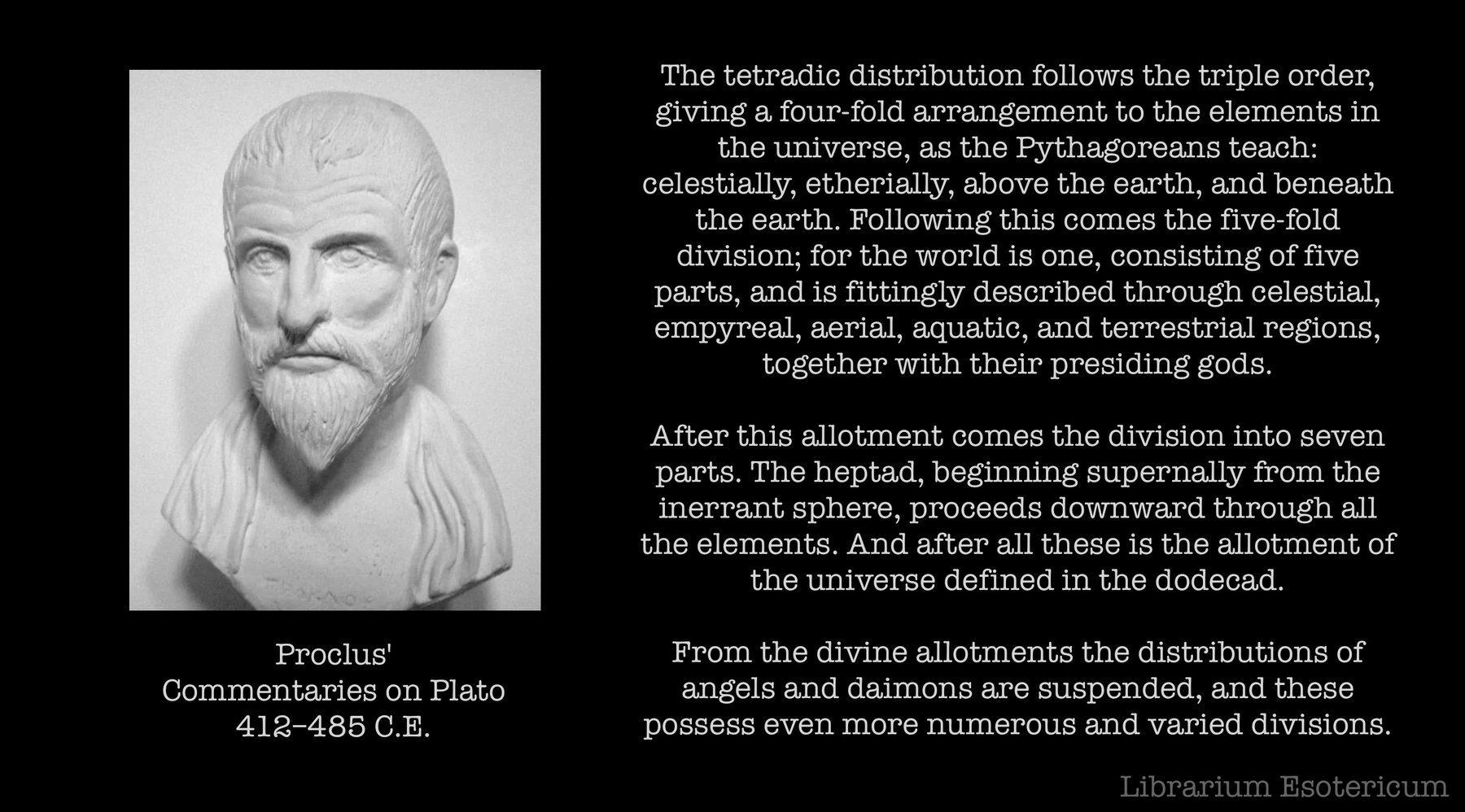
Proclus shows how long Plato’s cosmic architecture remained alive. Late antique philosophy did not treat the Timaeus as dead literature. It treated it as a map of reality.
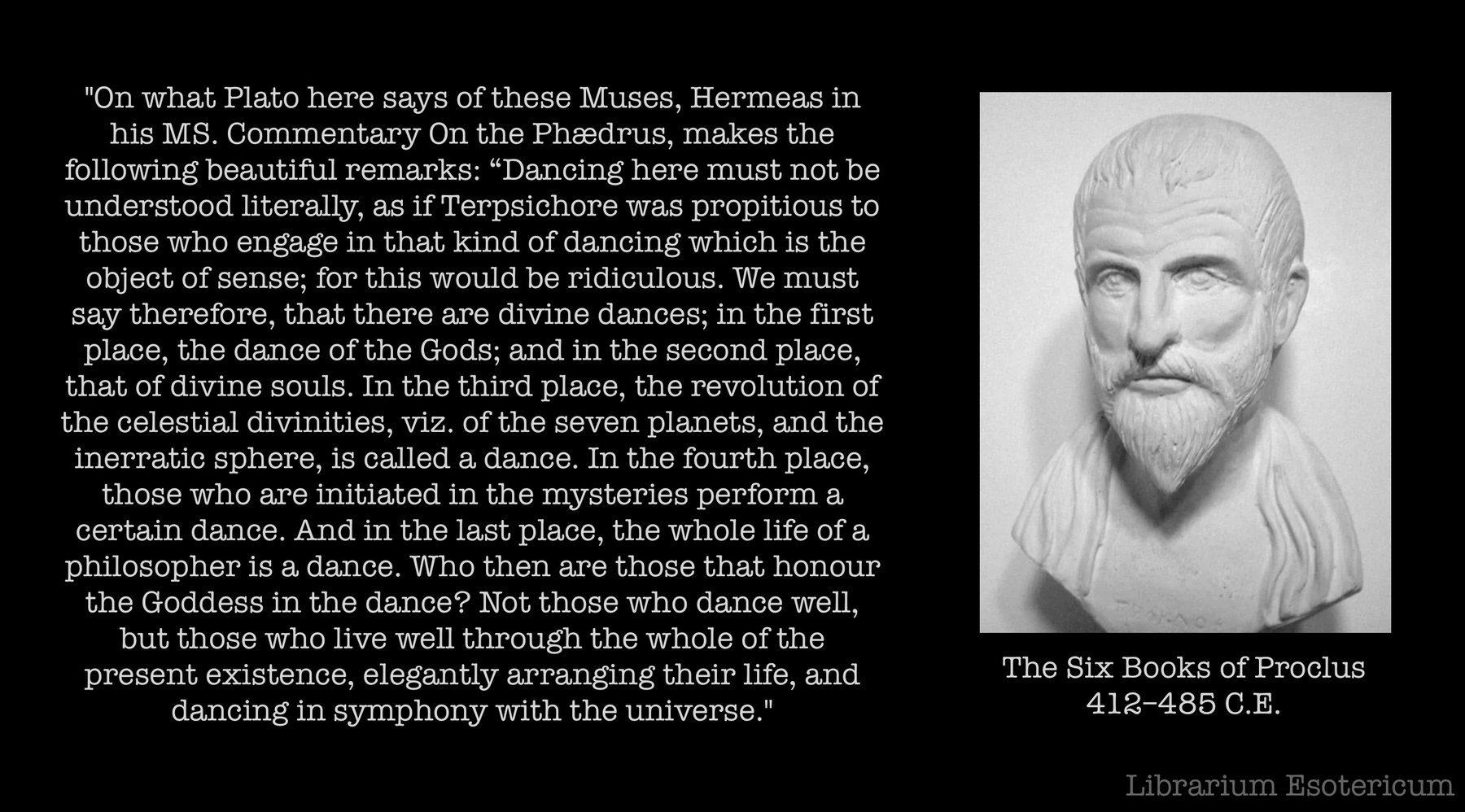
The six-book tradition gathers the Platonic cosmos into commentary, doctrine, and school practice. By this point, cosmology is a lineage.
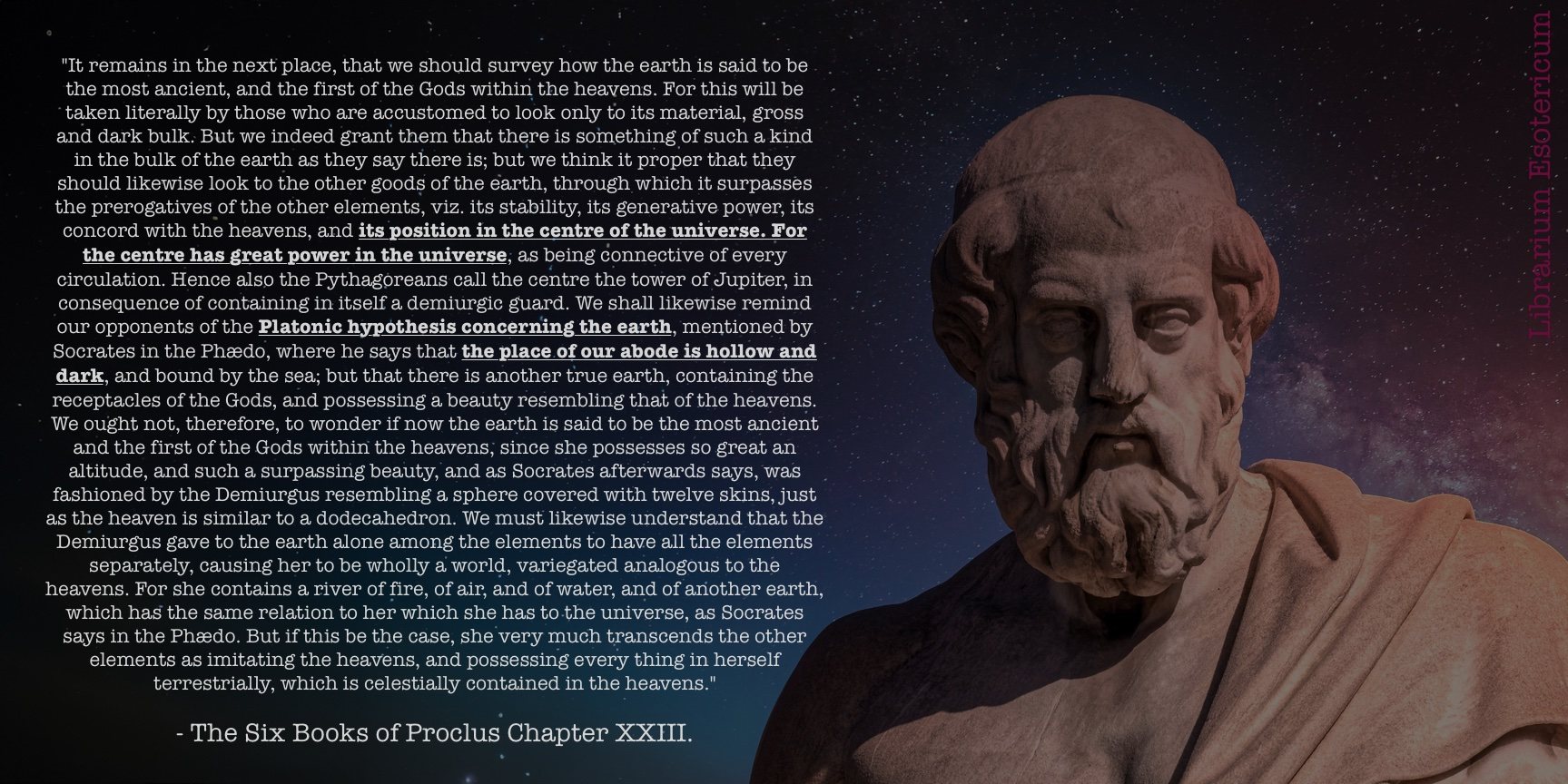
Proclus brings the argument back to the hollow and the center. The language is late, but the pressure is the same one we began with: a world arranged as interior, boundary, center, and ascent.
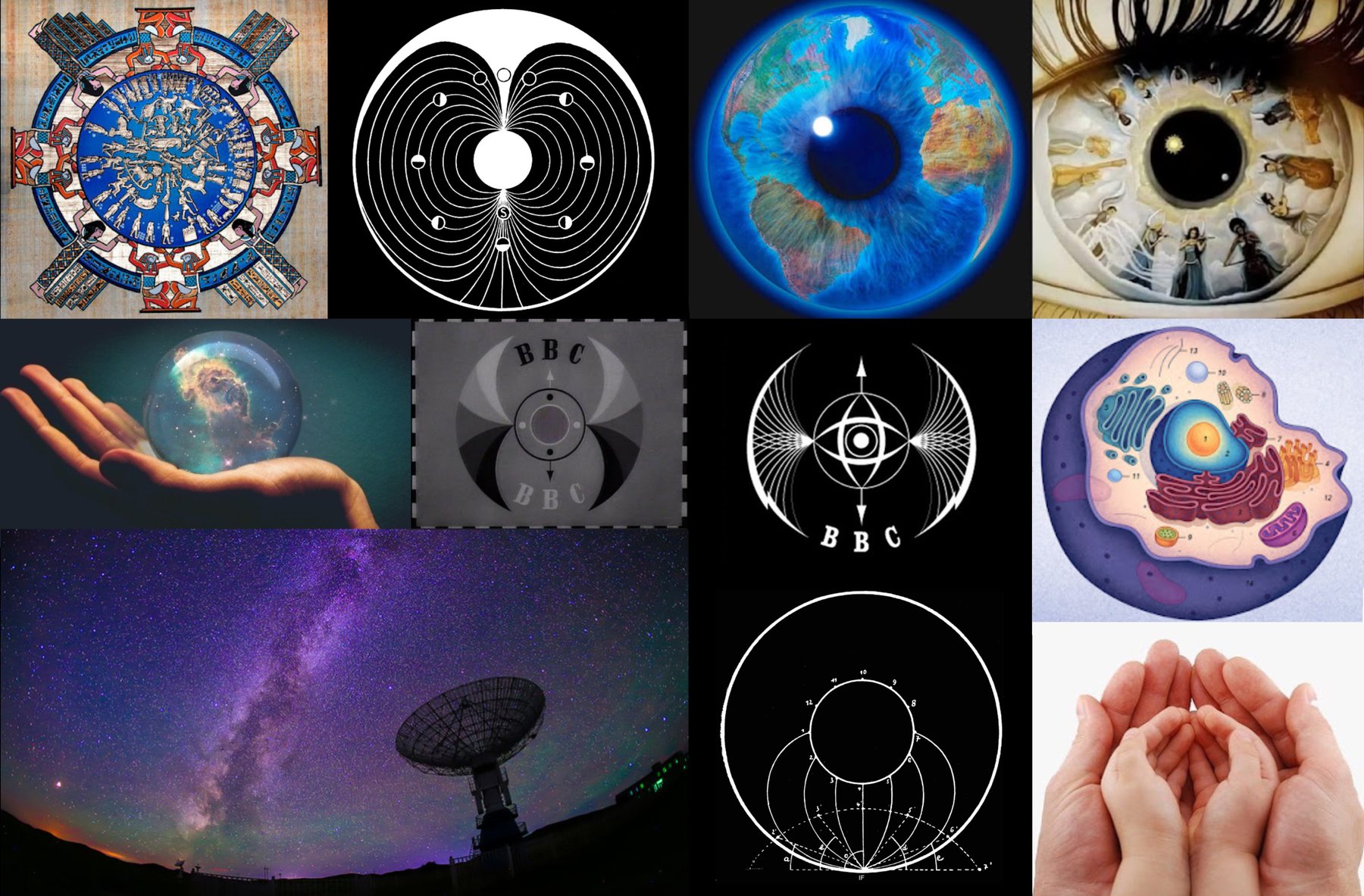
Across these sources, the world is not treated as an open rock drifting through empty space. It is a bounded dwelling, a formed enclosure, a geocosmos with depth, ceiling, center, and surrounding waters. The heavens bend over it. The underworld lies beneath it. The inhabited earth rests inside a larger order rather than outside one.
That pattern appears in different languages and symbolic systems: biblical firmament, classical spheres, medieval heavens, sacred mountains, world eggs, cosmic waters, and nested realms. The details change from culture to culture, but the structure keeps returning. Earth is not imagined as a convex ball viewed from the outside. It is described as a concave earth, an 8,000 mile geoid the holds the heavens together.
Discover more from JoeDubs
Subscribe to get the latest posts sent to your email.

Thank you Joe.
No prob, Melody! People often ask, what difference does it make? I say it makes all the difference IN the world!
Son interesting – thank you for sharing this!
Welcome to the bottom of the rabbit (w)hole!
Brilliant my friend! Thank you 🙂