In 1917, American missionary Orville Fowler Barcus published A New World Discovered, a book inspired by a series of observations he conducted over bodies of water in China.
In the book, Barcus compares three possible models of the Earth’s surface: flat, convex, and concave. After carefully considering the evidence, he reached the same conclusion that I later reached independently; the surface of the water appeared to curve upward in the distance rather than downward as the conventional convex model predicts.
Barcus made over fifty observations along the Yangtze River and the Grand Canal. From low vantage points, sometimes positioning his eye only ten to fifteen inches above the water, he studied distant shorelines, buildings, vegetation, boats, and reflections several miles away.
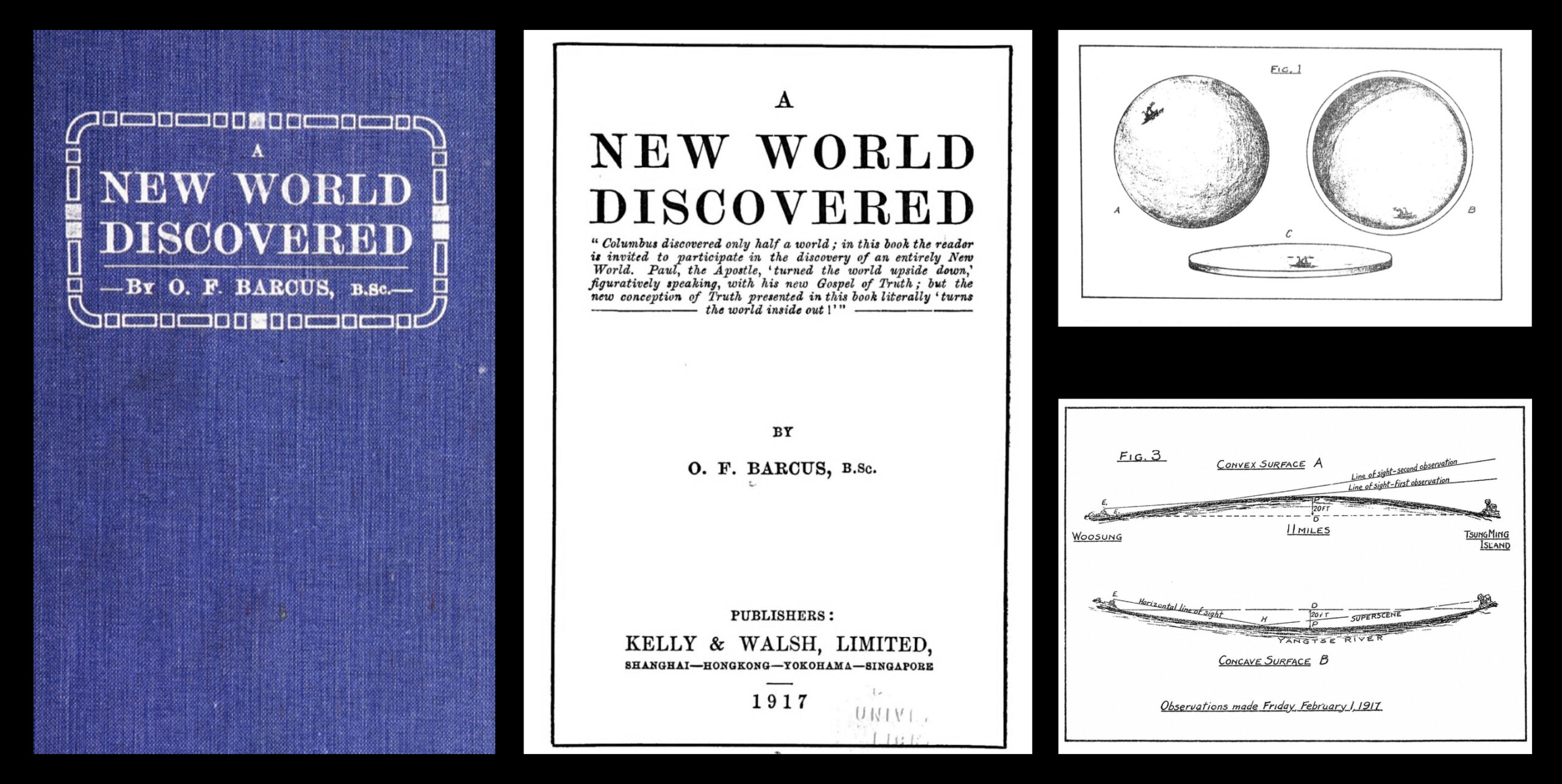
In the book, Barcus compares three possible models of the Earth’s surface: flat, convex, and concave. After carefully considering the evidence, he reached the same conclusion that I later reached independently: the surface of the water appeared to curve upward in the distance rather than downward as the conventional model predicts.
After much thought, he came to the same conclusion as I did. The water is curving up instead of down as we’ve been told.
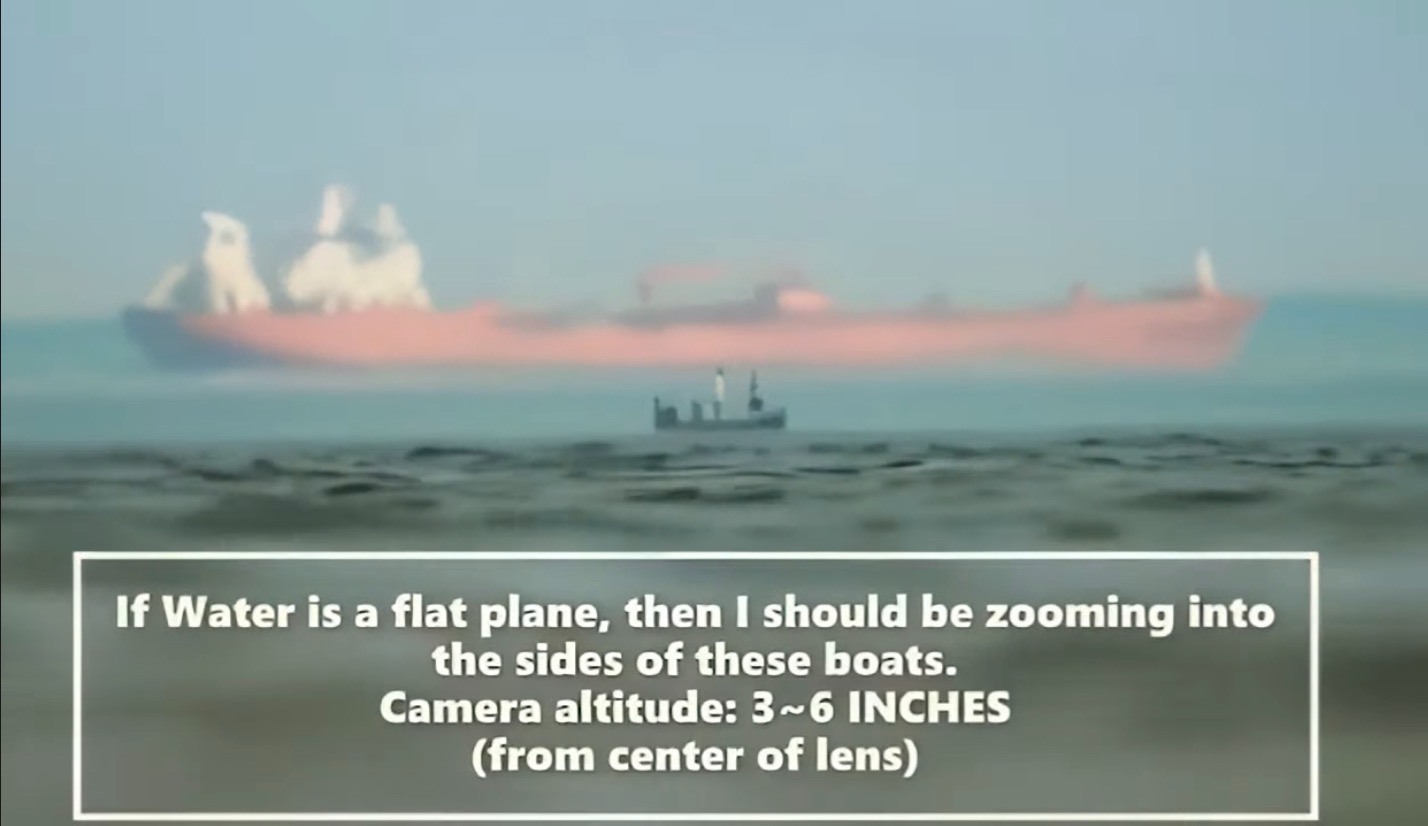
Just over a century later, another American by the name of Joshua James Bolieiro (known as Zenith Atlas) carried out the same observations over Lake St. Clair in Michigan that Barcus urged readers to perform in the preface to his work. Only now in the 2020’s we have Nikon P1000s with 125X optical zoom, an upgrade over the 8X zoom the prismatic telescope Orville used.
The following testimony appears in the beginning of his book. He would have passed these out back in the day. I filled it in.
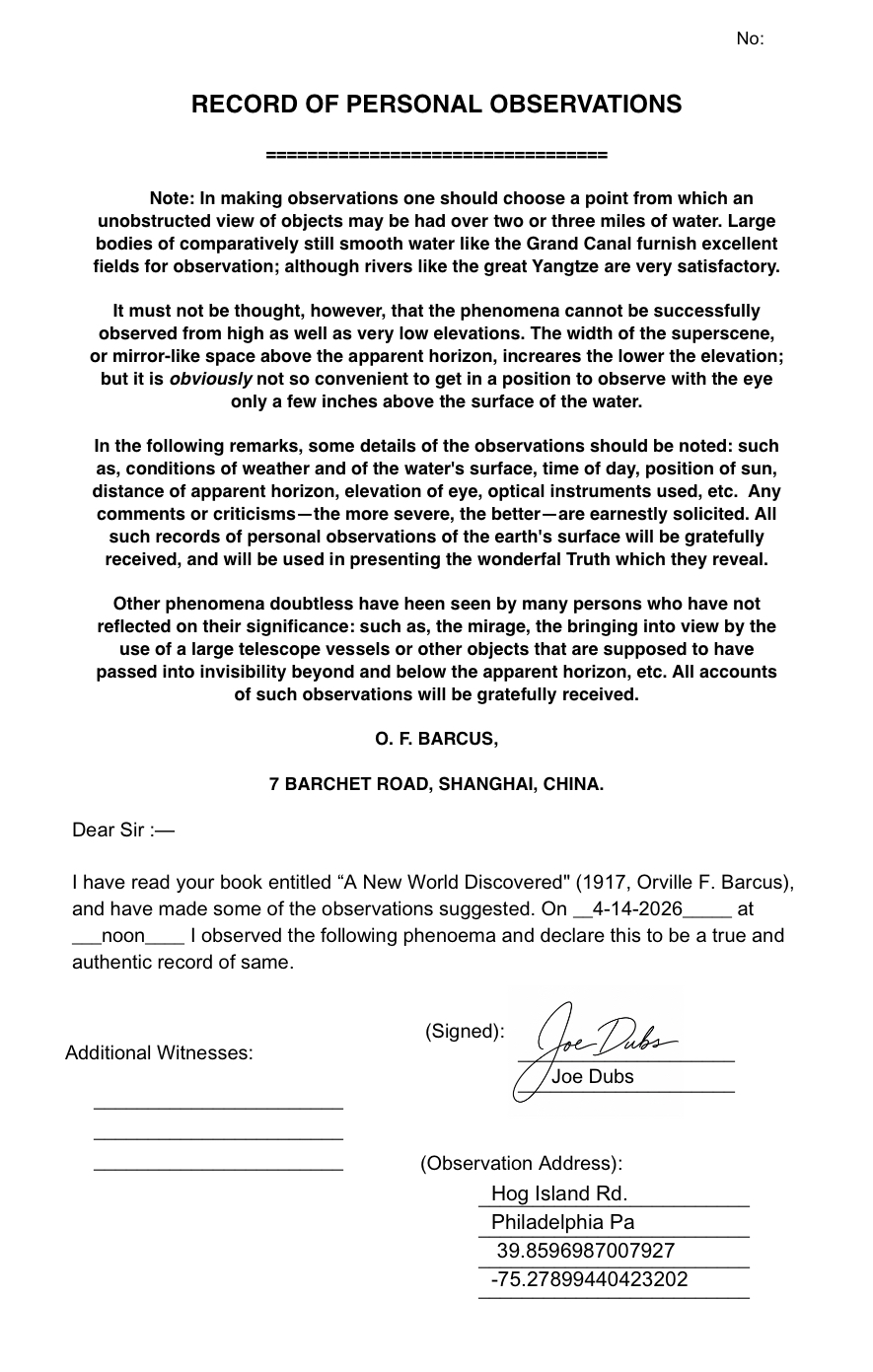
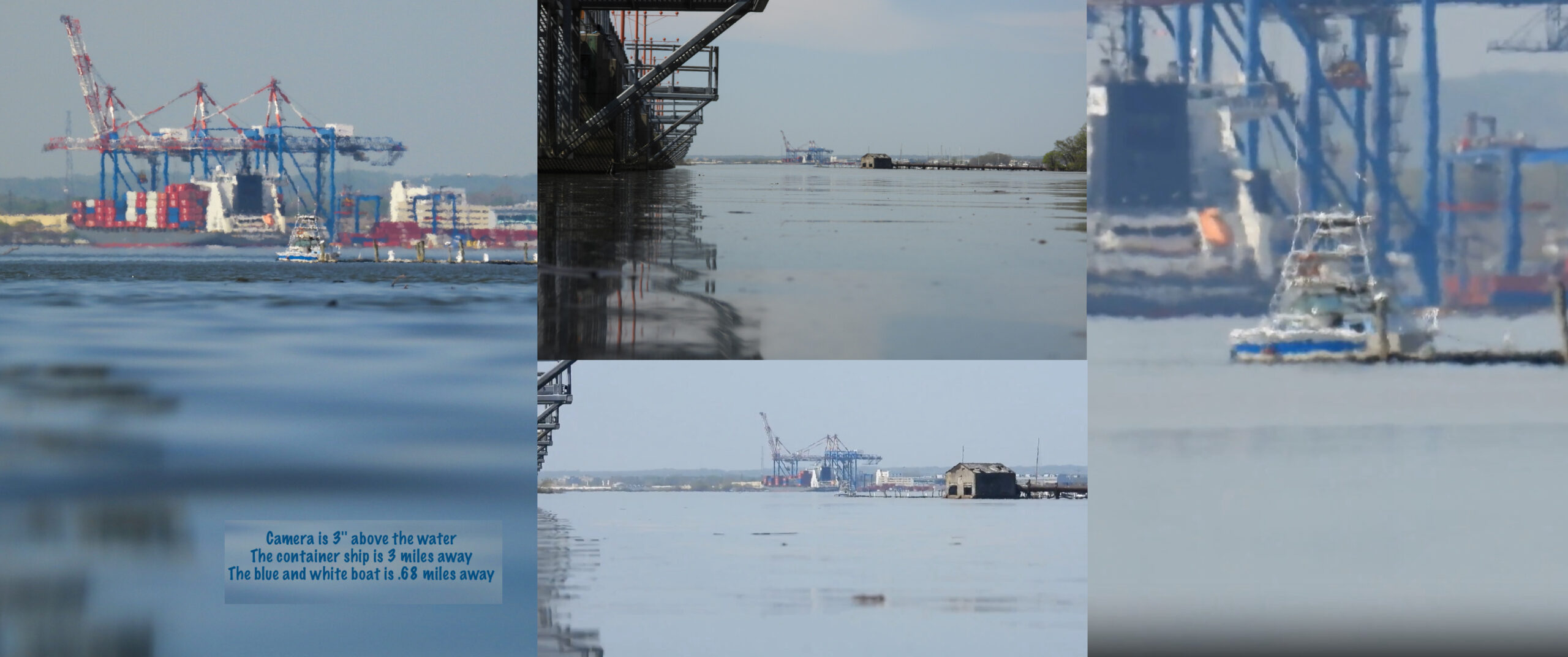
In 2024 I followed suit, this time over a stretch of the Delaware river, just south of the Philadelphia airport. Barcus recommended choosing a location with an unobstructed view across at least two or three miles of water, preferably with a distant shoreline as a background. My Hog Island observation is exactly this.
I found this book by scrolling through an online book repository called HathiTrust.org. After reading the first few pages I just sat there in disbelief; it was like I wrote the thing myself.
Start at two or three feet high in elevation and slowly lower your head until you see what he called the ‘superscene’, which is something I’m intimately familiar with now after a few years of observations with my P1000. I call it the ‘mirrizon’. This photo below is a good example.
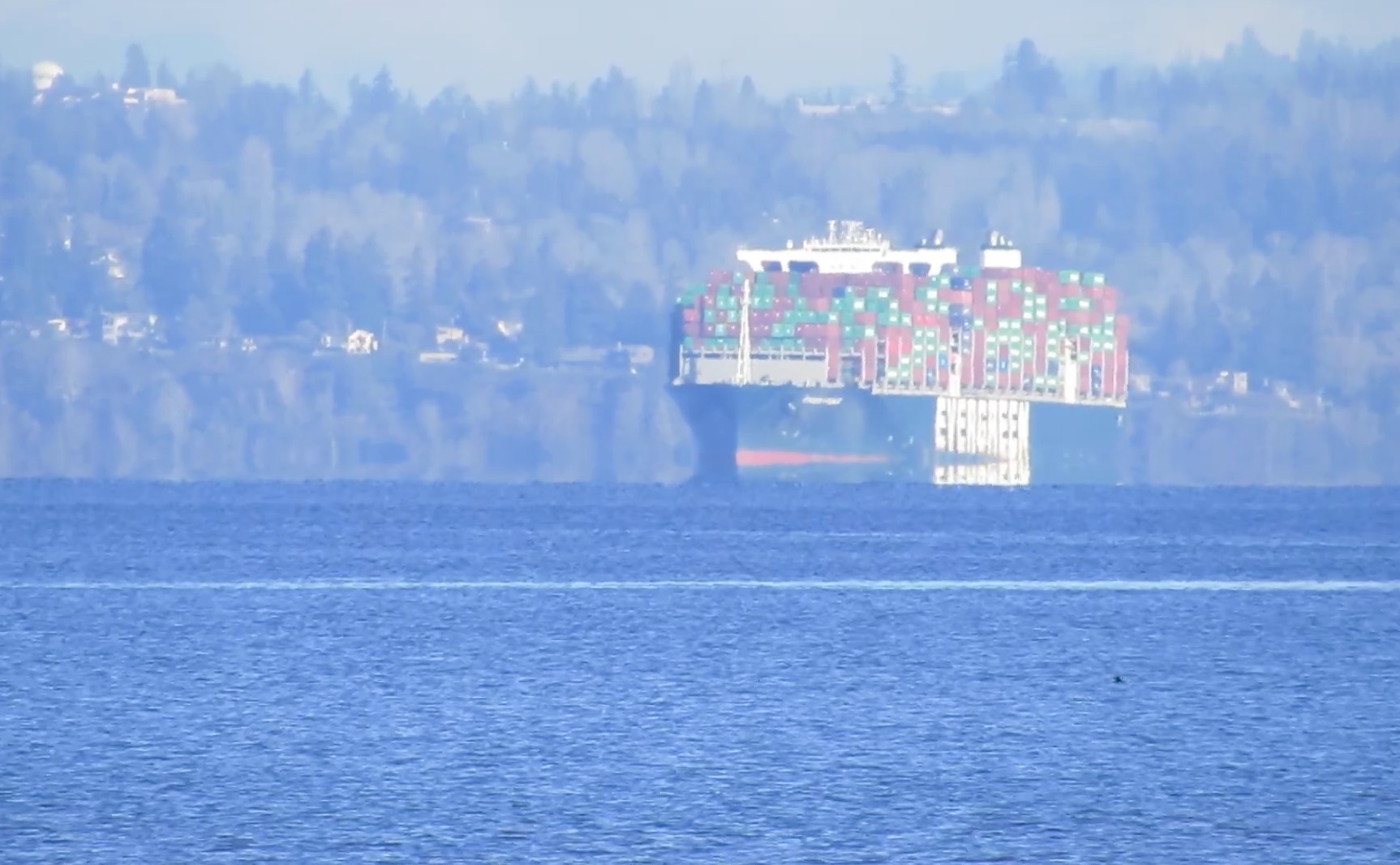
It’s the mirror-like band or strip that appears beyond and above the apparent horizon when looking across a long stretch of water.
The book is a quick read, only 100 pages or so. Some of the diagrams are missing from the scanned copy and some of them are cut off, so I’ve done my best to salvage this great work as best as possible. It’s one of the most incredible books I’ve ever read simply due to its clear, concise nature. He spent months doing these observations and immediately wrote this book. A New World Discovered was a small, limited-circulation publication that never received the attention it deserved. This is a small attempt to preserve this great book and present it to a larger audience.
His other book, mentioned in the book a few times “An Introduction to the New Cosmology” has vanished from the aether so if anyone finds it, please let me know. It was probably also published in Shanghai by Kelly & Walsh, Limited but I can’t be sure.
Read the full book, chapter by chapter in The Cave:
- Preface I — The New Earth
- Preface II — The New Heavens
- Chapter 1 — Introduction
- Chapter 2 — The Earth’s Surface: Flat, Convex, or Concave?
- Chapter 3 — Seeing Distant Objects Over Water
- Chapter 4 — The Wireless Phenomenon
- Chapter 5 — The Mirage
- Chapter 6 — A Study in Reflections
- Chapter 7 — How and What to Observe
- Chapter 8 — Disappearance of Vessels
- Chapter 9 — Other Phenomena
- Chapter 10 — Introduction to the New Cosmology
- Chapter 11 — Conclusion
- Appendix A — Cause of Day and Night
- Appendix B — Proofs of the Copernican System
- Appendix C — Seventy-Five Vital Questions
- Appendix D — Brief Outline History of Astronomy
Discover more from JoeDubs
Subscribe to get the latest posts sent to your email.
