Part II: The Plumb Lines of the Tamarack Mines
creatumejortu.com/la-tierra-es-concava-ii-las-plomadas-de-las-minas-tamarack
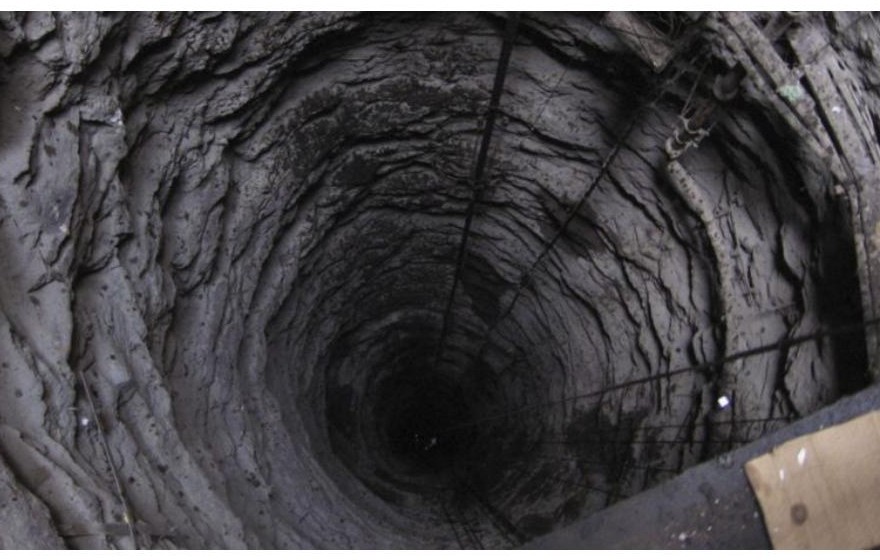
Sometime before 1901, at the behest of the French government, wishing to determine more accurately the true size of the Earth, it was proposed to suspend two cables 1.5 km deep in abandoned mine shafts , in order to measure the distance between the upper and lower ends, which they assumed should be somewhat smaller at the lower end, and they wanted to know exactly how much smaller, in order to determine the exact size of the circumference of the Earth.
The results of these tests were very strange . So strange, in fact, that the French geodetic scientists contacted the scientists of the American Geodetic Association and shared their findings, requesting that similar tests be conducted in the United States. Officially, nothing was done for several years. But around 1900, one of the association's geodetic surveyors, working near the Tamarack Mines close to Calumet, Michigan, contacted the chief engineer at Tamarack and passed on the information provided by the French government.
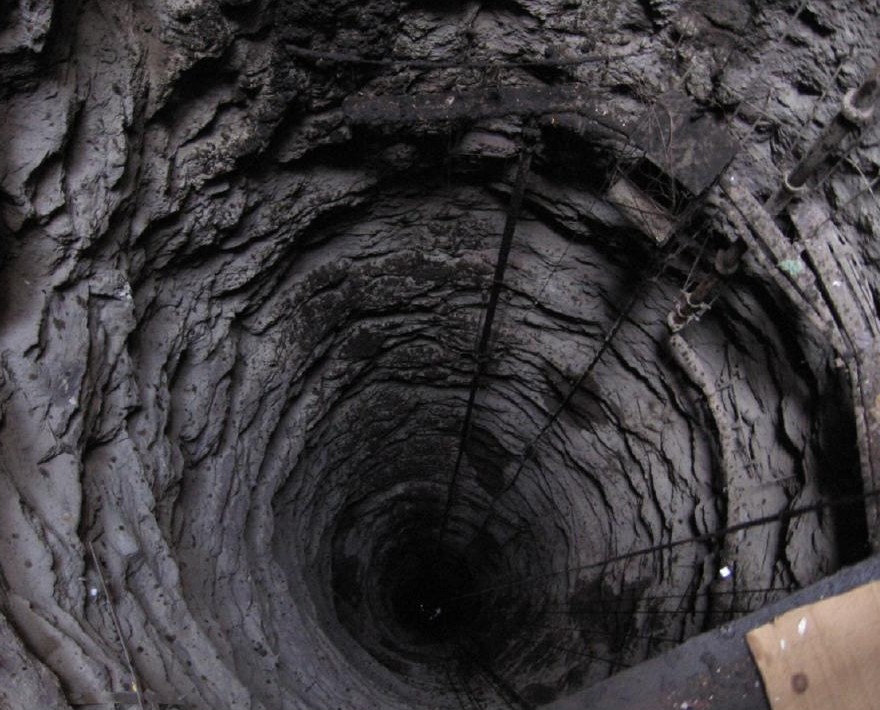
Two shafts used for descending by elevator were selected, and plumb lines exactly 1.5 km long were suspended from each . A 25 kg barrel of oil was hung from the end of these lines to prevent any swaying. It was also reasoned that this would minimize the effect of the Earth's magnetic forces on the results.
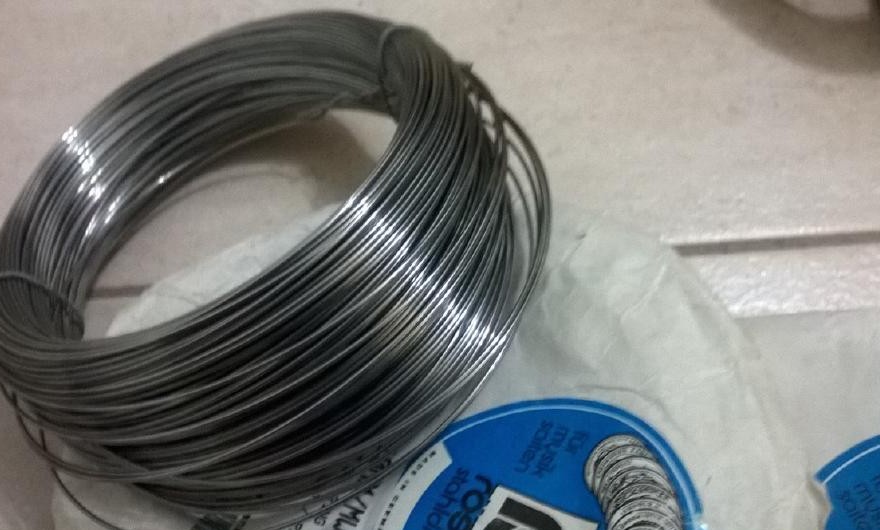
The cables used to suspend the barrels were 24-gauge piano wire. The cables were left hanging for a whole day , so that any minimal movement or swaying would be eliminated.
The measurements began… It was then discovered that the French geodetic engineers had not made a mistake.
A careful recheck showed that the cables, contrary to expectations, were more widely spaced at the bottom than at the top , leading to a strange conclusion: the center of gravity is not below the Earth's surface, but above the Earth's surface, somewhere in space! If these two lines, formed by the suspended plumb lines, were extended upwards, they would meet somewhere in the vacuum of the Earth, and that point, according to all the rules of gravitational attraction, should be the true center of gravity.
Deeply puzzled and even disturbed, the engineer in charge of the experiment, John B. Watson, requested the presence of Professor Fred W. McNair, President of the Michigan College of Mines. With McNair there to verify the results, the experiment was repeated, again yielding the same results, to the astonishment of all present . Professor McNair suggested that the plumb bobs should be replaced with wires of a non-magnetic material to avoid any possibility of magnetic attraction or repulsion due to possible concentrations of nearby paramagnetic minerals. However, even after the wires were replaced with lead ones, the same results were obtained . If any magnetic disturbances had been at work during the experiment, they would have altered the results upon changing the wires, but they did not, and the figures remained unchanged.
However, Professor McNair suggested that any drafts traveling between the mine shafts should be avoided, as they could be affecting the position of the plumb lines. Therefore, both mine shafts were completely sealed at the top to prevent any drafts. Once again, the results remained the same as in the previous tests .
After trying many other methods to see if the results varied and after obtaining the same unwavering result in all cases, Professor McNair gave up on continuing the experiment and abandoned it in complete astonishment .
A second series of experiments was carried out at Calumet, Michigan , and this time two wells were used that were 1.5 km apart and also 1.5 km deep. They were connected at the bottom by a perfectly straight transverse tunnel.
The plumb lines were found to be 21 cm further apart at the bottom than at the top .
Engineer JB Watson soon discovered the divergence that would be necessary to complete a spherical circumference of 360°; however, something didn't fit, as the plumb lines indicated, it would be the circumference of the interior of a sphere, not the exterior , and the center of gravity would be 6,500 km away in space!
This series of tests were not carried out in secret, so it was inevitable that the news of the time would report on it .
The news was reported by a journalist from the newspaper 'The Houghton' (Michigan) on page 3 of the 'Daily Mining Gazette' section of October 8, 1901, who published the story concluding: "the wires were further away at the lower end and nobody has suggested anything that seems to settle the why . "
Professor McNair returned to the Michigan College of Mines and tried to forget the whole strange incident, making no effort to contact his colleagues or other scientists to draw attention to the experiment's results. However, we can forgive Professor McNair for his reluctance to pursue the matter further, as its implications are enormous and overturn the modern understanding of the universe . Obviously, Professor McNair wasn't about to disrupt his daily routine, and neither were the governments of the United States nor France going to make a fuss about this new discovery. As the French said, 'The value of the franc will remain unchanged, and bridges and buildings can still be built; why would we create a problem?'
Can we blame the participants in the experiment for maintaining absolute silence from that moment on?
However, the facts remain: the plumb lines were always farther apart at the bottom than at the top . What does this mean? Should we reverse our concept of gravity and turn the Earth upside down? Should we reassess our position relative to other bodies in space and the very nature of the universe?
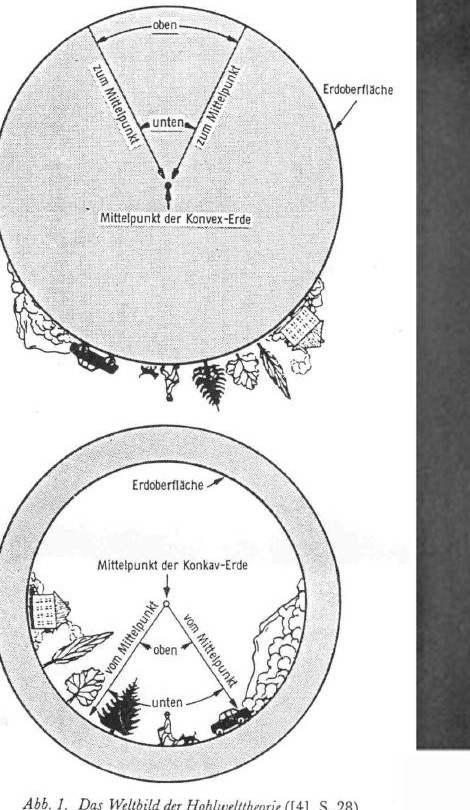
In fact, this experiment could be replicated much more easily , without having to drill hundreds of meters underground and descend through narrow, dark tunnels, with all the risks that entails. Not just anyone can verify an experiment conducted in mines more than a kilometer deep… but what if we dropped two heavy stones from very distant points onto a perfectly level bridge? The fall would only be affected by gravity , and they should land closer together than the distance from which they were dropped if the Earth were convex, the same distance if it were flat, and a greater distance if it were concave…
There is a bridge where this experiment could be carried out: the Millau Viaduct, whose level length extends for 2,460 meters, and whose maximum height is 343 meters. Therefore, the starting points of the free fall must be 500 m apart, and with a fall of at least 255 m, it should result in a minimum difference of 2 cm with respect to the points on the bridge where the stones were released, showing either convergence (convex Earth) or divergence (concave Earth).
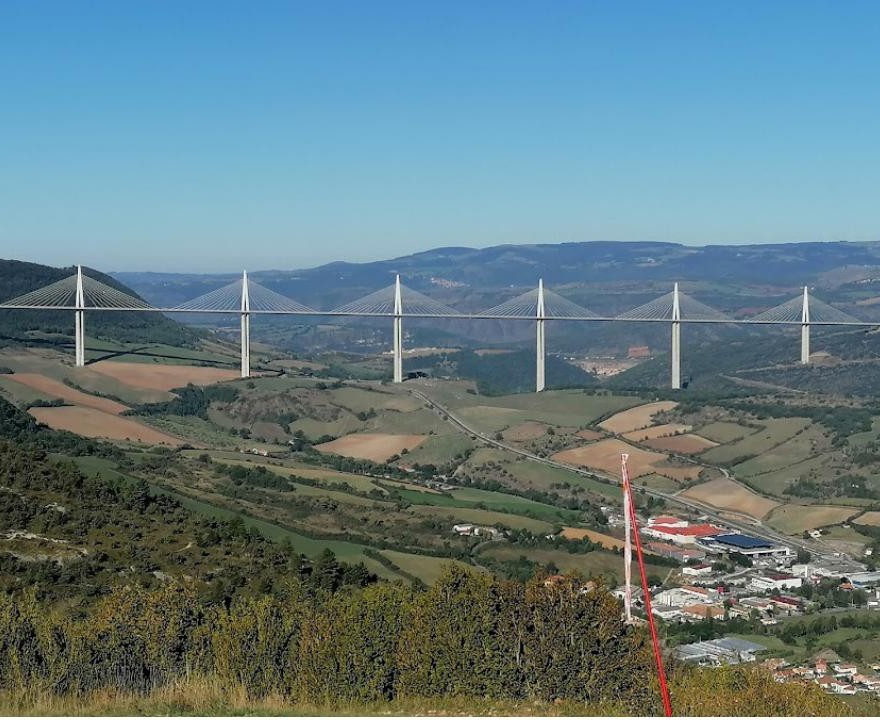
The Millau Viaduct is the tallest bridge in the world, and it is leveled for traffic.
This is the formula used to discover the discrepancy between the ends of the plumb lines, which was used in the Tamarack mines experiment.
The same formula applied to the Millau viaduct experiment, assuming two plumb lines are placed 500 meters apart at a height of 255 m.
This experiment would undoubtedly demonstrate the shape of the Earth conclusively; however, it presents technical difficulties that must be studied : 1) the Millau viaduct has very narrow emergency pedestrian walkways, and with screens that would greatly hinder the release of large stones; and 2) for safety reasons, it is very likely that the experiment would be suspended during its execution.
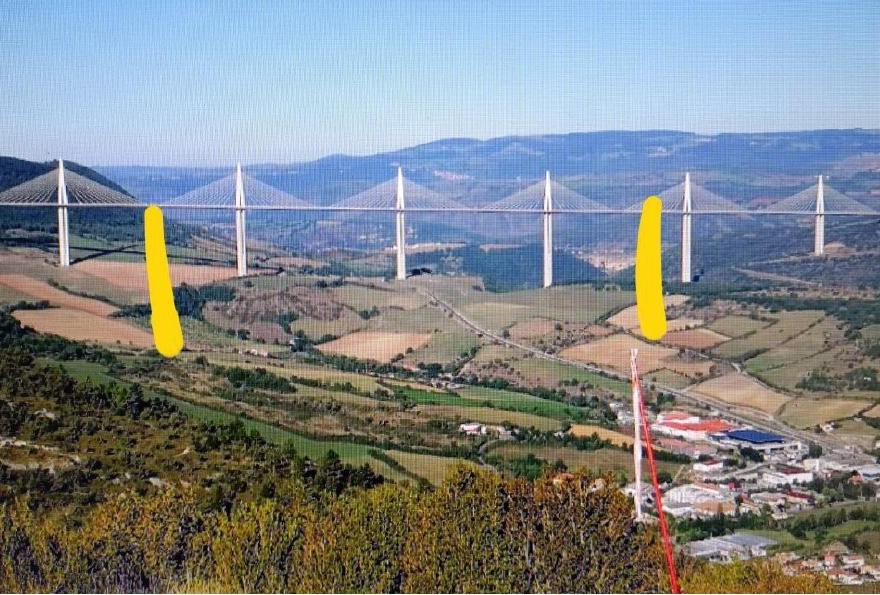
The Millau viaduct features a narrow pedestrian walkway, with side protections that would make it very difficult to throw heavy stones into the void.
Therefore, the experiment could be carried out in a more subtle way, for example, with steel cables suspended from very heavy oil barrels at their ends (plumb lines), and recording the distance between the top of the plumb lines (attached to the bridge) and their bottom (1 meter above the ground), with stakes driven into the ground every 10 meters to mark the distance between the lower ends of the plumb lines. This method would be visible to anyone who wanted to verify it themselves and, moreover, would be irrefutable, determining once and for all the true shape of the Earth .
The Millau Viaduct has a length, height, and level that are perfectly suited for conducting the geodetic plumb line experiment. This experiment would definitively end the debate about the shape of the Earth, in a way that is clear, conclusive, and verifiable on-site at any time and by anyone.
Finally, if this method also presents implementation problems, due to safety concerns, it could be carried out using powerful lasers attached to the bridge railings, spaced at least 500 meters apart, and perfectly vertical, plumb, so that the visible light mark on the surface would be affected only by gravity, functioning like a plumb bob. Once the lasers are in place, it would only be necessary to measure and mark the distance between the laser marks on the ground with stakes every 10 meters, thus determining, once and for all, the true shape of the Earth . Let us hope that a group of courageous scientists will dedicate themselves to carrying out this exciting experiment, and that their names will be recorded in the annals of history.
Sources and references:
http://blogs.mtu.edu/physics/2000/01/mtu-physics-department-history-1901-1916/
http://www.rolf-keppler.de/elot.htm
http://blogs.mtu.edu/physics/files/2000/01/DMGPlumbLines.pdf
http://www.wildheretic.com/concave-earth-theory/4/
Part 1: https://creatumejortu.com/la-tierra-es-concava-el-rectilineador
Part 3: https://creatumejortu.com/la-tierra-es-concava-iii-la-tierra-no-se-mueve
Part 4: https://creatumejortu.com/airys-failure-el-fallo-de-airy
Part 5: https://creatumejortu.com/tierra-concava-v-la-luz-se-curva
Part 6: https://creatumejortu.com/tierra-concava-vi-la-imposible-tierra-plana