Part III: The Earth Doesn't Move
creatumejortu.com/la-tierra-es-concava-iii-la-tierra-no-se-mueve
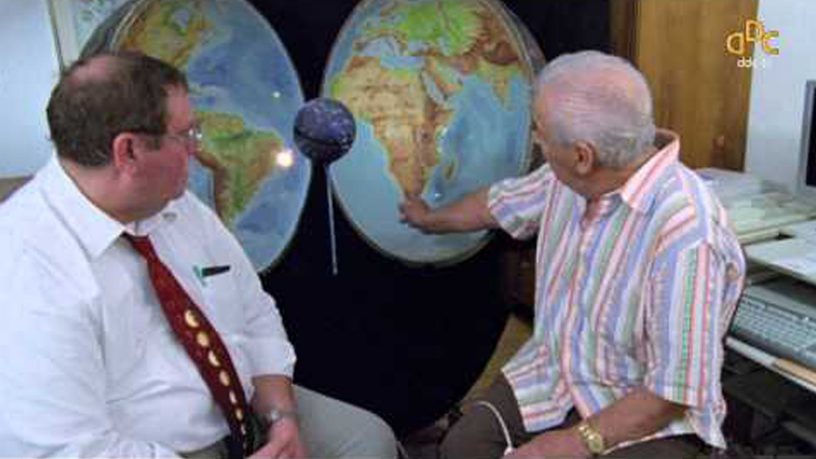
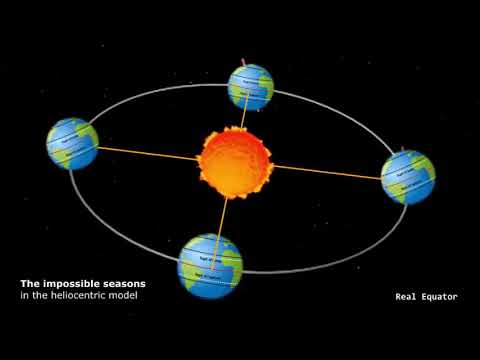
Since the time of Nicolaus Copernicus, and in the absence of an astronomical model that would resolve the many impossibilities of a flat Earth, most scientists have been encouraged to adopt the heliocentric model, according to which it is not the motion of the Sun that causes the days, but rather the Earth's own rotation. This concept is crucial to the heliocentric model, which could not simultaneously incorporate a stationary Earth, as this would imply that the entire Universe is moving except for the Earth. In fact, if it could be demonstrated that the Earth remains fixed and motionless, the entire Copernican system would be destroyed.
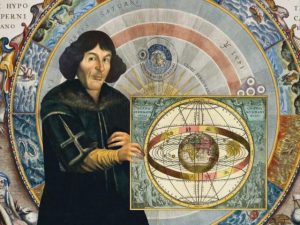
If Copernicus's heliocentric model is correct, the Earth should be continuously rotating on its axis, from west to east, at a speed of 1,700 km/h at the Equator, in order to complete a 40,000 km revolution in 24 hours. Furthermore, since it is a sphere, the closer to the poles the Earth moves, the slower its rotation speed would be, being about 850 km/h at the 60th parallel and 0 km/h at the poles.
What would it mean if the Earth were spinning at such an enormous speed? The first thing that strikes one as odd is why a helicopter, upon taking off and reaching a certain altitude, would not see the Earth passing below at full speed, so that one could travel the world without needing to move, simply by reaching the gaseous atmosphere. To this they argue that not only is the Earth moving at 1,000 km/h, but the whole atmosphere is moving with it at the same time, and that is why the helicopter always remains in the same position relative to the Earth.
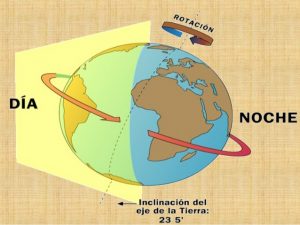
The speed of the Earth (and therefore its inertial effects etc.) varies from 1,700 km/h at the equator to 0 km/h at the poles.
The question that arises next is how the Earth's motion can drag the entire atmosphere along with it, given that the Earth's atmosphere has a gaseous density completely different from that of the Earth, and there is no ceiling or covering in space to exert the train-carriage effect so often invoked by heliocentrists to explain this phenomenon. The atmosphere is not like the air contained in a train carriage; from the Earth's surface to outer space there is a gradation, not an abrupt change, for example in atmospheric pressure. Furthermore, in a train carriage at a certain speed, any jolt is very noticeable and even dangerous. So if the Earth were rotating at 1,000 km/h, you can imagine how much more destructive earthquakes would be, following this same comparison, simply due to the effect of inertia. And finally, why is it that even when we move from one latitude to another we do not notice any change, if the difference in speed can easily be 1,000 km/h? Can you imagine switching from a 100 km/h car to one traveling at 1,000 km/h? Any of us would notice a huge difference, but on Earth, that never happens.
In the train example, heliocentrists would be forced either to recognize a solid dome as the 'roof', or to change the example to be on the train, not inside it.
Secondly, if the atmosphere were moving eastward at approximately 1,000 km/h, an airplane flying westward would have to overcome headwinds of between 500 and 1,700 km/h, with the pilot having to take into account the Earth's varying speeds depending on the latitude being crossed. And we are not talking about small speeds, but differences in the rotation of the atmosphere of almost 1,000 km/h depending on the latitude overflown. These changes in atmospheric speed should greatly disrupt an airplane's flight, yet no pilot takes such speed changes into account when traveling along the north-south axis.
On the other hand, if the plane were to move toward the east, along with the atmosphere, then in order to advance it would be forced to exceed the 1,000 km/h of the Earth and the atmosphere, and if it could do so, the time and fuel used would be much greater than going toward the west, so that all flights would be made from East to West and never the other way around.
Finally, when flying south-to-north or vice versa, either the pilot would have to calculate the rotational movement to reach the destination, or the atmosphere would drag the plane toward the east with different force, the drag being much greater at the Equator than at the rest of the latitudes, but none of this happens, since apparently neither the Earth nor the atmosphere rotate at 1,000 km/h lost in space. It also seems, then, that it is time to abandon the Copernican system and turn modern astronomy and the Universe as we know it upside down.
Watch Video At: https://youtu.be/hqigFzHprZ8
Watch Video At: https://youtu.be/6yfWx9HVnvU
Part 1: https://creatumejortu.com/la-tierra-es-concava-el-rectilineador
Part 2: https://creatumejortu.com/la-tierra-es-concava-ii-las-plomadas-de-las-minas-tamarack
Part 4: https://creatumejortu.com/airys-failure-el-fallo-de-airy
Part 5: https://creatumejortu.com/tierra-concava-v-la-luz-se-curva
Part 6: https://creatumejortu.com/tierra-concava-vi-la-imposible-tierra-plana
https://creatumejortu.com/memepedia-astronomia
Visits: 342