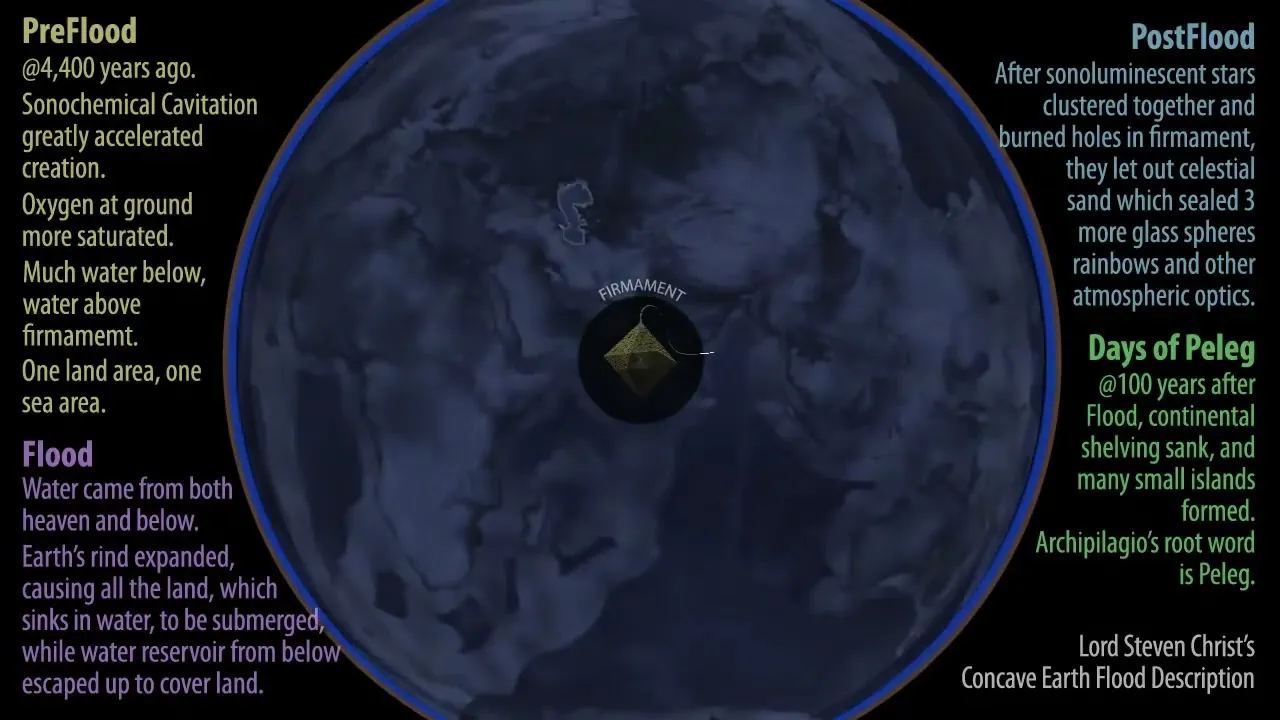
"All the fountains of the great deep were broken up, and the windows of heaven were opened." Genesis 7:11
The Flood does not begin with rain alone. Genesis gives it two openings. The windows of heaven open above, and the fountains of the great deep break open below. The text does not describe a storm moving over an ordinary world. It describes a breach from both directions, with the sky pouring down and the ground itself yielding water.
The same double mechanism appears when the waters recede. Genesis 8:2 says that "the fountains also of the deep and the windows of heaven were stopped." The sky closes. The deep closes. The story keeps both doors open until it is ready to shut them again.
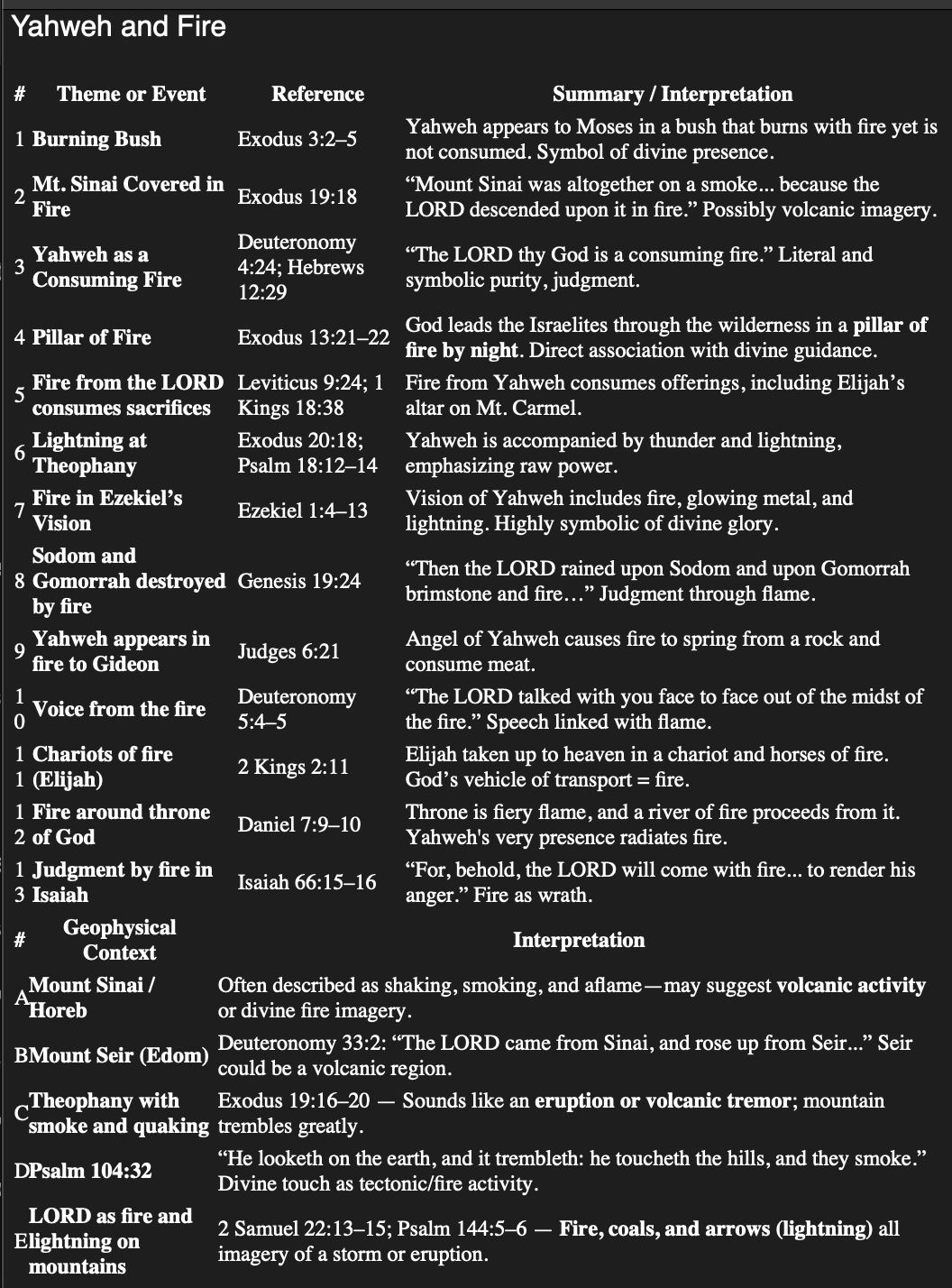
That split runs through the biblical material. In Exodus, Moses sees a bush burning without being consumed. At Sinai, the mountain smokes because Yahweh descends in fire, and the whole mountain trembles violently. Flame, cloud, thunder, sacrifice, and command gather around his appearances. The image is vertical. Something comes down.
Jesus moves through another element. His public life begins in the Jordan. He teaches from boats, calls fishermen, stills a storm, walks on the sea, and tells the woman at the well that the water he gives will become "a well of water springing up into everlasting life." Water is where he appears, what he crosses, and the language through which he describes life.
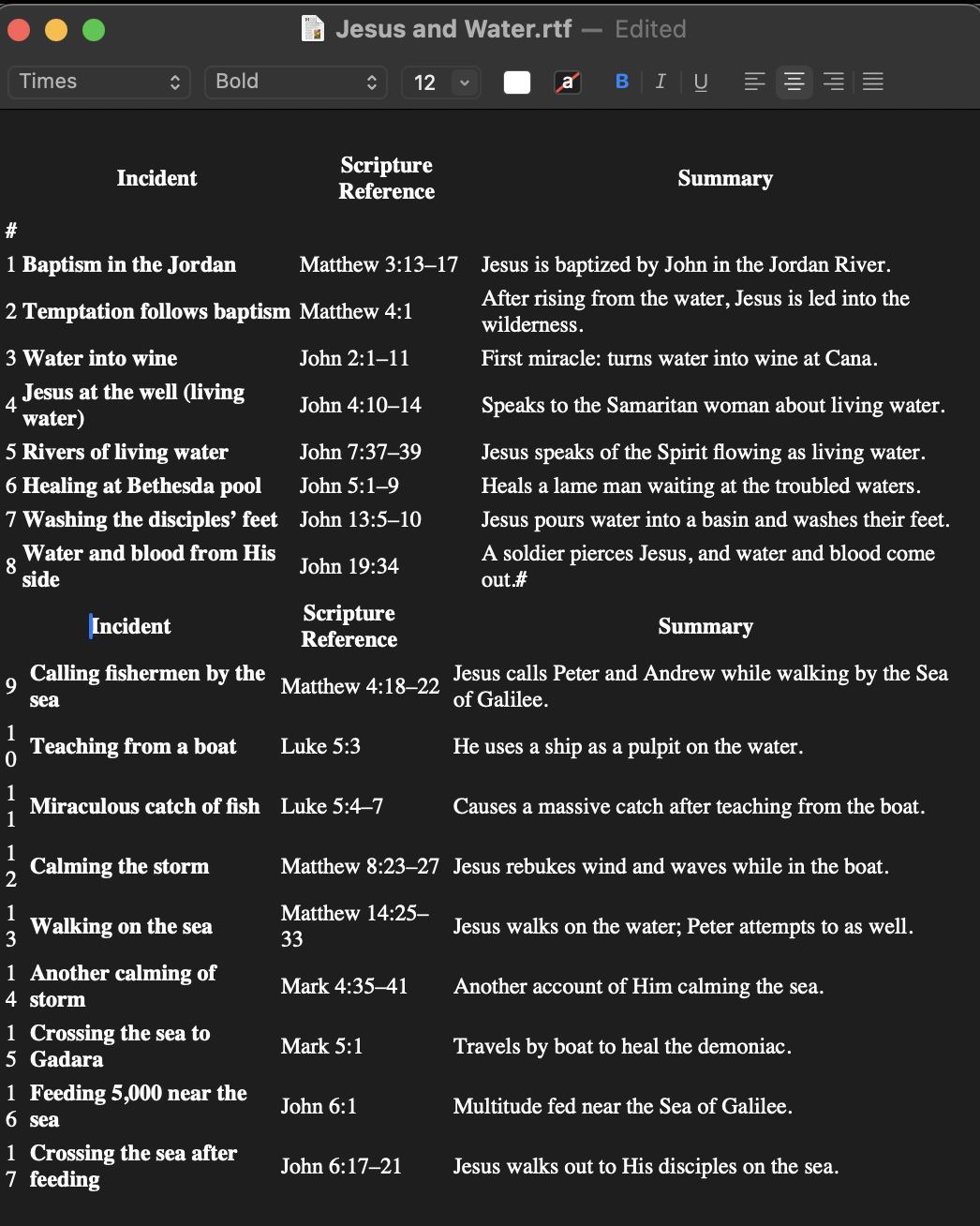
The contrast is hard to miss once it is laid out. Yahweh is surrounded by flame and smoke. Jesus is surrounded by wells, rivers, storms, and sea. One figure comes down from the burning mountain; the other stands at the well and speaks of water coming up from within. That last image matters. The water is not delivered by a cloud. It is already there, beneath the surface, waiting to rise. The old stories keep placing their power at opposite ends of the world.
Genesis does the same thing with destruction. It names the deep beneath the land, then says its fountains broke open. The story puts water inside the Earth before it puts water over the Earth. In an enclosed Earth, that order matters. Floodwater need not arrive from a distant ocean and cover a fixed surface. It can come up through the ground as the world changes around it.
This is why the old flood stories do not read like ordinary weather reports. They remember land breaking, waters appearing where they should not be, and a familiar surface becoming unrecognizable. A civilization lives on ground it mistakes for permanent, then the ground moves. What survives is not a map but fragments: a name, a mountain, a lost coast, a family put into a vessel before the waters arrive.
Plato's Atlantis story carries the same shape. Critias describes the island and its people, while Timaeus gives the destruction: "violent earthquakes and floods" erase Atlantis in "a single day and night." The place goes beneath the sea, and the later world inherits only the report. There are no surviving coastlines to consult, only the account of a land and a people swallowed by water.
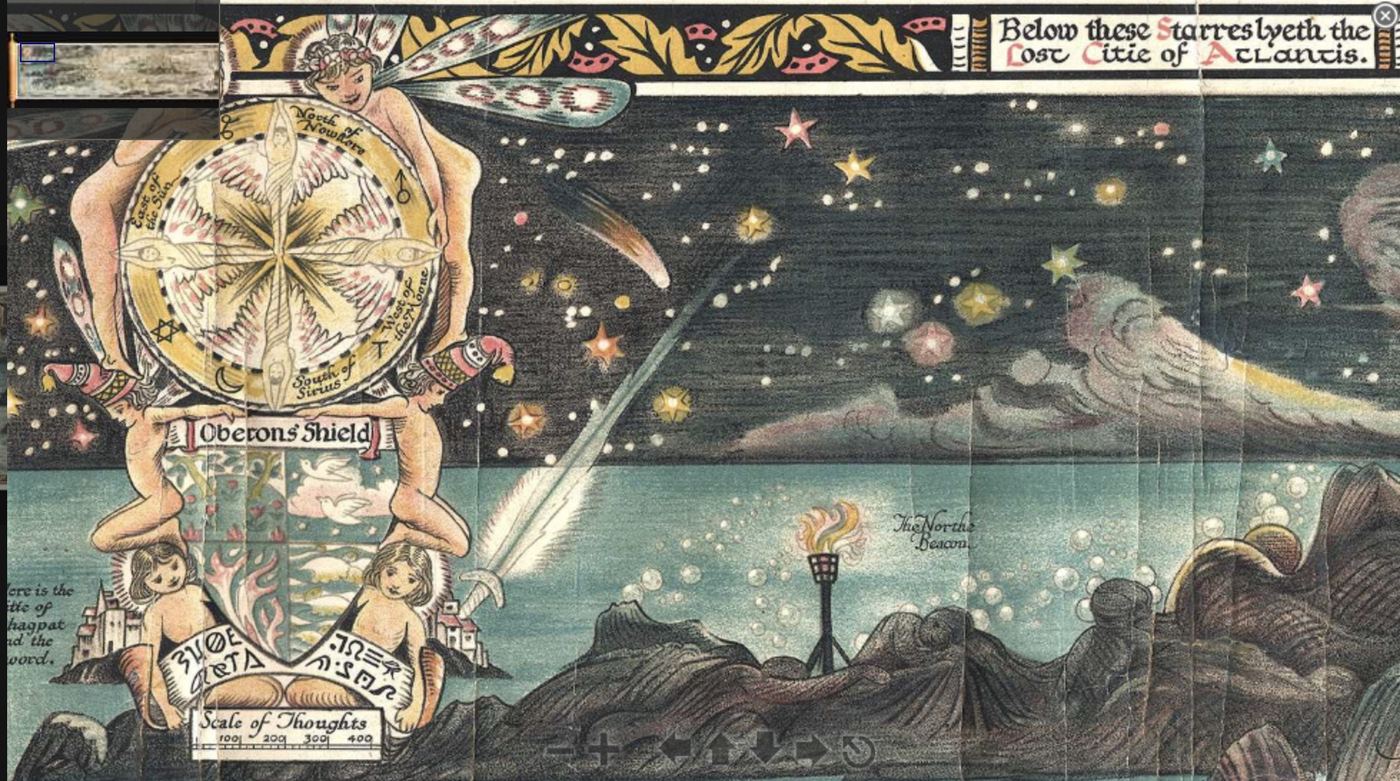
Genesis, Sinai, the Gospel waters, and Atlantis do not come from one book or one people. Yet the same old arrangement keeps returning: fire above, pressure below, water rising through the Earth, then a broken world remembered by those who made it out. The language changes. The pattern does not.
The survivors begin again on altered ground. The earlier age turns into myth because its coastlines are gone, its ruins are buried, and its stories have been handed down by people who no longer know what they are looking at. But Genesis leaves the mechanism in plain sight. Before the rain falls, "the fountains of the great deep" break open.