In 1964, New York elicited the help of one Walt Disney to transform the city's largest dump into a beautiful 900-acre, $800 million theme park — only for it to be dismantled after just two years. It was a modern marvel of its time. Now abandoned and crumbling decades later.
Walt Disney was central to the entire design. He built four of the fair's biggest attractions, and what he encoded in them tells a story most people missed.
What most people don't realize is that Disney used the fair to encode something — the concave earth.
The Unisphere
At the center of the fairgrounds stood the Unisphere — a 12-story, stainless steel globe. It was one of the first structures designed for the fair and one of the only pieces still standing today. Everything else was torn down. But the hollow globe stayed.
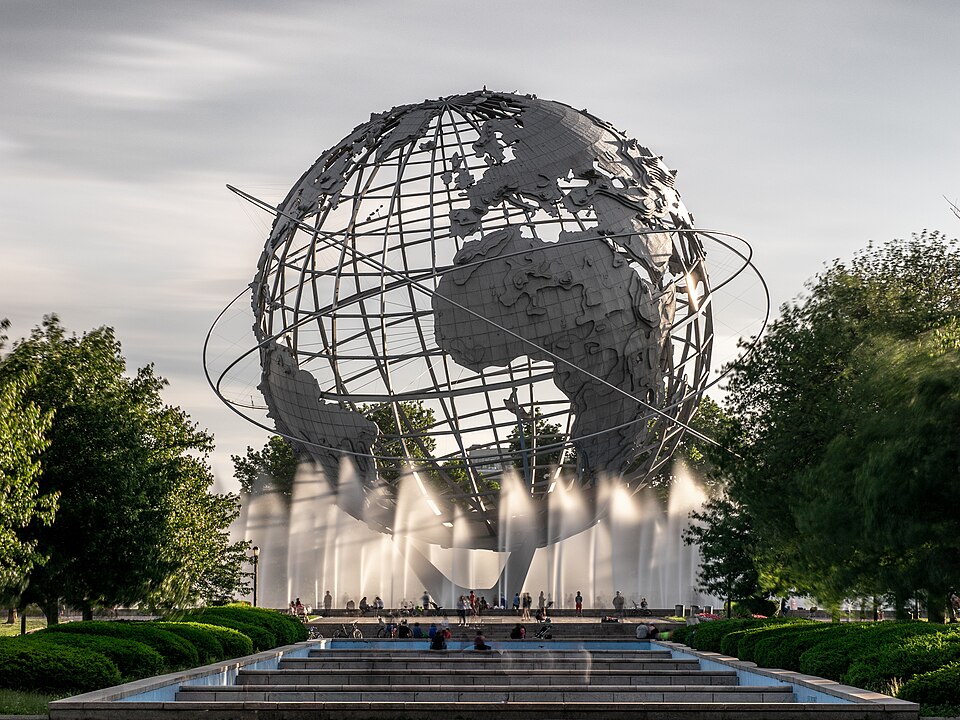
The name gives it away. Uni — one. Sphere — globe. The universe as a single sphere. But look closer: the Unisphere is hollow. You can see right through the metal framework to the other side.
A hollow globe. The universe contained inside a sphere. That's the concave earth model.
The fair's promotional materials called it "the largest representation of our globe ever attempted." But what if it wasn't meant to represent the outside of a planet? What if it was showing us that we're on the inside?
It's a Small World
Walt Disney's most famous contribution to the fair was "It's a Small World" — a boat ride through a building filled with hundreds of animatronic dolls from every nation, all singing the same song.
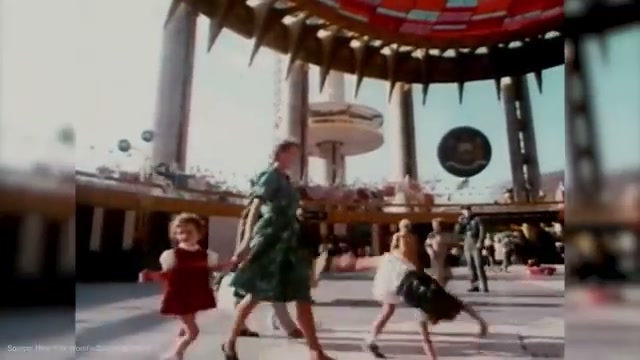
The song tells you everything:
It's a small world after all
Not the earth. The world. The word "world" didn't mean planet Earth back in the day, it meant the cosmos, the spherical sky. They've inverted the meaning. A small world means a small cosmos. Finite. Enclosed.
Outside the ride stood the Tower of the Four Winds — a 120-foot kinetic sculpture. Four winds, four corners, all moving within the same space. In a concave cosmos, the winds circulate inside the sphere. There is no "outside" to blow into.
The Fountain of the Planets
At night, the fair's central lagoon became the Fountain of the Planets — a water and light show. "Planets." Plural. All contained within the fair's central space, directly below the Unisphere.
Walt Disney and Cyrus Teed
Here's where it gets interesting. Walt Disney didn't just stumble into these themes. He had a fully developed plan for a self-contained city — Epcot, the Experimental Prototype Community of Tomorrow.
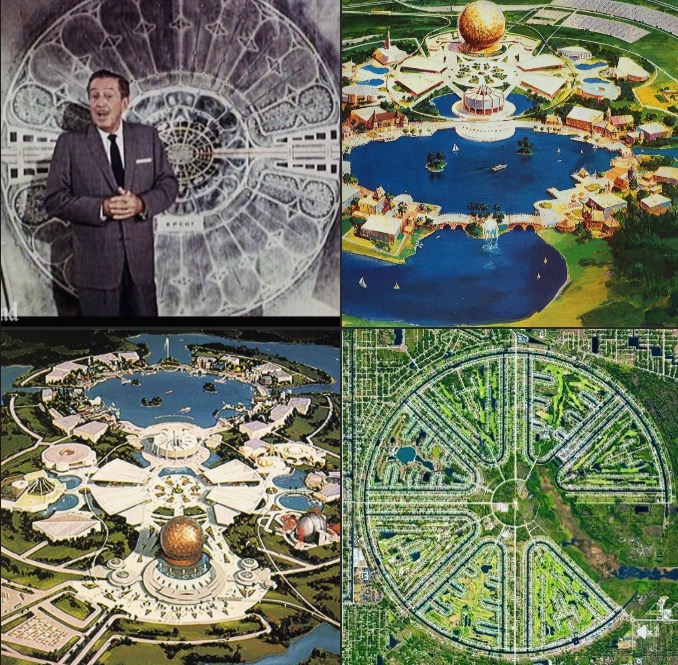
His original vision for Epcot was a city under a dome. A world within a world. People would live, work, and move through a completely enclosed environment. No outside.
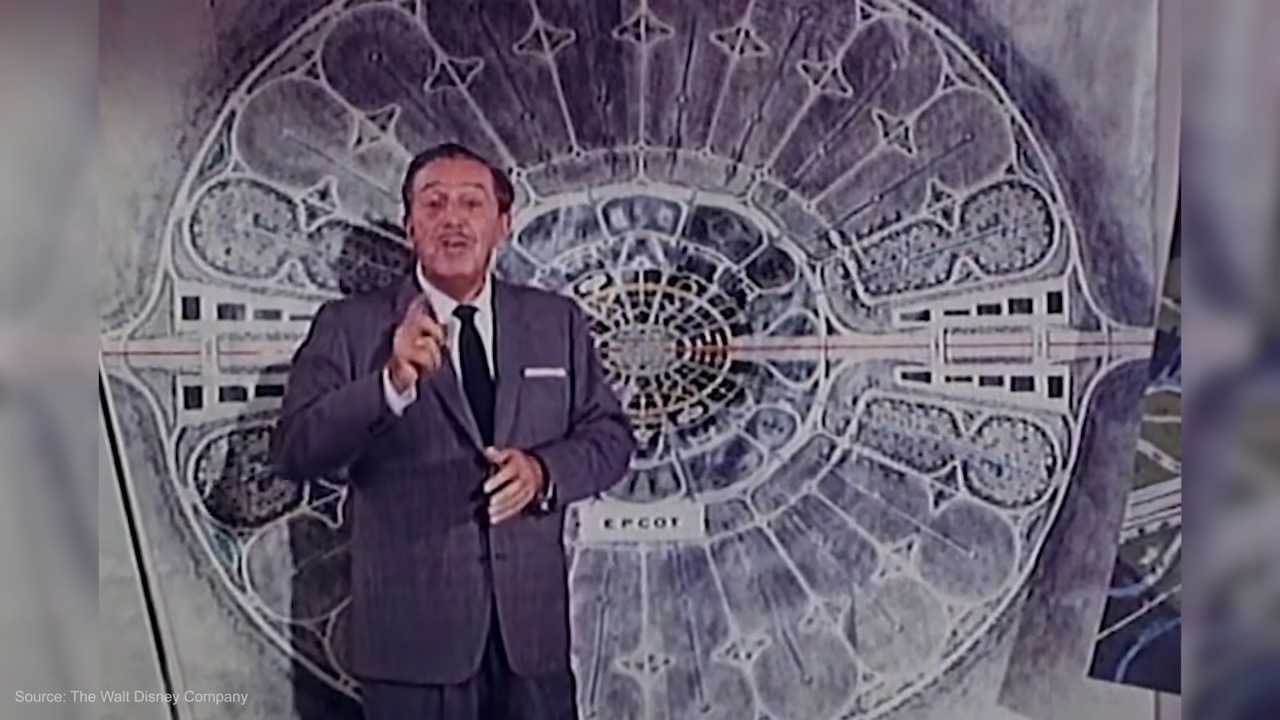
That's the exact same model Cyrus Teed proposed in the late 1800s. Teed — the founder of Koreshanity and the person most responsible for the modern concave earth theory — described a hollow sphere where humanity lives on the inside. The universe is inside the earth. Everything is contained.
Walt Disney's Epcot plans mirror Teed's cosmology almost exactly. A closed system. A finite world. A contained universe.
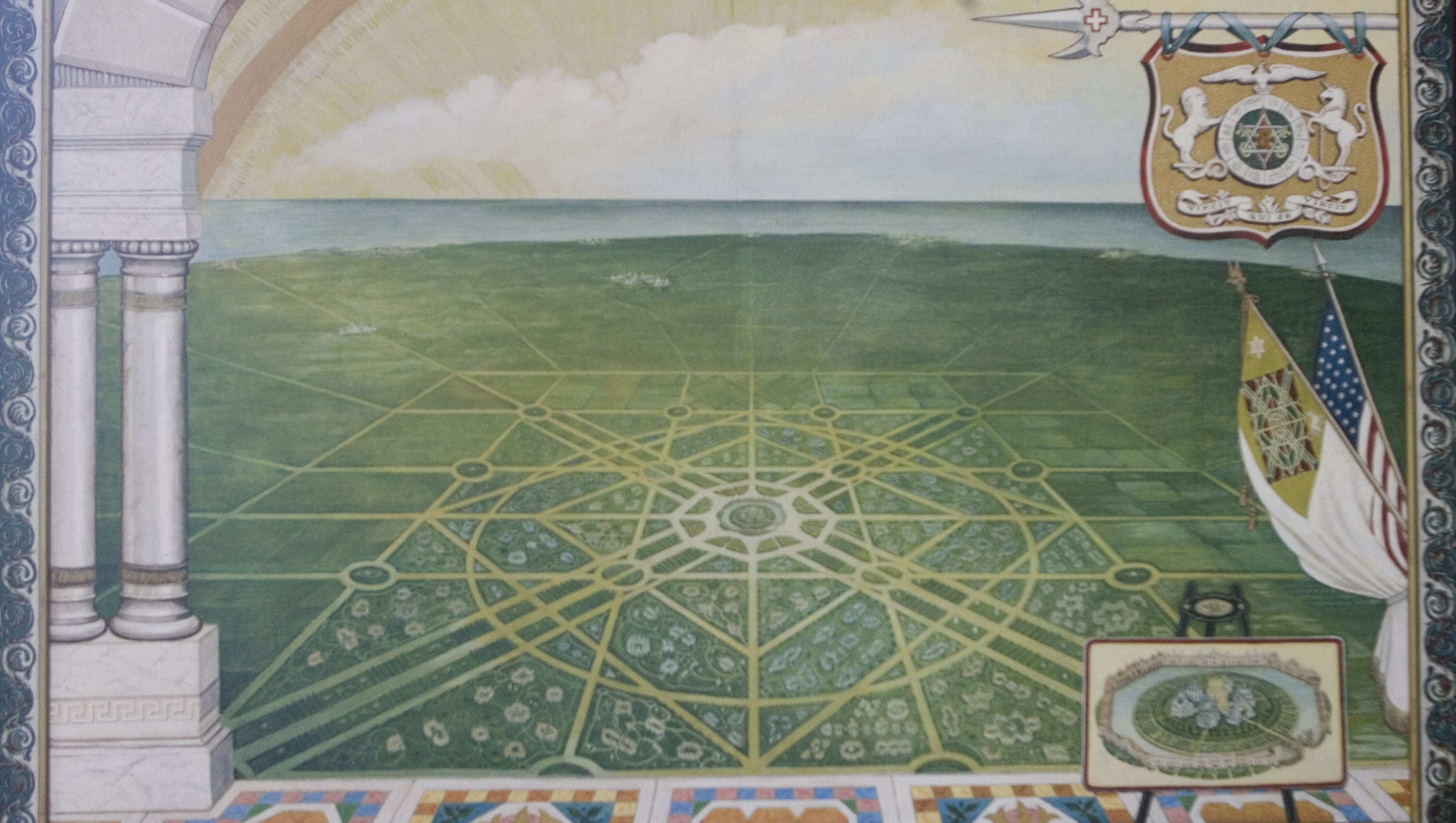
Teed didn't just theorize about it. He drew it. This painting hung in the Koreshan Art Hall in (also in Florida) — a concentric city with radiating streets, all contained within a single geometric design.
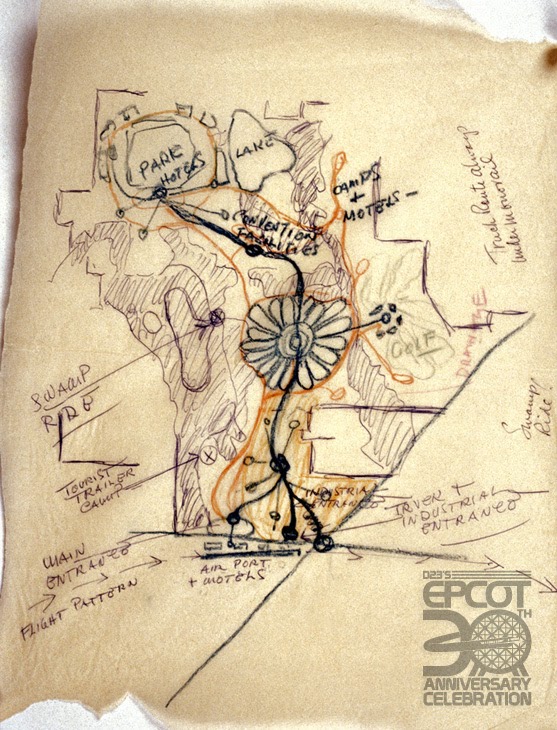
And Walt Disney drew his own version. This is his original 1965 master plan for EPCOT — a radial city with a dense central core, monorails, and residential districts fanning outward. Same geometry. Same idea.
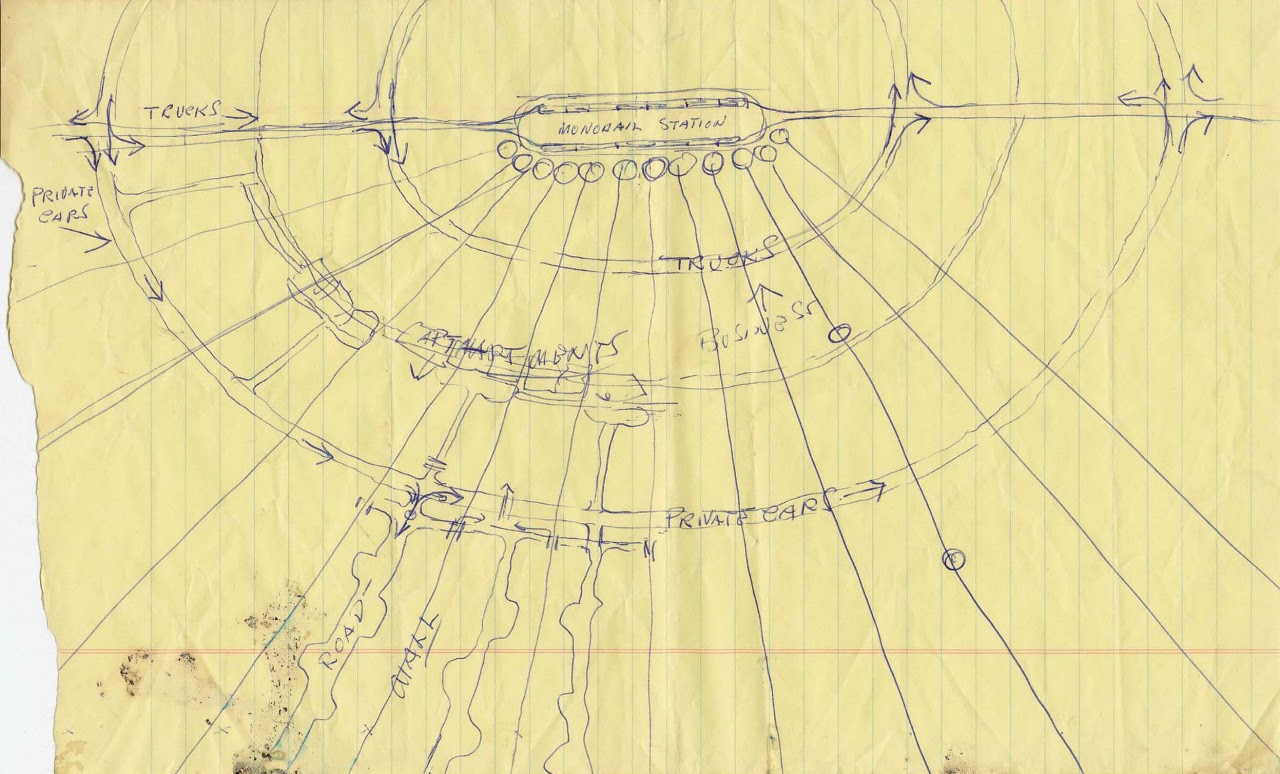
Look at the central core of Walt's EPCOT sketch. A transportation hub with monorails and peoplemovers radiating outward. Everything contained within a single system. Compare this to the Unisphere, compare it to Teed's New Jerusalem, and you start to see the pattern.
Walt died in 1966 before Epcot was built. The Epcot we got is a theme park — a "permanent World's Fair" — but not the enclosed city Walt had drawn. The vision was watered down.
What Remains
The 1964 World's Fair itself was temporary. They built it in two years, ran it for two seasons, then tore almost all of it down. 90% of the structures were dismantled by 1966. The knowledge was revealed and then hidden again.
But the Unisphere stayed. It was one of the first things designed and one of the only pieces they didn't destroy. A hollow metal globe at the center of everything. Still there today in Queens, New York.
What Was Walt Saying?
The 1964 World's Fair brought 51 million people through its gates over two seasons. Most of them rode It's a Small World, saw the Unisphere, and walked past the fountains without ever questioning what they were really looking at.
A hollow steel globe at the center. A song about a small cosmos. Rides that move in circles. Planets in a fountain. A planned city under a dome that mirrors the cosmology of Cyrus Teed — right down to the radial geometry of the city plan.
Walt Disney didn't just build attractions. He encoded a cosmology. The universe is finite, enclosed, and we're on the inside.
- --
Source: "The History of the 1964-1965 World's Fair" by For the Love of Theme Parks (YouTube)