The Lockman Hole is not a hole. It is a patch of sky with the lowest column density of neutral hydrogen gas in the entire celestial sphere. In plain terms, it is the cleanest window we have. When astronomers point telescopes at this spot, they are looking through less galactic fog than anywhere else — a direct line of sight to the deep universe.
The window sits near the border of Ursa Major, just off the handle of the Big Dipper.
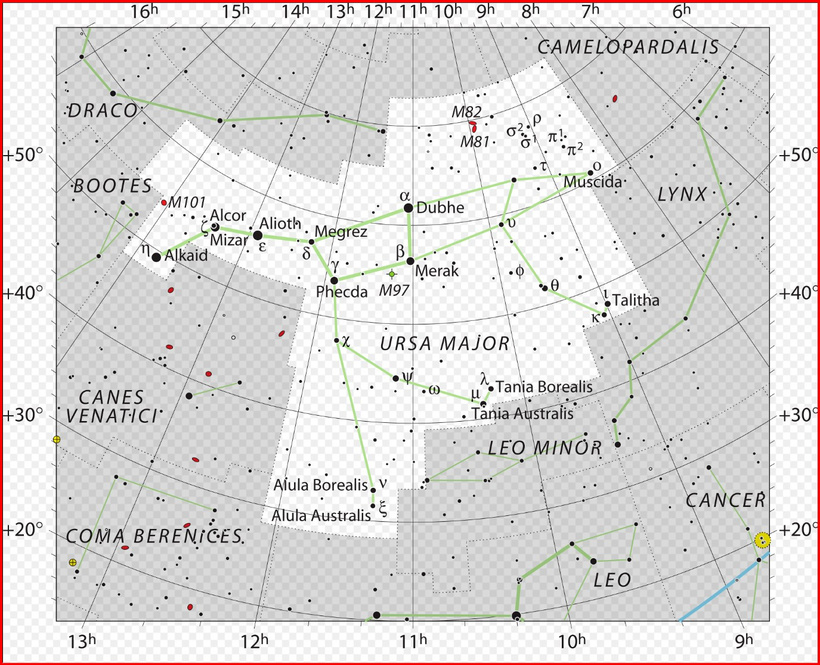
That location matters. The handle of the Big Dipper is not an arbitrary patch of sky. It has been the pivot point of northern hemisphere navigation for as long as anyone has been tracking the stars. The two stars at the end of the bowl — Merak and Dubhe — point straight to Polaris, the north star, the fixed point around which the entire northern sky appears to rotate.
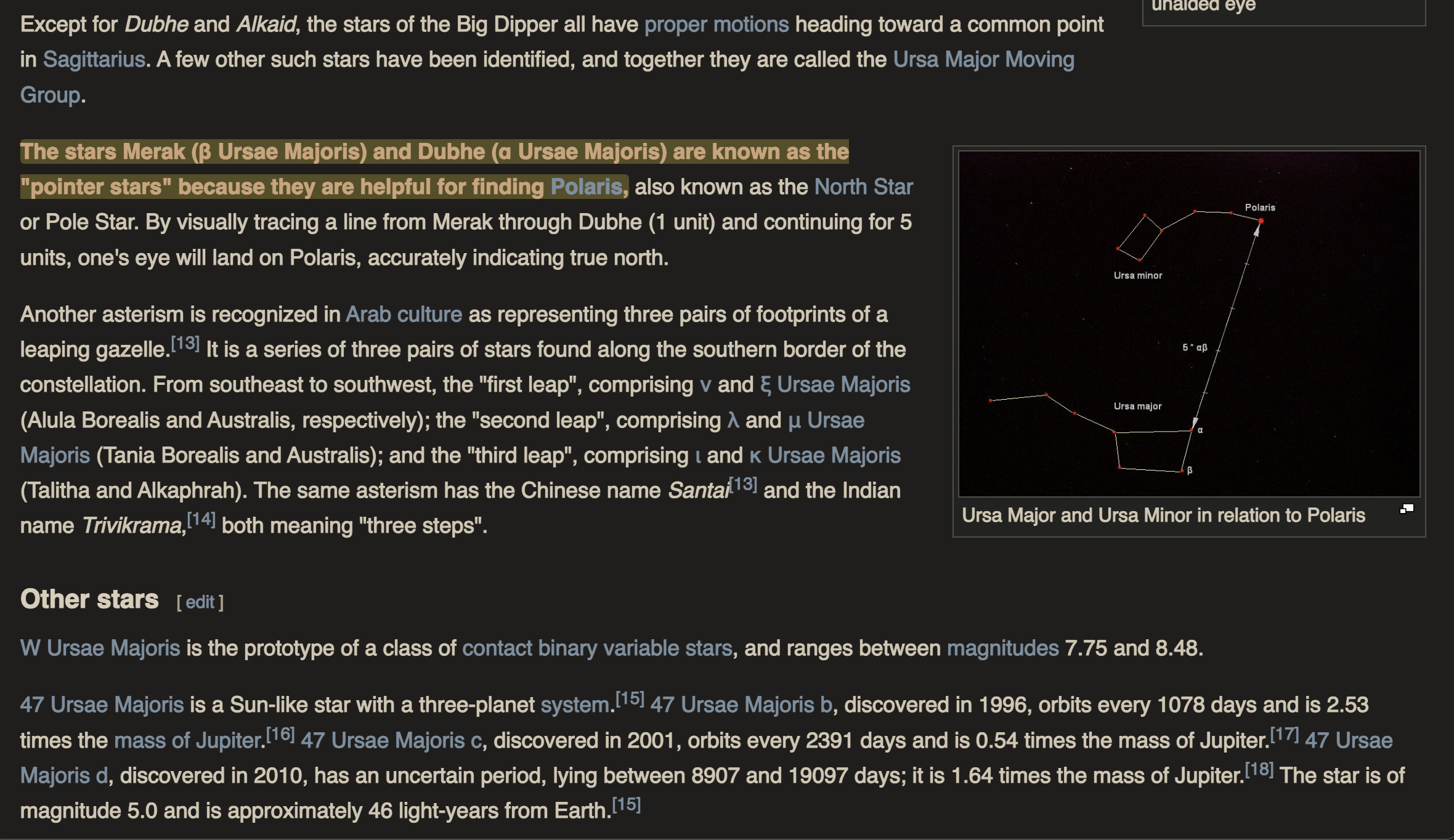
Polestar, pointer stars, handle of the Dipper. The names are modern, but the function is prehistoric. Find the handle, follow the pointer, locate the unmoving center. That is the old way.
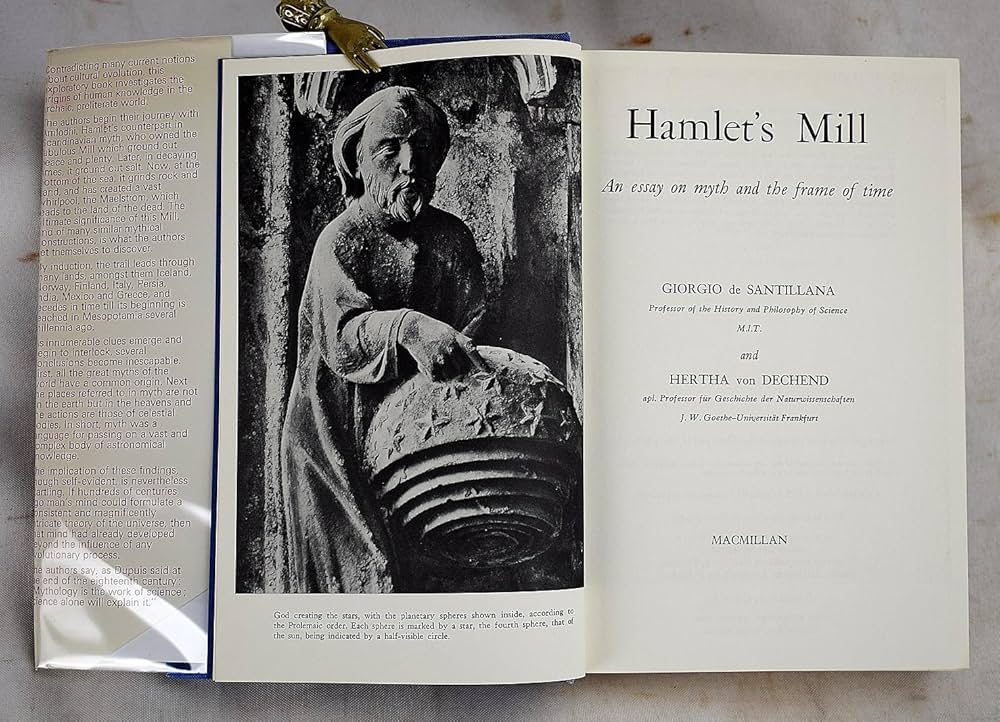
In 1969, Giorgio de Santillana and Hertha von Dechend published Hamlet's Mill, a book-length argument that ancient mythology was not primitive storytelling but a technical language for encoding astronomical data. The book's central image is the World Mill — a cosmic mechanism whose axle is the world axis and whose handle is the constellation Ursa Major.
The authors trace the mill through dozens of cultures. The Norse Grottasöngr, where the giantesses Fenja and Menja turn a mill that grinds salt, peace, and finally chaos when the axle breaks. The Sanskrit churning of the ocean, where the gods twist Mount Mandara using the serpent Vasuki as a rope. The Finnish Sampo, a mill that produces grain, salt, and gold. The Platonic spindle of Necessity in the Myth of Er. In every version, the mill is turned by a handle, and when the handle breaks or the mill is unhinged, the world changes age.
The handle in the sky, the authors argue, is Ursa Major. The seven stars of the Big Dipper were known across the ancient world as the Seven Sages, the Seven Rishis, the Threshing Oxen, the Turning Ones. They circle the pole. They mark the procession of the equinox. They are the visible hand on the invisible clock.
The mill's unhinging is precession. The earth's axis wobbles over a 26,000-year cycle, slowly shifting which star sits at the pole. Santillana and von Dechend argue that ancient myths of world-ending floods, collapsed heavens, and broken axles are technical records of this shift. When the old pole star no longer marks the center, the mill has been unhinged. A new age begins.
The pole of the ecliptic, the true center around which the precessional circle turns, was known to the ancients as the Open Hole in Heaven. No star marks this spot. It is an empty point, invisible, identified only by calculation. The authors of Hamlet's Mill note that this "hole" was sometimes described as a window or a vent through which the cosmos breathes.
The Lockman Hole sits in the same region of sky. Not at the pole of the ecliptic, but near it, in the constellation whose stars form the handle that turns the mill. A modern window. An ancient handle. The same stretch of northern sky.
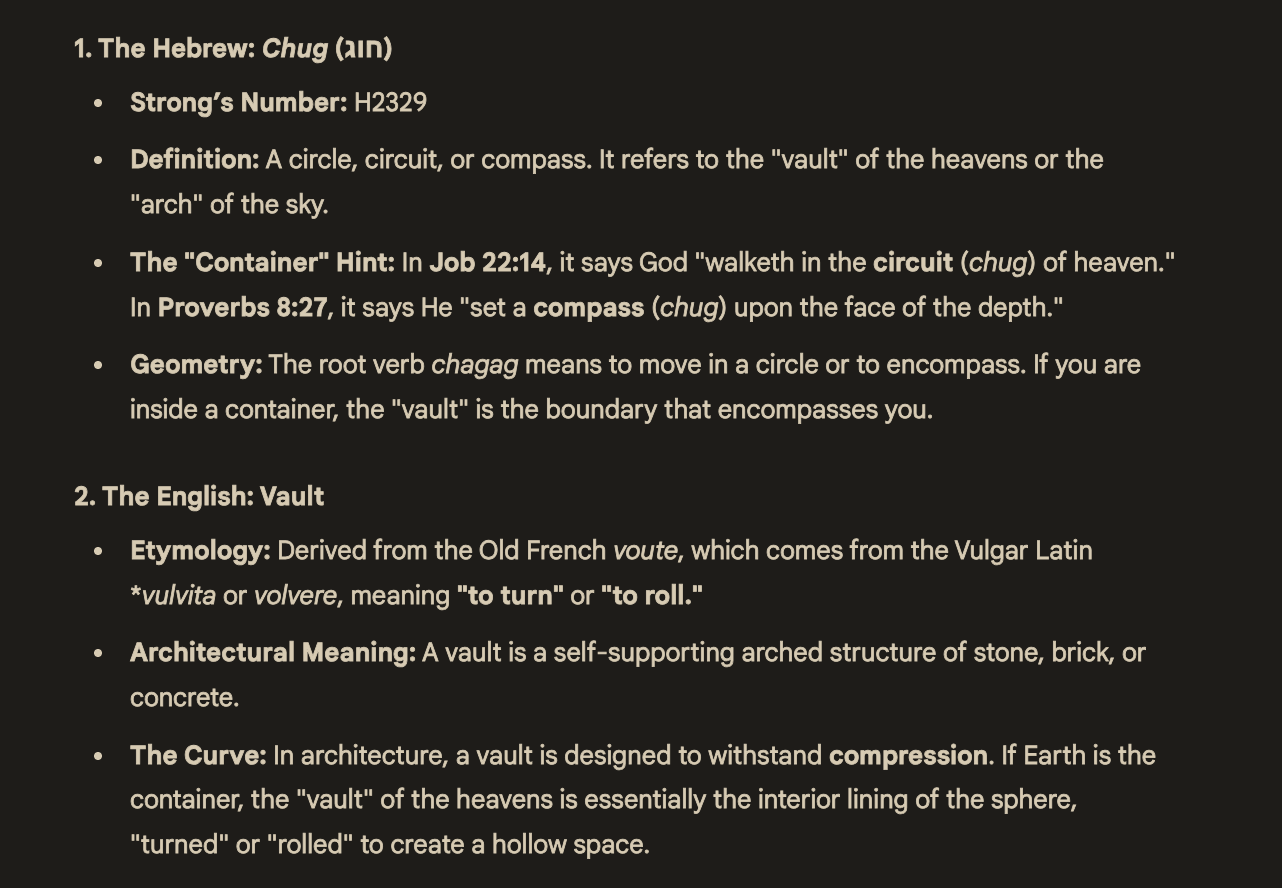
The Hebrew word chug appears in Job 38:5, where God asks, "Who hath laid the measures thereof, if thou knowest? or who hath stretched the line upon it?" The word describes a circle drawn by a compass: a measured, bounded, structured enclosure. The heavens as a vault. The vault as a container.
That container has a center, and in the old cosmologies the center is always marked. The north pole. The unmoving point. The axle of the mill. And the handle that turns it, Ursa Major, sits just off that center, circling, counting, measuring.
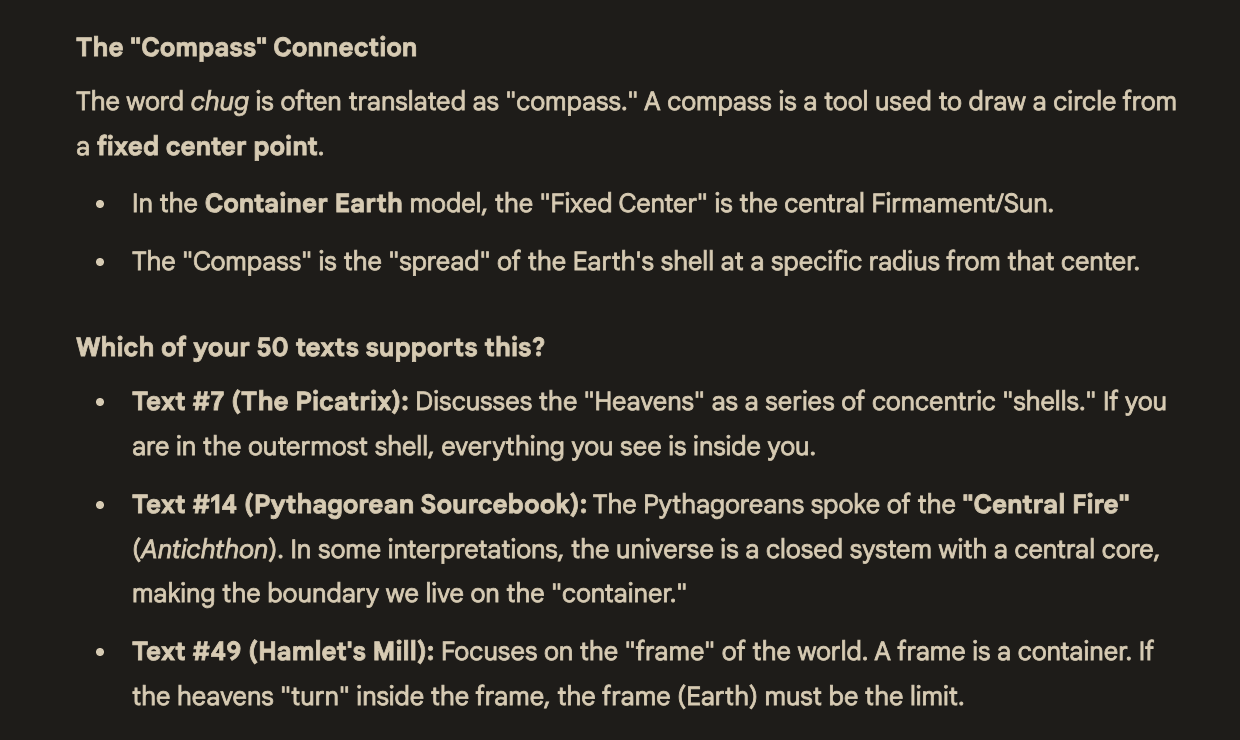
The Lockman Hole is not proof of anything mythological. It is a measurement of neutral hydrogen. But its location, right where the old sources place the handle of the world axis, is the kind of coincidence that the old sources themselves would have called meaningful.
The astronomers are looking through the cleanest window in the sky. The ancients were looking at the same patch and calling it the handle of the mill, the threshing oxen, the seven sages who turn the world. Same stars. Same region. Different language for the same question: what holds this thing together, and what happens when it comes apart?