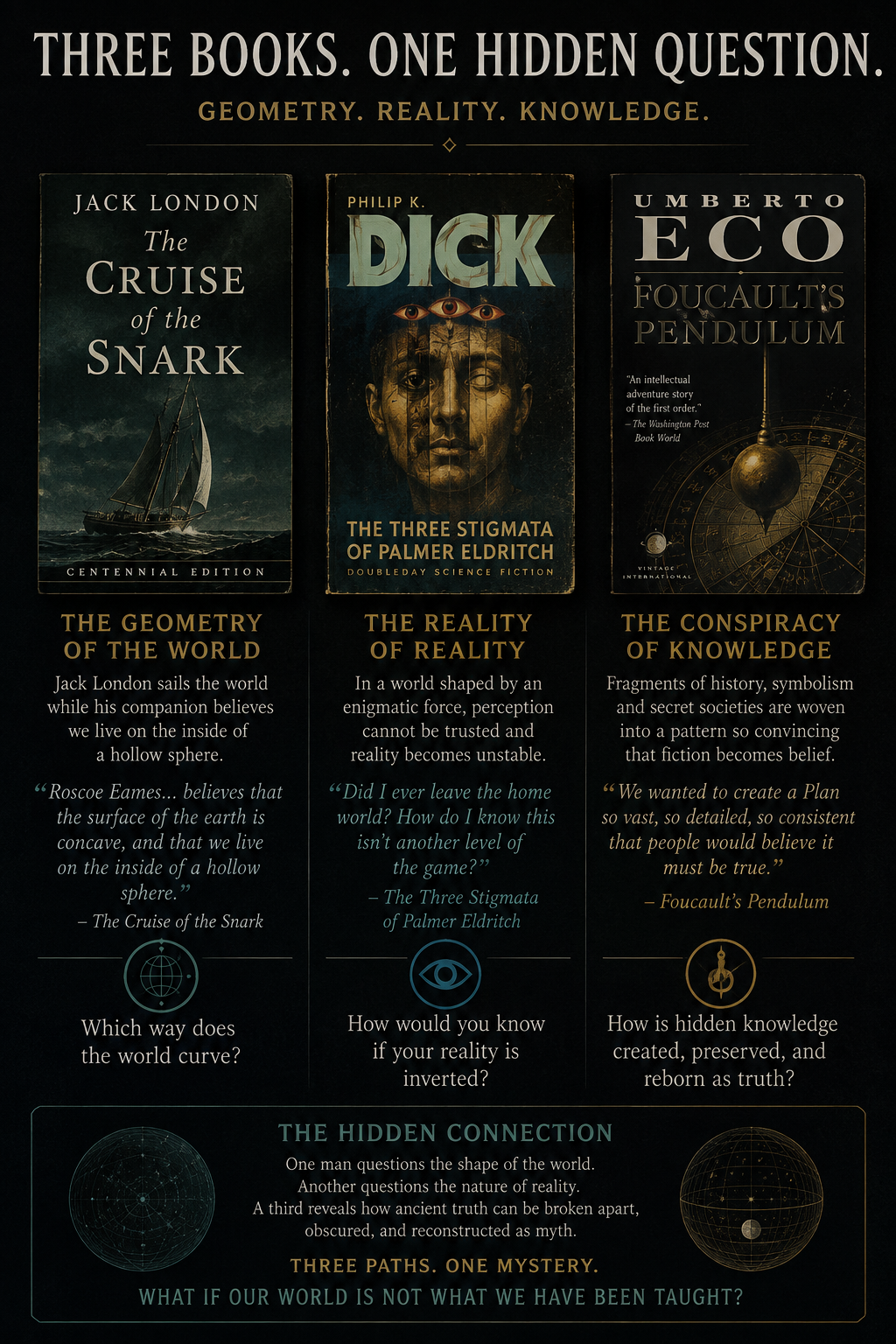
The Hidden Geometry: Three Books and One Question of Reality
Three books separated by decades and genre—Jack London’s The Cruise of the Snark (1911), Philip K. Dick’s The Three Stigmata of Palmer Eldritch (1965), and Umberto Eco’s Foucault’s Pendulum (1988)—can be placed beside one another to reveal a remarkable progression. London questions the physical geometry of the world, Dick questions the reliability of perceived reality, and Eco questions the historical machinery by which hidden knowledge can be fragmented, reconstructed, and mistaken for fantasy. Read together, they suggest the possibility of an inverted cosmology concealed in plain sight.
The connection begins most explicitly with Jack London. Before the Snark even leaves on its voyage, London introduces his co-navigator Roscoe Eames as a follower of Cyrus R. Teed, founder of the Koreshan movement. London writes that Teed possessed “a different cosmology from the one generally accepted.” He then states the issue without ambiguity: Roscoe believed “the surface of the earth is concave” and that humanity lives “on the inside of a hollow sphere.” London jokes that although the two men will sail aboard the same vessel, Roscoe will travel around the world on the inside while London travels around the outside. Each expects eventually to convert the other.
That passage transforms The Cruise of the Snark into something more interesting than an ordinary travel narrative. London is physically crossing oceans while learning celestial navigation, using observations of the Sun and stars to determine his position. At one point he describes navigation almost as initiation into a priesthood: he has “listened to the voices of the stars” and learned his position upon the sea. The disagreement between London and Roscoe therefore concerns something fundamental: the same observations can be performed while the two men hold radically opposite mental pictures of the world containing them. London ultimately accepts conventional astronomy, but the presence of Teed’s cosmology establishes the question openly.
Philip K. Dick moves that problem from geometry into consciousness. The Three Stigmata of Palmer Eldritch constructs realities within realities until the characters can no longer confidently determine whether they have returned to the original world. Perception itself becomes unreliable. The important parallel is not that Dick secretly describes a particular terrestrial model, but that he attacks the assumption that the reality presented to consciousness must correspond to the underlying structure of reality. London asks, in effect, Which way does the world curve? Dick asks an even more disturbing question: How would you know if your entire conception of the world were inverted?
Then comes Foucault’s Pendulum. Eco supplies the historical mechanism. Casaubon, Belbo, and Diotallevi assemble “the Plan” from Templars, Rosicrucians, Hermeticists, Kabbalists, Freemasons, sacred geography and other fragments of Western esotericism. Their conspiracy is deliberately manufactured, yet it becomes frighteningly persuasive precisely because the fragments from which it is constructed are real. Eventually the distinction between invented pattern and recovered knowledge becomes dangerously unstable.
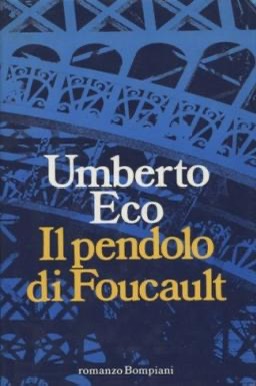
Italian Bompiani cover for Umberto Eco’s Il pendolo di Foucault (Foucault’s Pendulum).
This is where old cosmological imagery becomes especially provocative. Nicolosi’s famous globular cartography represents the terrestrial world as two circular hemispheres. Historically these are cartographic projections of a conventional globe, not declarations of an interior Earth. Yet visually they are reversible: the terrestrial surface appears contained within circular boundaries. Alongside this stands the traditional celestial sphere, where the stars are arranged upon a spherical heavenly framework. Put the terrestrial and celestial images together and an intriguing inversion appears—Earth as container, heavens as contained sphere.
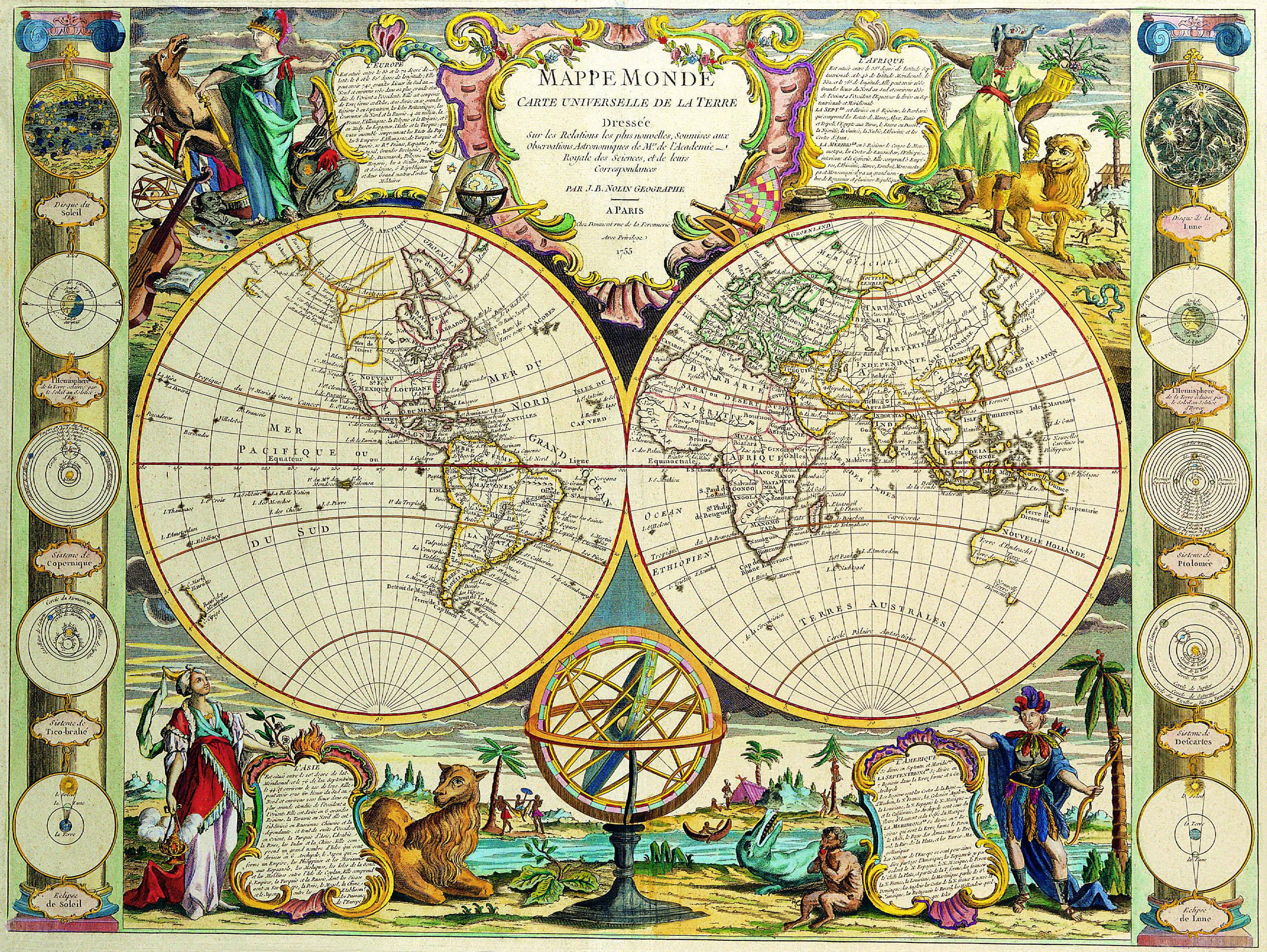
A supplied decorative double-hemisphere world map, framed by allegorical figures and a central armillary sphere. The file contains no maker or date metadata, so this article does not assign one.
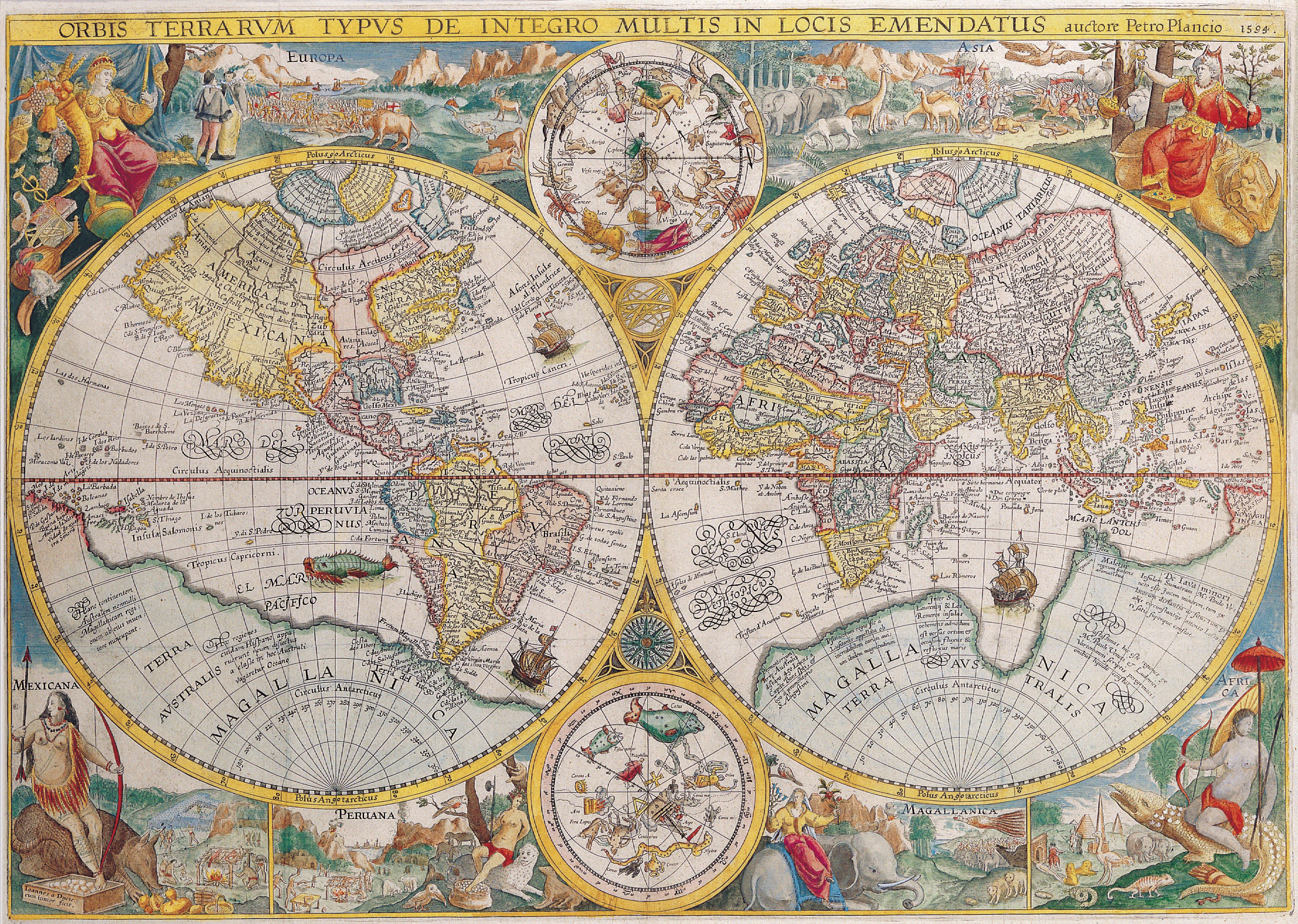
Petrus Plancius’s 1594 Orbis terrarum typus de integro multis in locis emendatus, engraved by Jan van Doetecum the Younger: a double-hemisphere world map with two smaller celestial hemispheres. Yale’s catalog notes its depiction of New Guinea as part of the southern continent labeled Magallanica.[1]
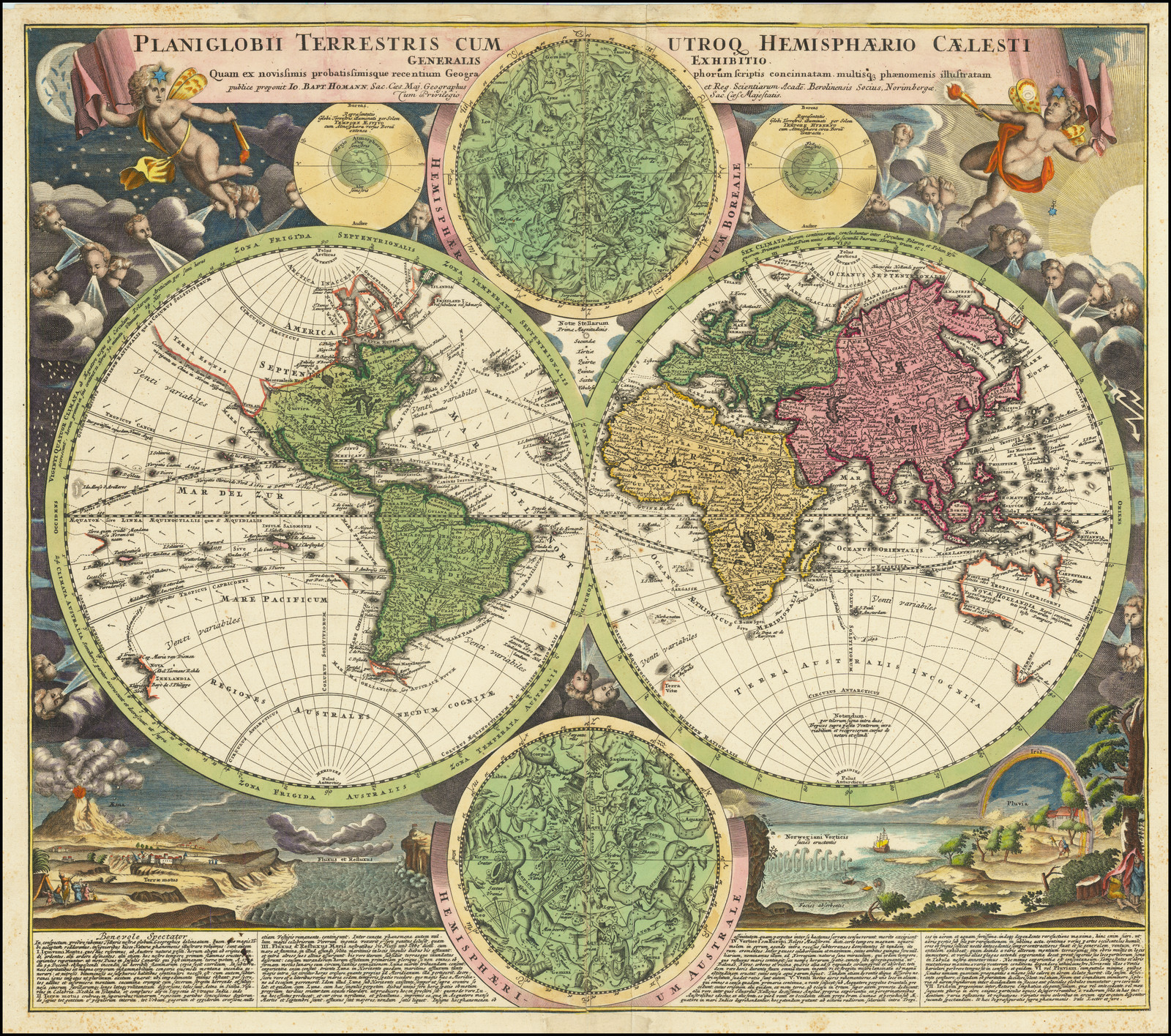
Johann Baptist Homann’s Planiglobii Terrestris cum utroque Hemisphaerio Caelesti: twin terrestrial hemispheres accompanied by northern and southern celestial hemispheres, pairing Earth and sky on one sheet. The library record assigns the map to Homann in Nuremberg and dates the form to the early eighteenth century.[2]
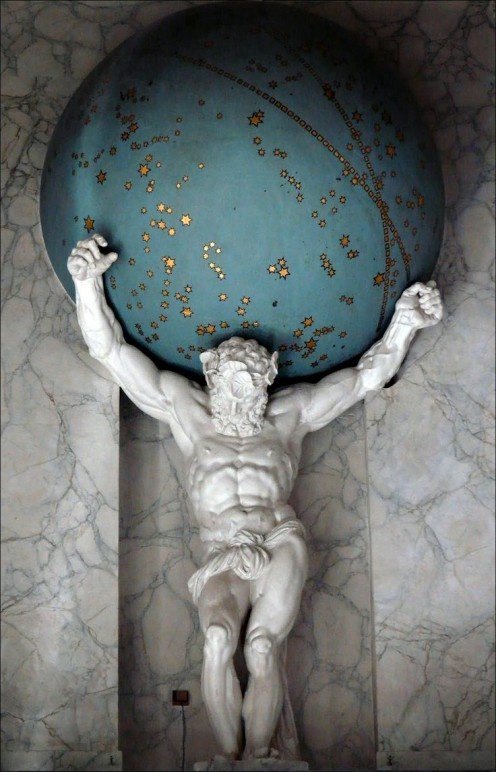
Atlas bears a blue celestial globe marked with constellations and star patterns—an architectural version of the heavens as an ordered surface.
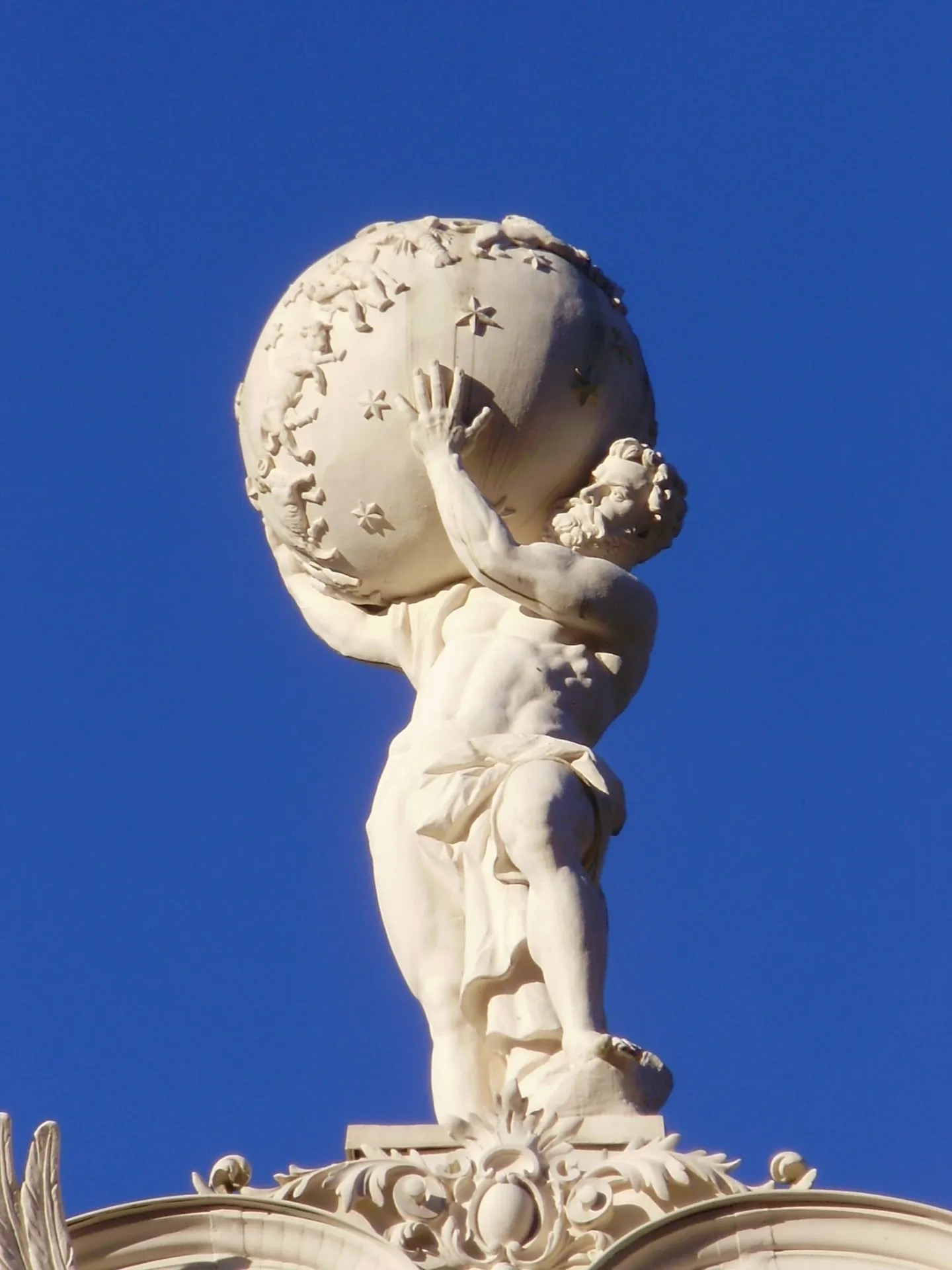
Despite its filename, the supplied image depicts a classical male globe-bearer rather than a winged cherub. Its sphere is modeled with stars and relief constellation forms rather than terrestrial coastlines.
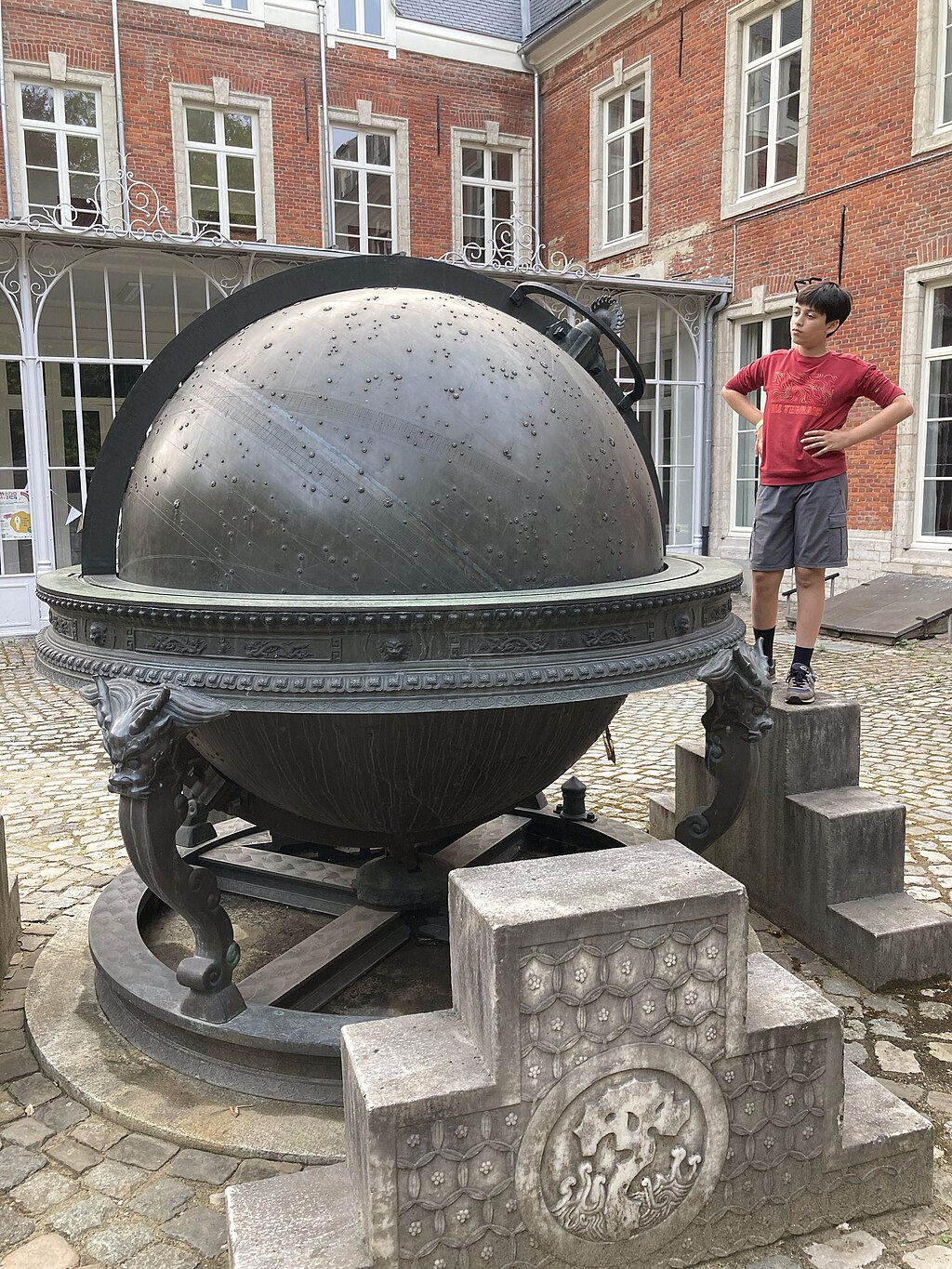
A monumental metal celestial globe or armillary-like instrument combines a pierced, star-marked sphere, equatorial band, and meridian ring. The available file has no location or maker metadata.
Rosicrucian and Hermetic traditions add another layer because their literature repeatedly communicates through correspondences, nested worlds, macrocosm and microcosm, astronomical symbolism and geometrical diagrams. That does not establish that historical Rosicrucians secretly taught an interior Earth. But it raises a legitimate historical question: could an older cosmological conception survive after its explanatory key disappeared, leaving behind maps, symbols and geometrical conventions that later generations interpreted differently?
The three books consequently form an extraordinary sequence. London gives us the disputed geometry. Dick gives us the problem of perceived reality. Eco gives us the hidden transmission and reconstruction of knowledge. None of the three authors needs to have consciously intended the complete connection. In fact, that is precisely what makes the comparison compelling. Taken together, they tell a larger story about humanity confronting the possibility that the world we picture mentally and the world we actually inhabit may not be the same thing.
Attached video
The Three Stigmata of Philip K. Dick
Sources
[1] https://collections.library.yale.edu/catalog/15308331 — Yale Library: Petrus Plancius world map (1594)
[2] https://www.deutsche-digitale-bibliothek.de/item/PSSQOUPCKUXUU75XB4JSYHZH6KITHGGD — German Digital Library: Johann Baptist Homann planisphere